Ted K. Dass, Managing Trustee of Horamavu Parisara Abhivruddhi Samiti (HPAS) reports on the walkathon and the clean-up efforts at Horamavu Agara Kere.
On Saturday, 27-Feb-2016, HPAS organised a Lake Awareness Walkathon at Horamavu Agara Kere, located in north-east Bangalore. More 200 people including school children from Maruti Vidyalaya (Babusapalya) and residents of Horamavu walked to raise awareness about the lake and the need to save it. In addition to the walkathon, people participated in a workshop on garbage segregation, watched and photographed birds of the lake, and had fun at a photo-booth set up with the lake as the backdrop. KR Puram MLA Mr. Byrathi Basavaraj, Horamavu Ward corporator Mrs. Radhamma Venkatesh, Mr. Sanjay Kumar, BBMP Horamavu ward health inspector, and several local leaders also participated in the Walkathon.
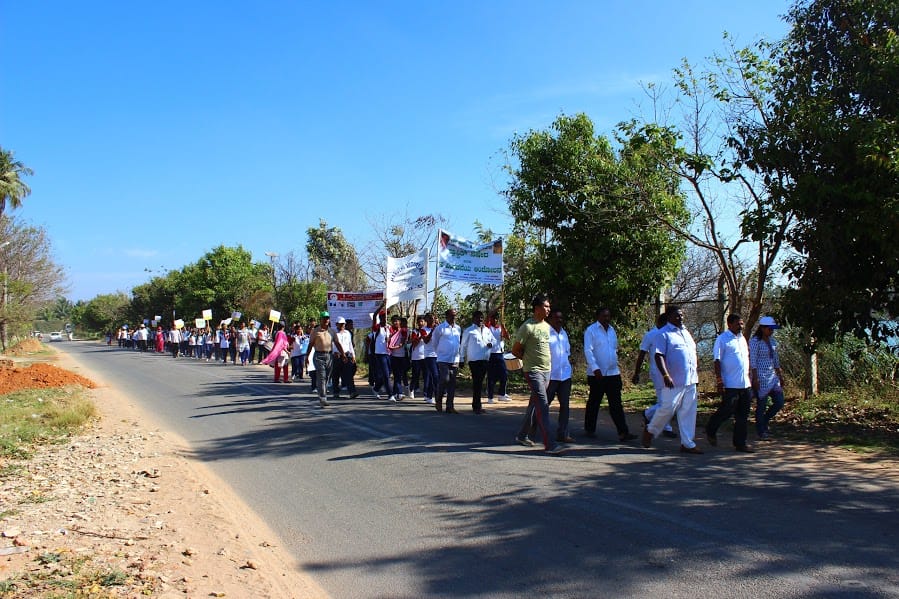
Walkathon 27th Feb 2016
Speaking to the participants, Mr. Basavaraj assured his full support to rejuvenate the lake as well as to make Horamavu ward plastic-free. Further, he appealed to the residents to segregate their garbage. Mr. Sanjay Kumar informed the gathering that Bengaluru was generating 4,000 metric tonnes of garbage every day and that people should make segregation-at-source part of their daily practice. He also informed that shortly they will be distributing waste bins to households to facilitate separation of their waste. Mr. Ted K. Dass, HPAS managing trustee, addressing the school children exhorted them to practice the mantra of “Reduce, Reuse, and Recycle” to break free from the cycle of generating huge amounts of garbage every day. Further, he encouraged the students to talk to their parents and family members to practice segregation-at-source for all household waste.
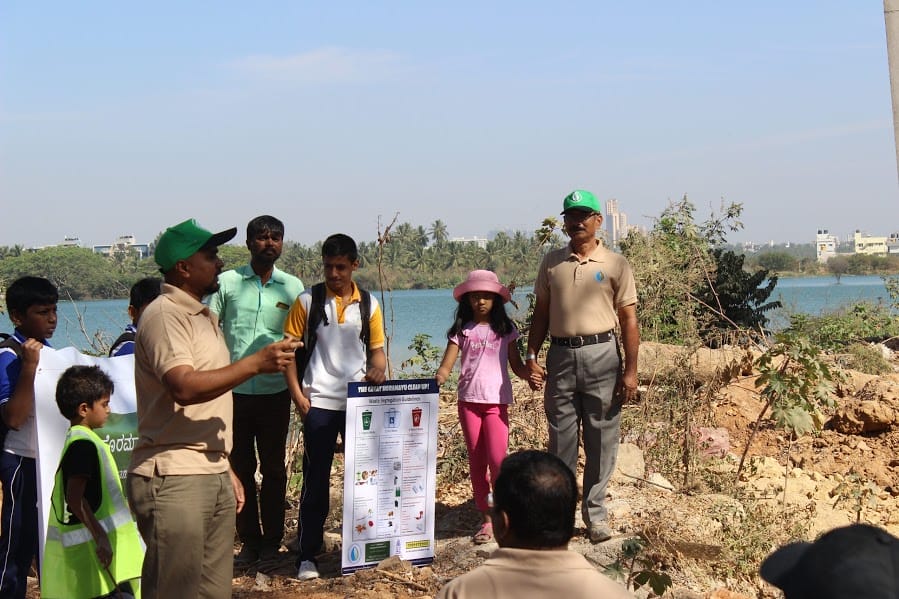
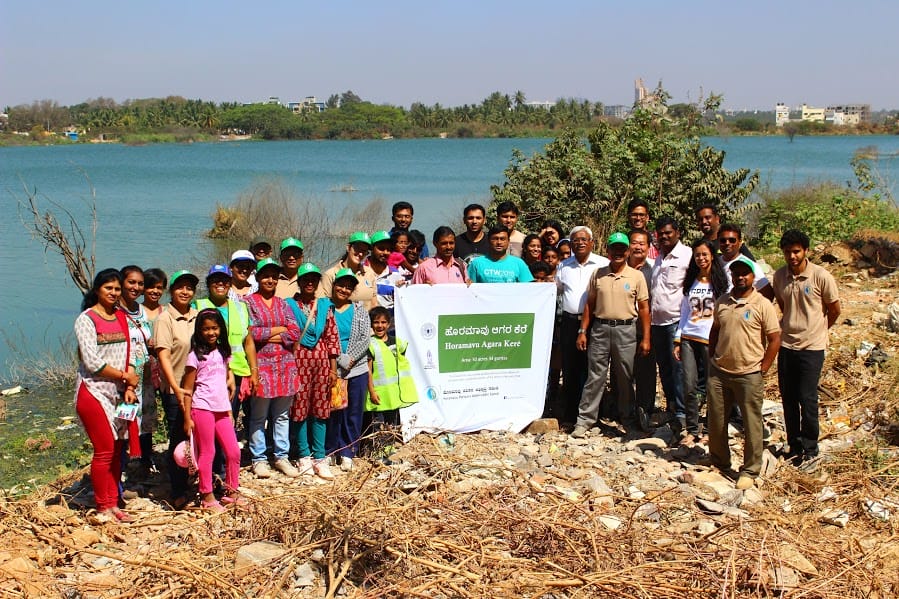
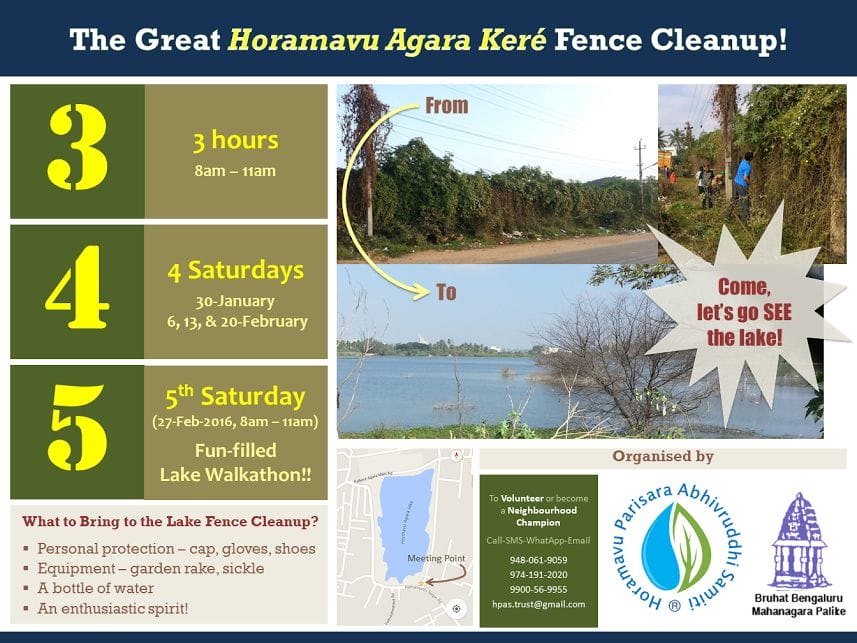
The Walkathon was the culmination of HPAS’s 3-4-5 Campaign, started on 30-Jan-2016, to clean the fencing along the Horamavu Agara Keré.
The objective was simple: To make the lake visible from the level of the road so that people who travel by everyday can “see” the lake. For one is more likely to care about something that one can see.
Before the campaign’s launch, the fence was completely covered by the dense growth of weeds and creepers, which had completely blocked out the view of this 50-acre lake. The lack of “visibility” led to a situation where the lake had become an open toilet and a garbage dump for people and shopkeepers living nearby. Further, a Lake Cleaning Drive and a Keré Habba organised by HPAS in 2015 did not lead to any sustained change, perhaps, because people simply couldn’t see the lake. Hence without being able to see it, most people had no attachment to the lake.
To address this issue, a small group of HPAS volunteers with support from Mr Sanjay Kumar, health inspector for BBMP-Horamavu Ward, ran a pilot event on 19-Dec-2015 to clean a small section of the lake’s fence. The outcome was very encouraging as residents and passersby started noticing and appreciating the view of the lake through the cleared up fence.
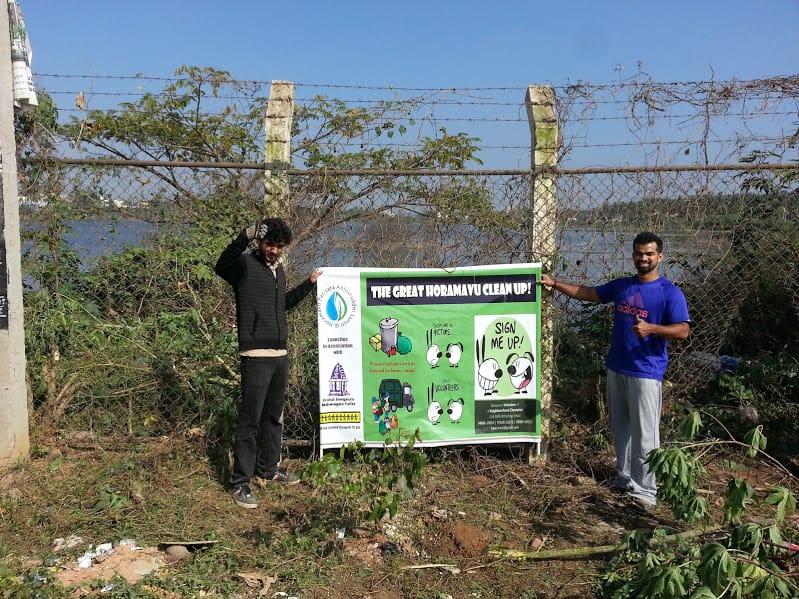
Pilot clean-up Dec 2015
Encouraged by this response, HPAS launched its 3-4-5 Campaign on Saturday, 30-Jan-2016. The Campaign envisaged people spending 3 hours (8am – 11am) over 4 Saturdays to clean the fencing along the southern border of the lake and culminating with a Lake Awareness Walkathon on the 5th Saturday.
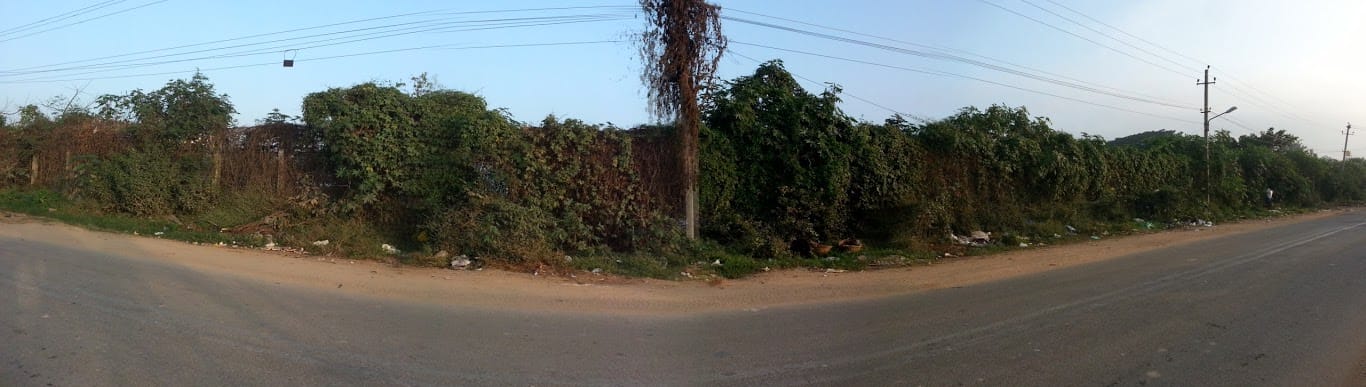
Dec 2015
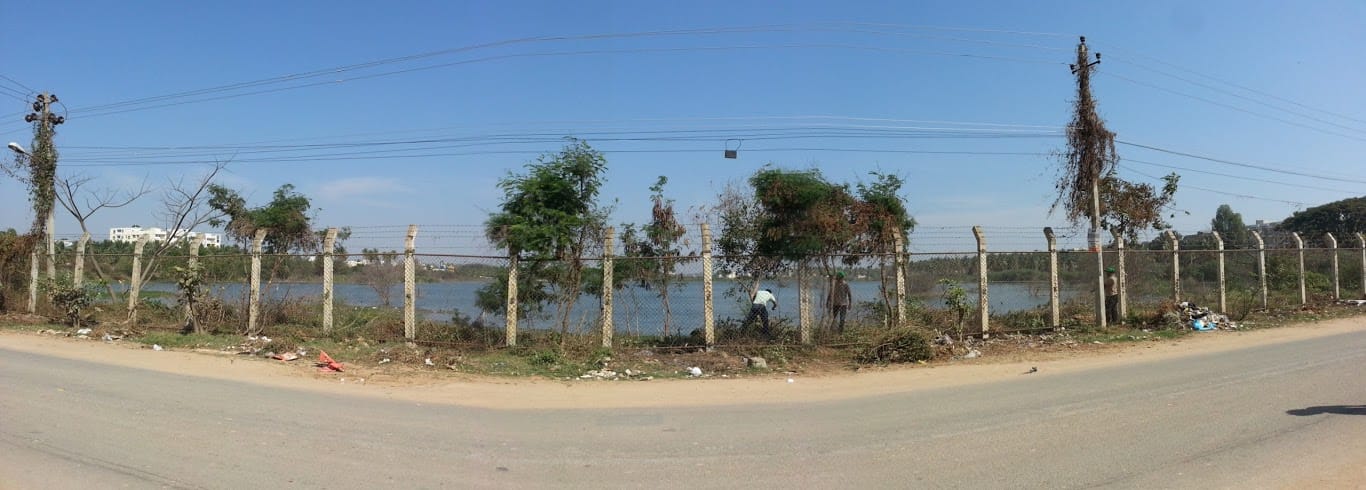
Jan 2016
The results of a small group of 10-15 people’s labour in less than 12 hours of actual work have been outstanding! Residents and passersby have been slowing down or stopping at the lake to admire its beauty and the numerous species of birds that nest there. Also, the amount of garbage being tossed out by people driving by the lake has reduced.
However, there is still a long way to go to revive Horamavu Agara Keré. A functional sewage treatment plant is required to ensure that raw, untreated sewage is no longer discharged into the lake. Fencing along the eastern border, which is so far unfenced, needs to be erected, and the fencing along the northern border needs to be repaired. More importantly, the local community must get more involved and participate in activities to save the lake.
HPAS will continue to work along with the local community and the political and administrative bodies to ensure that Horamavu Agara Keré is fully revived.
Ted K. Dass
Managing Trustee
[+91-9900-56-9955 | hpas.trust@gmail.com | www.facebook.com/SaveHoramavuLakes]
More photos of the Walkathon and the 3-4-5 Campaign can be accessed here.