Preparing for an eco-friendly Ganesha festival at Kaikondrahalli Lake

The nightmare of our lakes is fast approaching. Yes, this is the time of year that every lake that has water in it would actually be wishing it was dry enough to turn away devotees of Lord Ganesha. Every year during the Ganesh Chaturthi festival, thousands of idols that do not dissolve/ with hazardous paint and paraphenalia (not environmentally friendly) find their way to lakes and immersion tanks, creating tons of garbage after the festival.
 
This year, in order to encourage people to use clay Ganesha idols, MAPSAS will be doing two events at Kaikondarahalli Lake on Sunday, 13th September 2015.
 
EVENT 1 – Ganesha Idol Making Workshop
Rs 300 per person
Starting at 10:00 a.m.
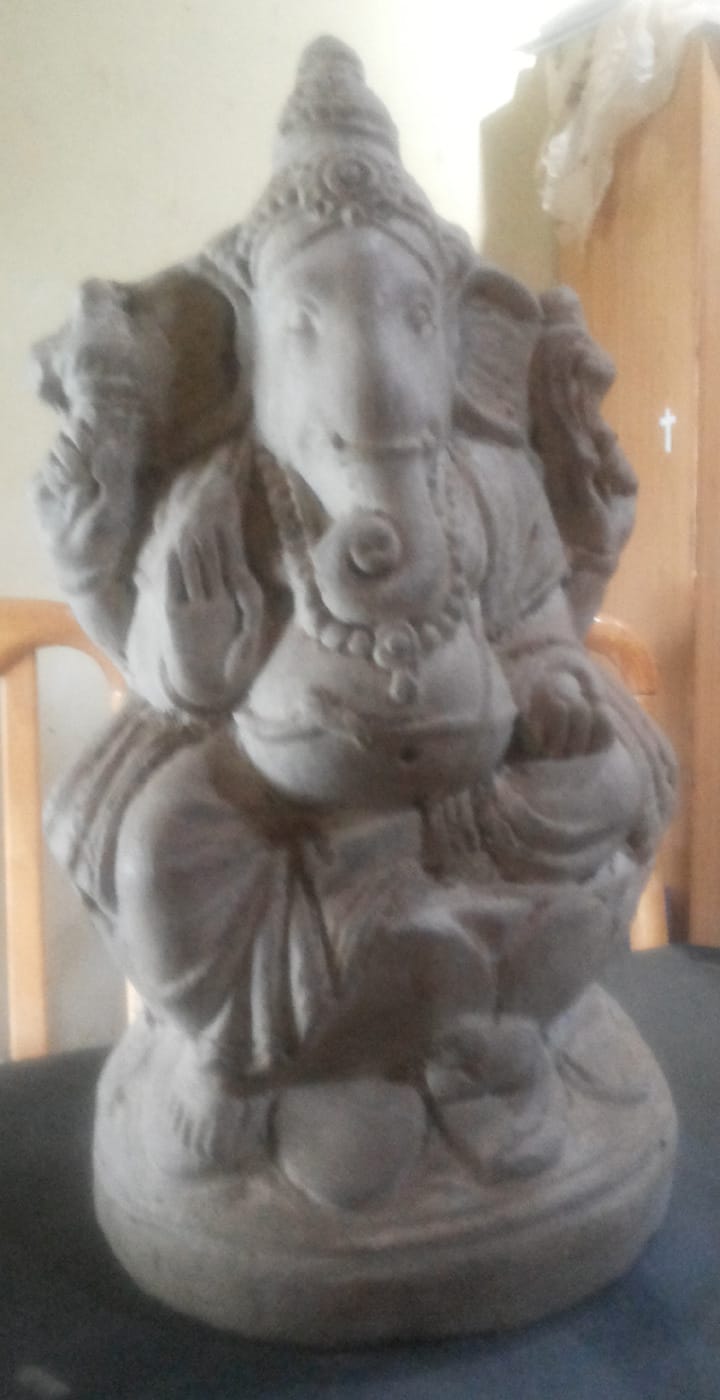
 
This will be conducted by Pavan from Potters Club.
All materials (moulds, clay, etc.,) will be provided. You can take your idol home, pray to it and bring it back to the tank at the lake for immersion and feel good that you haven’t done harm to our environment.
The charge of Rs.300 per person will pay for the instruction, clay, transportation of the materials, etc.  A part of the proceeds will also go towards filling and cleaning the tank during the days when people throng to the lake to do immersions.
 
20 people can attend the workshop at a time. If there are more than 20 people additional sessions will be held. Prior registration is required for this event. Please email uttu2m@gmail.com if you are interested in attending this session. If there are more than 20 registrations, the timings for the next sessions will be decided.
 
EVENT 2 – Magic Show and Skit
Free
Starting at 11:00 a.m.
 
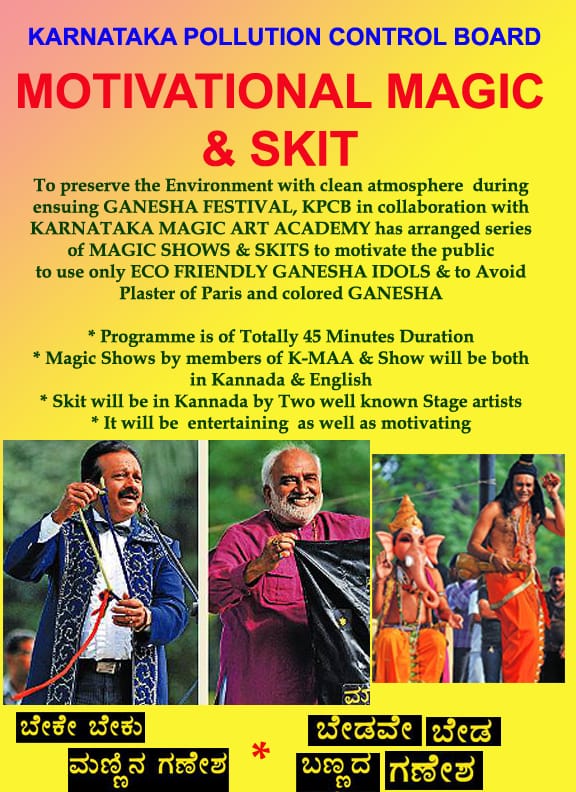
The magic show and skit are aimed at raising awareness about eco-friendly Ganesha celebrations. This is being organised by the Karnataka State Pollution Control Board. Details in the poster.
 

Leave a Reply

Your email address will not be published. Required fields are marked *

Similar Story

The wild in the city: What citizen scientists tell us about Bengaluru’s biodiversity

Spatial and temporal biodiversity patterns, as observed by citizen scientists in the city during 2016-2025, were studied at a datajam in December 2025.

Imagine you’re out on a morning walk, phone in hand, when you spot a butterfly you’ve never seen before. You snap a photo, log it into a citizen science app, and voila! You’ve just contributed to crucial biodiversity monitoring. This isn’t just a hobby; it’s part of a global movement where ordinary people collect, record, and sometimes analyse data about plants, animals, and ecosystems. Citizen science stretches the reach of ecological research. Every observation adds to unique longitudinal datasets that reveal phenology — periodic events in the life cycle of a species — along with species distribution shifts and population…

Similar Story

Air quality management is a governance problem, not just an environmental one

Despite massive funding, Indian cities face weak governance, poor data, and limited capacity, as air pollution continues to worsen.

Indian cities are struggling to breathe. Air pollution is a year-round governance challenge. In 2024, 35 of the 50 most polluted cities globally were in India, with PM2.5 concentrations above 66.4 μg/m3. This is at least 13 times the World Health Organization (WHO) guidelines and at least 1.6 times the National Ambient Air Quality Standards (NAAQS) in India. Citizens continue to bear the brunt of worsening air quality, and urban local governments (ULGs) are at the forefront of the problem, being primarily accountable for their citizens' first mile. While they do have a role to play in addressing this threat,…