PNLIT turns five today.
Thanks to our donors, volunteers, staff, vendors, media, government authorities and everyone else who extended support to us in various capacities, the journey has been very fulfilling.
Puttenahalli Lake continues to be PNLIT’s primary focus and we are happy with the positive difference that ‘five years’ has made.

The green of the trees, grass and other plants (weeds included) cannot be missed. Flowers, fruit and fish ensure that birds, butterflies and other life forms are able to sustain. More than 70 different species of birds have been spotted at the lake over the past five years. The breezy shade of the trees and refreshing air makes the lake area an ideal setting for literary, cultural and educational community events, several of which have been held, while also offering exercise space and peace and quiet from the hustle of city life. (Check our blog posts for more information.)
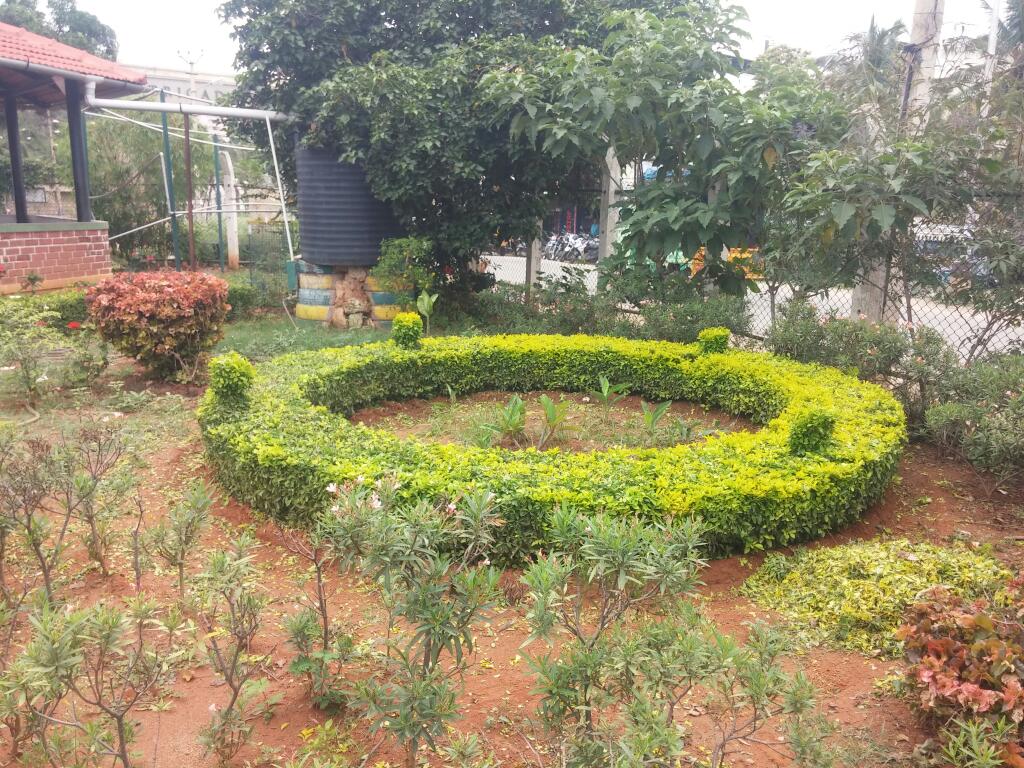
Gazebo garden, developed and nurtured by PNLIT (Pic: Nupur)
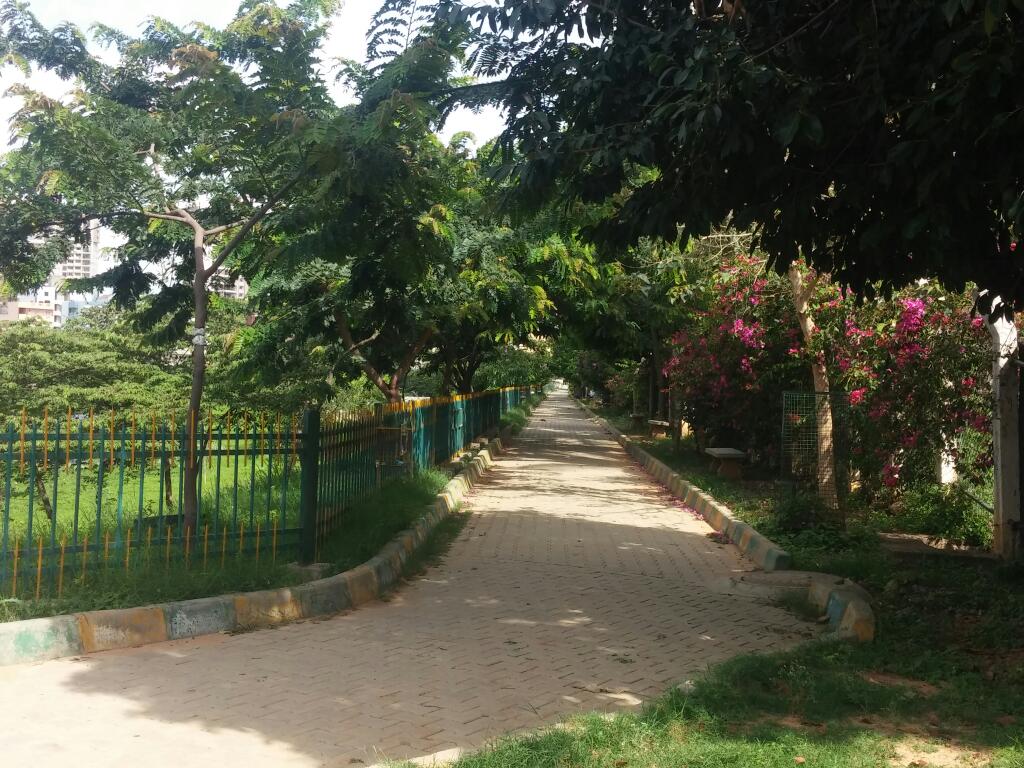
Pathway lined with trees and flowers (Pic: Nupur)
PNLIT Trustee Nupur was at the lake this morning and was delighted to see the garlic vine in full bloom with gentle lavender flowers, and a migrant grey heron prominently perched on the poles she had planted in the lake bed some weeks ago. These little joys make every minute of the time spent in nurturing the lake totally worth it!
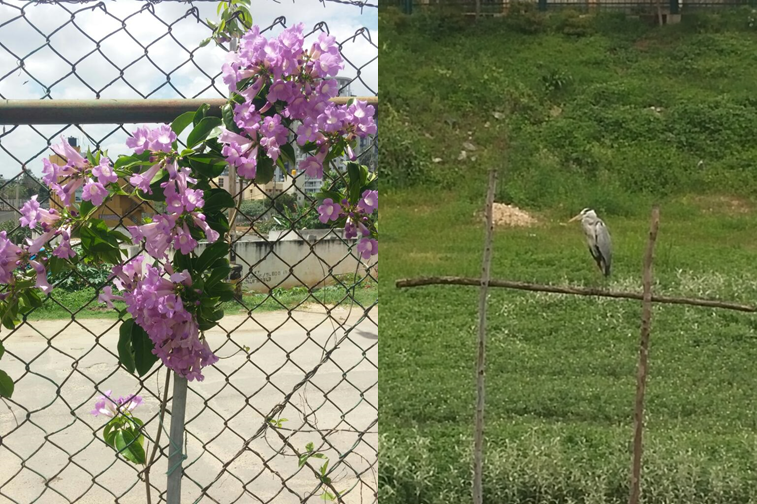
Garlic vine flowers and a Grey heron (Pics: Nupur)
Water, which should be taken for granted in a lake, has been one of the challenges. With no proper catchment left for Puttenahalli Lake, PNLIT has been looking at ways to get more ‘good’ water into the lake. This past year, progress has been made. Apart from the rain water/ storm water from the roadside drains, starting a few weeks ago, water from the South City apartment complex’s sewage treatment plant has been feeding the lake. This is a milestone in Bangalore’s lake-saving movement and if successful, would be extended to other lakes. The South City owners association, SUGRUHA, upgraded the STP with its own funds so that it met the quality standards. With rigorous control on the water quality, it would take a while for the lake to fill. Next year, at this time, maybe we will have ‘brimming’ news to share.
The PNLIT teacher volunteers have had a good year, with their students doing well in the public exams.
PNLIT merchandise that is a minor source of income for PNLIT, continues to delight. We presently have cloth bags, T-shirts, coasters with birds/ butterflies, wristbands, photoframes, cartoon postcards, CapsToKeep bottle cap magnets and keychains. Reasonably priced, these make unique gifts. PNLIT also has a store on eBay Charity, that you can shop on here. While shopping on Amazon, Flipkart or Snapdeal, using the links on the PNLIT website would give PNLIT a percentage of your spends. These are small ways in which your shopping will not only contribute to PNLIT, but also spread awareness about Bangalore’s lake-saving efforts.
The donations and contributions in kind (both material and service) received from our well-wishers have ensured that we have been able to pay our staff salaries, maintain/ execute small improvements in the lake area, conduct lakeside activities and participate in city-wise lake-related efforts. We spend according to the money we get. This is how we have managed. Some contributions to our corpus fund have helped to build it, but we still have a long way to go. The interest on a corpus of Rs 50 lakhs will take care of routine expenses. We have applied for FCRA registration which is in process. We are looking for corporate support. If we get more money, we can do more.
PNLIT is recognised as a charity and donations are exempt u/s 80G of the IT Act. With almost no administrative expenses, you can be sure that your money is well spent. If you would like to support a charity, do consider PNLIT. For details on how you can donate and help please click here.
We look forward to your continued support in the transformation of Puttenahalli Lake to a secure ecosystem and a place of serenity for all of us.
Best wishes,
Arathi for The PNLIT Team