PNLIT is committed to promoting awareness of the environment among the residents around the Puttenahalli Lake. We are happy to tie up with Artyplantz to achieve this end. Like PNLIT, ArtyPlantz loves nature and takes real pleasure especially in plant life.
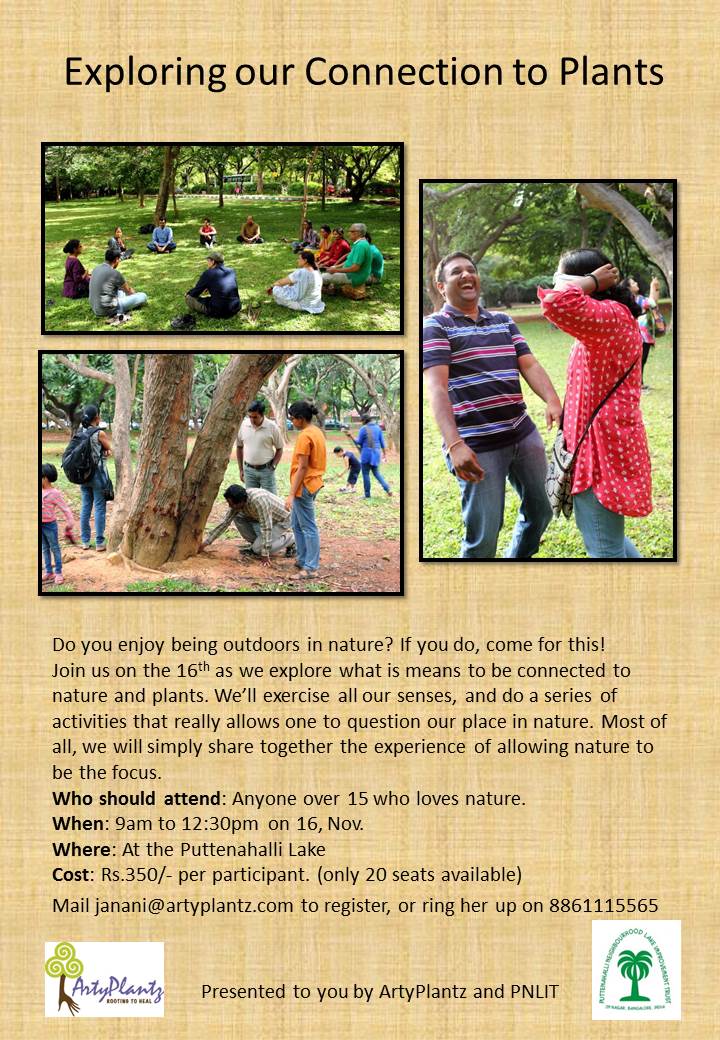
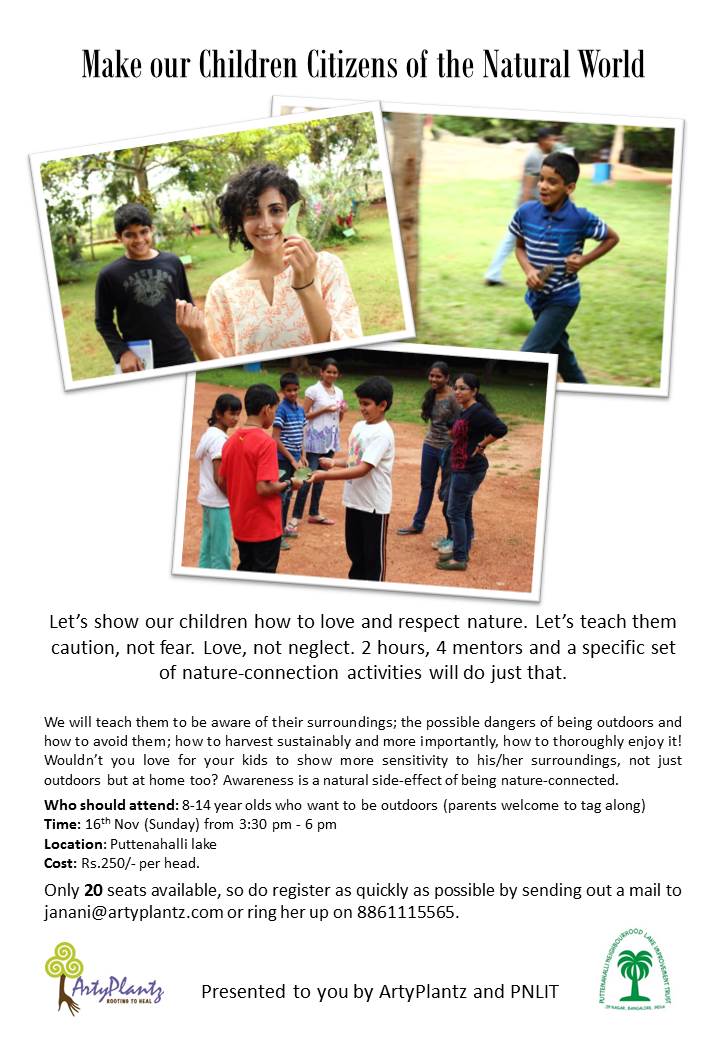
ArtyPlantz and PNLIT are organizing two specially designed programmes on Sunday, 16th November at Puttenahalli Lake, JP Nagar 7th Phase, Bangalore.
Session 1 – for adults and children above 15 years – to sensitize and help them connect with nature. This event will be held 9:00 a.m. to 12:30 p.m. Fee Rs. 350/participant. Seats limited to 20.
Session 2 – for children between the ages of 8 and 14 years – to help them discover the beauty of plant life. This session is from from 3:30 p.m. to 6:00 p.m. Fee Rs. 250/child. Seats limited to 20.
Please register with Rekha George (mob. 9740151629) / Nupur Jain (mob. 9886629769) / Janani (see posters below) to book your place.
Janani from Artyplantz, who will be leading the sessions had this to say:
The term Nature Connection is so new to our vocabulary it could be a little confusing at first. I thought I would share with you this one video we made almost a year back which talk a little about why we do what we do. If you ignore the dates and the location, this is what we want to bring to you at your wonderful lake.
http://www.youtube.com/watch?v=aPGJSwGrFoY
For the 8-14 year olds session (Session 2), we are playing a set of games that draws the child’s attention to the nature around. We want to enable them to have fun in it, know how to use some plants whether for fun or to eat or for medicine. We are also going to try and show by example and suggestion how to care for and respect their surroundings. This could be in the form of how to harvest sustainably, how to know if it is ok to touch certain plants, pick up certain things etc. We want to build in them the confidence, the love and the high amount of awareness needed to fully connect with nature.
For the 15+ or adult session (Session 1), we would like to explore with you how we can sharpen our senses, pay more attention to what is going on in nature and see what it is that we have been missing. In doing that, we will also learn how to build more of that stamina to be outdoors. From being indoors and boxed off all the time, our brains are getting improperly used. We can only use certain parts of the brain and the body in the sterile conditions that we make for ourselves. As a culture now, we have forgotten what it could mean to be connected, but the amazing thing is subconsciously, we still know. All it needs is for us to turn that switch on. That, is what we mean to do at the session. If it sounds even mildly intriguing, you should come and check it out. I promise you, I’ll make it fun.
Grin!
Janani Eswar
Rooting to Heal
*****