Tree planting scheduled at Yelahanka Lake

Yelahanka Lake, covering 292 acres is one of the largest lakes in Bangalore, under the jurisdiction of the Bruhat Bengaluru Mahanagara Palike (BBMP). Home to many birds, ornithologist Dr Subramanya recorded as many as 33 species during a one-hour visit to the lake in November 2012.

About 14 acres of the lake was encroached by illegal buildings and hutments, but over the past year, in multiple operations, the BBMP has successfully evicted the encroachers, regained possession of the property, and is now looking to restore it. 
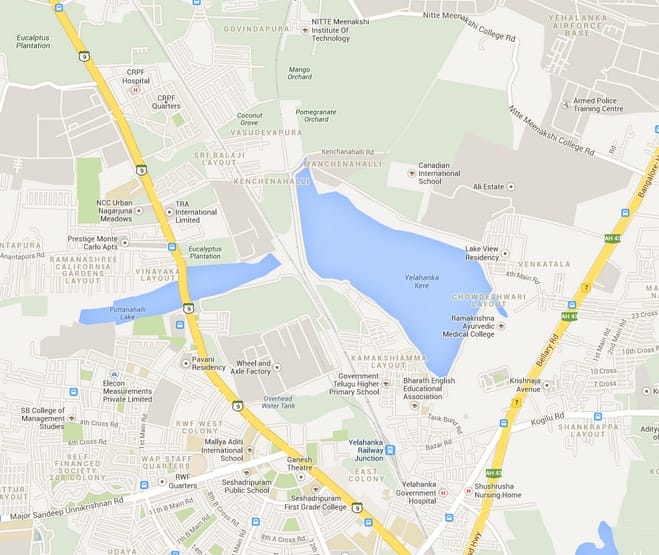
Yelahanka Lake

Yelahanka Lake and the neighbouring Yelahanka Puttenahalli Lake

To initiate the restoration, the BBMP has requested United Way of Bengaluru to help with a tree planting event at the lake. United Way, has been working with the BBMP and local citizens’ groups at several Bangalore lakes since 2011, and its “Wake the Lake” campaign has been focused on reviving the dying lakes of the city.  

Mr Suresh Nair, Executive Director, United Way of Bengaluru has indicated that 1000 saplings will be planted at the lake on 27th July 2013. The planned schedule is below:

10:30 – 11:00am – Welcome Speech by United Way, Local MLA Mr. Vishwanath and BBMP Chief Mr. Satish address the gathering, Talk by renowned environmentalist Saalumarada Thimmakka  (the lady who has planted a number of banyan trees and looked after them to adulthood).
11:00 – 11:30am – Puppet-o-thon – a show using puppets from recycled materials – lead by John Devaraj and children of Vibgyor International School (1km walk up and 1km walk down a stretch of the lake).
11:30 – 12:30pm – Planting of the 1000 saplings by donors, volunteers and participants.

Everyone is invited to participate in the efforts to bring this lake back to life.


Event details
Place: Yelahanka Lake
Date: Saturday, 27th July 2013
Time: 10:30 am to 12:30 pm

Leave a Reply

Your email address will not be published. Required fields are marked *

Similar Story

Notes from the field: Why Begur Lake is losing its waterbirds

71% of waterbirds at Begur Lake are declining. A visit to one of Bengaluru’s rapidly deteriorating lakes shows what's causing the collapse.

During the Open City biodiversity datajam held in December 2025, our group examined the ecological trends around Bengaluru’s lakes. Our analysis suggests a majority of waterbirds are declining across the city's lakes. Earlier, we addressed crucial questions on how migrant and resident waterbirds are surviving across 14 of Bengaluru’s lakes, how the shape of the lakes influence microhabitats, and how a scoring system can be used to record the decline in lake quality and bird populations. The last of our four-part series turns its attention to an individual site. As part of this study of waterbirds in 14 city lakes,…

Similar Story

Bengaluru lakes are changing, and birds are paying the price

From disappearing reedbeds to altered shores, here is why some of the city's lakes are thriving while others face ecological collapse.

While bird detection trends over the years clearly point to the decline of Bengaluru’s shoreline and vegetated-edge habitats, numbers alone tell only part of the story. In Part 3 of this four-part series on the state of the city's waterbirds, we have used a scoring system to understand how stressed the lakes and the microhabitats within the lake are, based on the bird diversity they support. We explore how lake shape, permanent inundation and shifts in citizen-led management might explain why some lakes may thrive as wetlands while others collapse.  For instance, at Kasavanahalli, the Pied Kingfisher and the Coot…