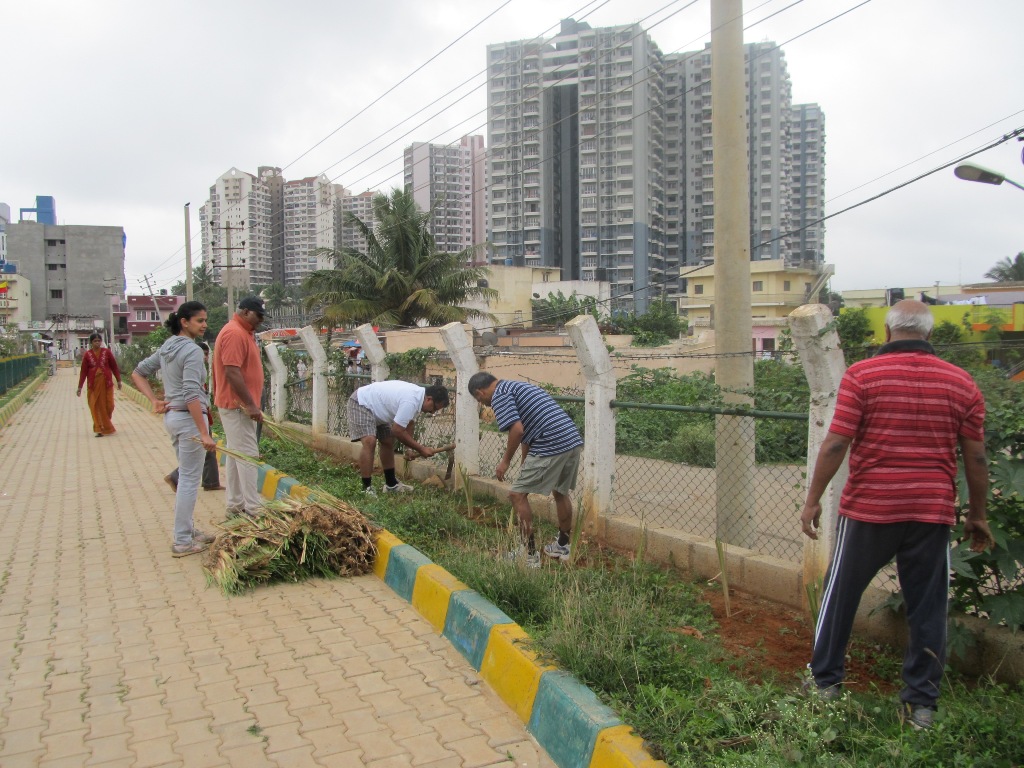
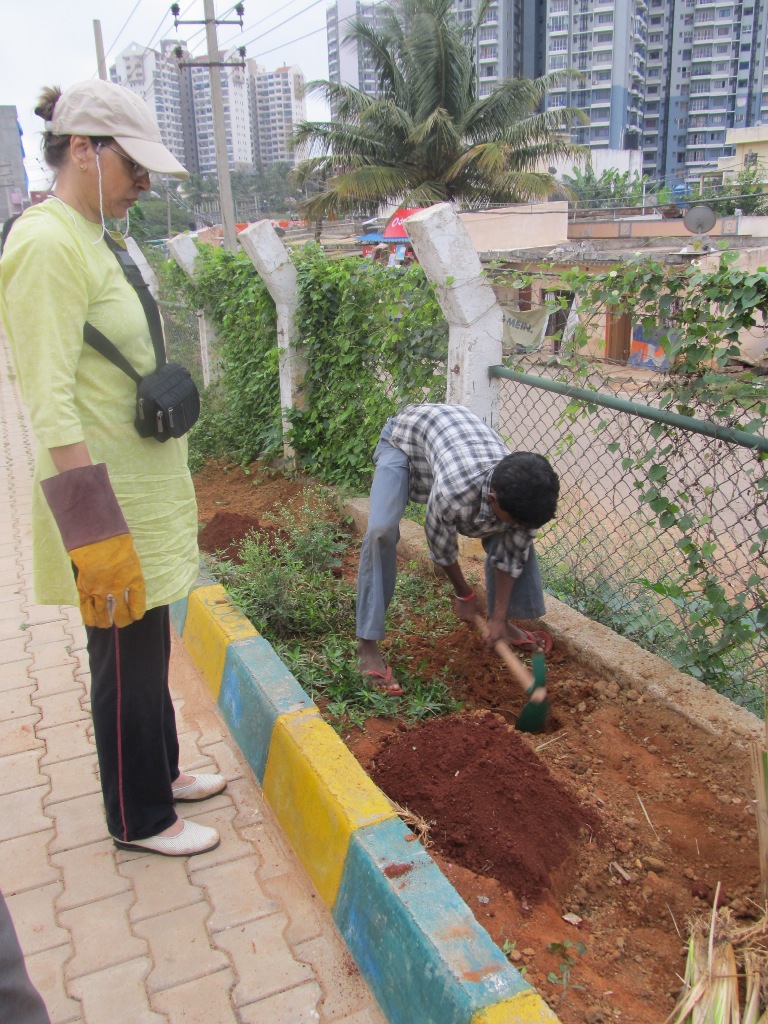
Volunteers plant vetiver to hold the soil

Vetiver is a perennial grass (Binomial name Chrysopogon zizanioides, commonly called Khus) that has a very strong root system which grows deep and binds the soil wonderfully, preventing soil erosion. The island at Puttenahalli Lake already has some mature clumps of vetiver that were planted way back in 2010.
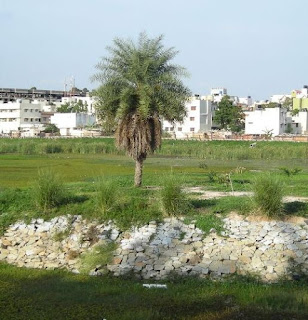
 Vetiver clumps on the island (May 2011)

With the rains finally making an appearance, we’ve stepped up our gardening effort. This morning there were many gardening volunteers at the lake, from different complexes around the lake and even Jeanne all the way from Richmond Town and Pankaj from Whitefield. The volunteers planted vetiver along the one of the boundary fences (near Nataraja Layout). 

The work planned for the weekend was all completed in one day! 

Volunteers at work

About a month ago, volunteers had helped in moving weeds from the lake bed/ bund/ surroundings and piled them for composting. This is now transformed into lovely rich manure, which we will use for the plants at the lake.

Rich manure

Heartfelt thanks to all the volunteers. We look forward to your continued support. 

Pics: Usha Rajagopalan

Leave a Reply

Your email address will not be published. Required fields are marked *

Similar Story

Why Uppal is getting hotter: Dense construction and reduced green cover increase temperatures

Data from 2015-2025 reveals how rapid urbanisation has intensified Uppal's heat risks, signaling the urgent need for blue-green infrastructure in Hyderabad.

Uppal is a suburb of Hyderabad, located in the northeastern part of the city. It is known for housing landmarks like the Rajiv Gandhi International Cricket Stadium and has schools, government offices, industrial zones and commercial centres. The area experiences high temperatures due to the Urban Heat Island (UHI) effect that operates within the city limits.  Our examination of Land Surface Temperature (LST) data covered the years 2015, 2020, and 2025 and shows how heat zones have expanded with warmer areas becoming larger. In Uppal, rapid urban development has changed the thermal balance. Dense construction and fewer trees  are creating  persistent…

Similar Story

BDA’s tree plantation drive faces accountability issues, not accounting errors

This record-breaking drive in Bengaluru has cleared out shrub ecosystems rich in biodiversity to plant saplings that may never thrive.

Fifteen lakh trees. A place in the Guinness Book of Records. The Bengaluru Development Authority (BDA) has been on overdrive, promoting its new project to plant 15 lakh trees in spaces created in its new layouts. 240 acres have been earmarked across BDA’s faraway layouts. The saplings are to be planted across lake and nala buffer zones, parks and public spaces in new neighbourhoods like Nadaprabhu Kempegowda Layout, Banashankari 6th Stage, and Dr Shivarama Karanth Layout, according to the BDA Chairman N A Haris. While such massive tree plantation exercises are by themselves questionable, there is also the question of a…