In solidarity with their peers


Last Saturday evening (23rd April 2011), around thirty IT/ITeS Employees gathered under the banner of IT and ITeS Employee Centre (ITEC) in front of Bangalore’s Town Hall amidst heavy and incessant rain to condole the shocking suicide of Prabhakar. The deceased was a thirty eight year old who had been working in the information technology industry for over a decade. The late Prabhakar had apparently left a note stating that he was resorting to the extreme step as he was unable to cope with the severe stress that his job was causing him.
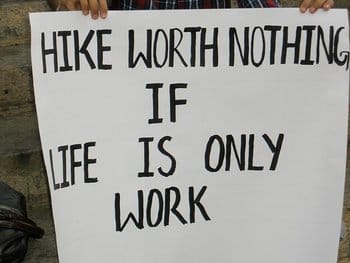
 

ITEC has decided to set up an Employee Helpline Centre where IT/ITeS Employees can seek counseling and professional assistance from a group of specialists including counselors, psychiatrists, legal and other health experts. Further details are available here.

Photos courtesy: ITEC

Comments:

  1. Nagaraja Magonahalli says:

    I am a retd central civil servant, both my sons are in IT industry, when I make comparison of living, except their high paid salary, they have no time for finer aspects of living like theatre, music, social functions etc. They will realise at the fag end of their career they have chosen wrong career in life, left with no rlatives or friends. Even members of family do not respect them in spite of having lived modern life.

  2. S Srinivasan says:

    For Heaven’s sake, please do not compare with the ways you lived and that of the present generation. Whichever career they choose, they have to face a fast life . The taste in fine arts comes from the way they had been brought up. Please do not blame them . As far as they give respect to you , you should be happy.You find happiness in them and their children. It is time the elders understand the pressures faced by the present generation.

Leave a Reply

Your email address will not be published. Required fields are marked *

Similar Story

All work, no play, low pay: How migrant workers powering India’s nuclear dreams live

A look at the leisure-less, emotionally strained lives of migrant workers working for the atomic power plant in Kalpakkam near Chennai.

80 kilometres south of Chennai stands the Madras Atomic Power Station (MAPS) — one of two big nuclear power plants in Tamil Nadu  — and its affiliate organizations. These organizations employ around 15,000 permanent employees, who mostly live with their families in the Kalpakkam and Anupuram townships, located approximately 5 kms from the nuclear plant. The distance is said to mitigate health risks from radiation. But they are not the only human resources of the plant. More than 4000 workers, hundreds of them migrants to the state, are employed on a contract basis every year in construction, housekeeping, catering, hygiene…

Similar Story

Can Telangana’s new Bill end platform workers’ exploitation?

The Bill has provisions for safe working conditions and grievance redressal, but excludes aspects like a uniform fare policy.

Indian laws currently don't recognise gig workers either as organised or unorganised workers. While organised workers are protected by their agreements, unorganised workers like wage labourers, at least theoretically, can access some benefits under the Unorganised Workers’ Social Security Act, 2008. The exclusion of one of the most conspicuous types of workers today from both these categories seem to contribute to the invisibilisation of their work. In Part 1 of this series, we saw how platform workers in Hyderabad become more vulnerable during extreme rains and flash floods. In this part, we explore what protections are available to them under…