Citizen Matters launched its book ‘Living in Bengaluru’ on August 4th. The book is a guide to make living in Bengaluru easier. It is a compilation of FAQs and how-to articles written by Citizen Matters‘ professional journalists and experts. The articles include guides on buying property, getting khatas, ID cards etc., tips for saving time on these tasks, and other tips on saving water, fuel etc.
R K Misra, member of ABIDe Task Force, released the book at Reliance TimeOut book store in Mantri Mall, Malleswaram. Vatsala Dhananjay, well known property lawyer and author of a chapter in the book, was also present.
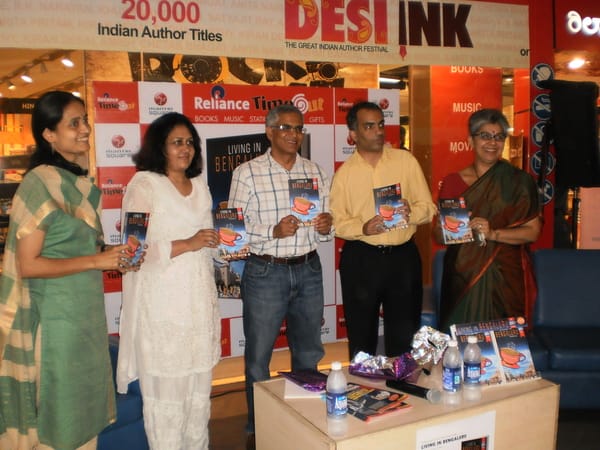
The book launch at Reliance Timeout store, Malleswaram. From left: Citizen Matters co-founder Meera K, property lawyer Vatsala Dhananjay, ABIDe member R K Misra, Oorvani Media board member Ashwin Mahesh, Meenakshi Bharath. Pic: Padmalatha Ravi.
Speaking at the event, Misra said that the city had failed both in terms of delivering and giving information on services. "Bangalore’s population doubled in the last ten years and only about half the citizens are original Bangaloreans. Living in Bangalore is complex – it includes interacting with neighbours, government officials etc., but no one knows how to go about getting birth certificates, renewing passports etc." He said that ‘Living in Bengaluru’ has detailed, vetted information, and that citizens could even challenge government officials based on it.
Vatsala shared with the audience a range tips on buying property without getting cheated, based on her chapter "Twelve dos and don’ts" in the book.
Meenakshi Bharath, Malleswaram-based civic and environmental activist and gynaecologist, shared an anecdote. A doctor, she talked about her experience of not being able to locate blood donation services for her daughter, during an emergency. "If as a doctor, I could not get this information, how difficult would it be for others? Sharing information will make things easier for everyone," she said.

Audience at the book launch. Pic: Padmalatha Ravi
Citizen Matters Editor Subramaniam Vincent said, "The cover picture of the book is that of a cup of tea. If living in Bengaluru could ever be a cup of tea, the book can get you closer to it." Articles from the newsmagazine would soon be available on cell phones, he added.
Readers can post about any errors in the book online, at www.livinginbengaluru.com. Critical updates and errors will be published in this page.
All data published already, will be verified for reprints of the book. Depending on when the first set of books run out, at the time of second reprint, an e-book may also be published in due course.
The book is available online at Flipkart.com. It will be available in chain outlets like Reliance Time Out, Crossword and Sapna from August 7th, as well as independent book stores. It is priced Rs 99. ⊕
Aadhaar has been initiated with the purpose of helping the people of India especially with the people belonging to poor and rural class. No doubt there are a no. of flaws in the functioning of this new project but at the same time it must also be noted that Aadhaar can be prove to be very fruitful as well. There is a need to make the whole system more transparent and error free then only the project will said to be a successful one otherwise it will be another scam or fraud from the Indian government.