Stone cutting units ignore KSPCB order

Three months after the deadline, one of the units continues to function. Neighbouring residents continue to lose sleep over noise and dust pollution.

One of the three stone cutting units ordered to shut down in April is still functioning. While KSPCB says BESCOM has been asked to cut power supply, BESCOM officials say they haven’t received any written order in this regard.

This stone cutting unit is located in the Bank of Baroda colony in JP Nagar 7th Phase. KSPCB had earlier ordered all the units to shut down by 30th April.
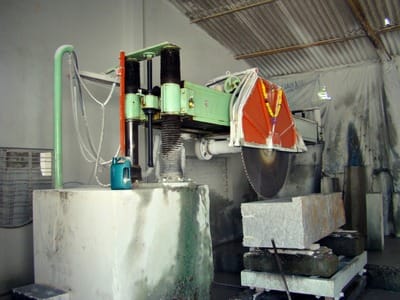
Stone cutting unit. Pic: Yograj S Mudalgi

Sadiq Ahmed, Senior Environmental Officer, KSPCB reiterates that the action has been taken. He says, “We have ordered the BESCOM officials to cut the electricity supply for the units still operating. Further action will be initiated soon.”

However, Basavaraj, Junior Engineer, S6 subdivision, JP Nagar says that they have not received any letter from BESCOM. He says, “We need a written order to disconnect the electricity supply.”

Earlier, residents complained to KSPCB because of loud noise generated out of the three stone cutting and polishing units – Ashwini, Alankar and Vijaya.

The residents of Brigade Palm Spring, an apartment complex behind stone cutting units, met Sadiq Ahmed in February. After listening to them, Notice of Proposed Action (NPD) was issued to the unit owners. Also, a copy was sent to BESCOM. Citizen Matters reported this issue on 29th February.

Rahul Rai, who has been active in demanding the the closure of all stone cutting units, says that KSPCB asked for an affidavit from all stone cutting units by 31st March 2012. At that time stone cutting units had agreed to shut them down by 30th April.

Mahendra Kumar, owner of the Ashwini Granites, that is still operating says that he will take another three months to his new factory in Hosur. He adds, “Right now we are doing some finishing work from this unit and we have informed KSPCB about this.”⊕

Leave a Reply

Your email address will not be published. Required fields are marked *

Similar Story

Bengaluru’s GBA and Hyderabad’s CURE: What they have in common and where they differ

While the mega-cities have split up into smaller corporations, both have put state leadership in control of city governance.

With the Core Urban Region (Integrated Governance) Bill 2026, better known as the CURE Bill passing in the Telangana Legislative Assembly, India's two fastest-growing mega-cities—both having crossed the 1.3-crore population mark—now operate under brand-new urban governance laws enacted within roughly two years of each other.  Both states confronted the exact same structural challenge: a single, overstretched corporation, fractured inter-agency coordination, and an urgent need for hyper-local administrative units capable of  delivering civic services efficiently. In an earlier article, we broke down how local governance would change with the Greater Bengaluru Governance Act. Read it here. Two mega-cities, one playbook The…

Similar Story

SIR in Bengaluru: Disenfranchisement at a grand scale

With Bengaluru Urban seeing a 42 per cent reduction in the voter rolls, is the SIR an update or a denial of electors' rights?

The CEO Karnataka recently published the final rolls for Karnataka after finishing their hurried and stressful Special Intensive Revision (SIR). People were asked to prove that they live where they do, and map themselves or their parents/ancestors to the 2002 voter roll. The final roll published now has 4.54 Crore electors in Karnataka as against the 5.54 Cr as per the 2025 Special Summary Review; a reduction of almost one crore electors or 18% of the earlier rolls. However, the numbers in the 28 constituencies in Bengaluru Urban paint a more drastic picture. The 1.026 crore electors as per the…