You walk up to the counter and pick up your serving of piping hot sambar rice and sit in a neat row of chairs under colourful umbrellas. You make a mental note to pick up some coffee from the small kiosk on the premises on your way out.
After polishing off your meal, you pay Rs 5, a fraction of what it would cost you anywhere in the city, as you have just eaten at Amma canteen 2.0.
This could well be the future of the ubiquitous, government-run, low-cost eateries as its management has been turned over to a trust in order to improve its finances and give it a makeover.
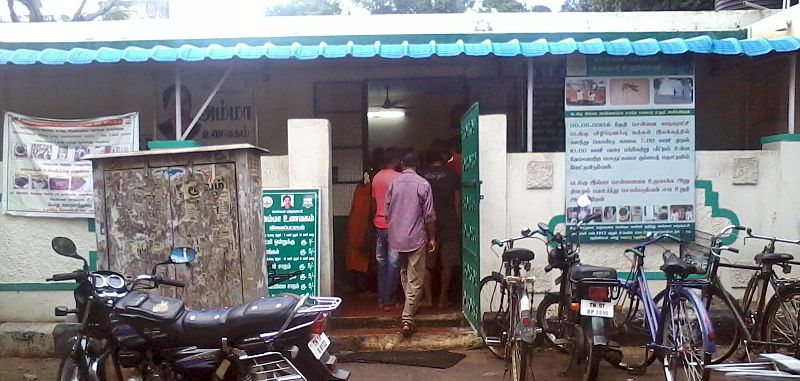
Behind the Amma Canteen
Amma canteens, outlets that serve affordable daily meals, were launched as a pet-project of former Chief Minister J Jayalalithaa in 2013. These canteens predominantly serve South Indian food at low cost.
| Idli – Re. 1 Pongal – Rs. 5 Sambar Rice – Rs. 5 Lemon Rice – Rs. 5 Karuveppiali Rice – Rs. 5 Curd Rice – Rs. 3 2 Chapatis – Rs. 3 |
The canteens are currently managed by the Government of Tamil Nadu which spends around Rs 100 crore every year from its budget for this subsidised food programme. The canteen sees regular patronage by college students, migrant workers and residents of the localities they are situated in.
The project, which was introduced by the ruling AIADMK, is one of the success stories that the party hopes to showcase as part of its campaign. Recognising the importance of the canteens, the primary opposition party, DMK, too has vowed to continue the scheme if elected to power.
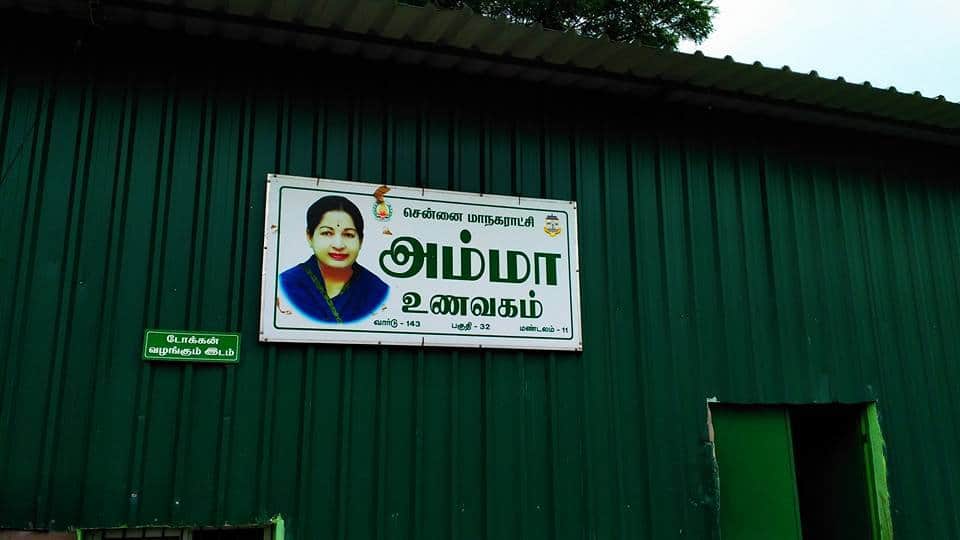
While there is no political threat to its existence, its unfavourable financial position, if left unaddressed, could become its undoing.
Balancing act
When the initial proposal was submitted for the creation of Amma canteens it was clearly outlined that these eateries would be a no-profit, no-loss welfare scheme and would provide hygienic and quality food. According to the government’s financial statements, all the 407 canteens in the city only manage to earn an average of Rs 30 crores on a yearly basis.
Presently, the actual production cost of one idli is close to four rupees, but selling them at merely one rupee shifts the burden back to the state government’s exchequer. Similarly, the loss on one plate of sambar-sadaam (sambar rice) is close to ten rupees and the same for thayir-saadam (curd rice) is five rupees. Even though their yearly turnover is way above the average level of any other private eatery, their profits weave an entirely different tale.
Despite accomplishing its focal objective of providing good quality food at cheap rates to people from the low-income bracket, these canteens are juggling with financial sustainability.
A revenue department official stated that the loss faced by these canteens was as much as two-and-a-half times the revenue earned ever since their inception. According to Chennai Corporation’s data, the loss incurred by these canteens was over Rs. 500 crores while the expenditure borne by them had crossed Rs. 700 crores since its inception.
There is a box kept in these canteens where people are free to contribute how much ever they want to towards this welfare scheme. The respective municipal offices claim these proceeds and adjust them in the books of the canteens.
Read more: RA Puram biogas plant revived, powers Amma canteen
Lockdown and its impact
The 407 Amma canteens located in every nook and corner of the city proved to be a boon for the underprivileged people during the lockdown. They had completely waived off all the charges and served food free of cost to their customers.
See here: List of all Amma Unavagams in Chennai open during the lockdown
While this move greatly helped many citizens tide over the issue of hunger during the lockdown, it also ended up burdening the government financially. “These canteens are a boon for people like us. I would have starved to death if these canteens didn’t exist,” said Devi, a domestic helper, who eats all her meals at the Amma Unavagam.
“My husband spends all the income I earn on liquor. I am hardly left with any cash to buy ingredients to cook. But I’m very thankful to the Amma Unavagam for being considerate enough to give us good food at such cheap rates,” said a customer who regularly eats at the Amma Canteen in Kilpauk.
Post-COVID, patronage too has become an issue for Amma canteens. The heavy footfall usually seen at the eateries dipped after many of its usual customers, such as college students and migrant workers, were no longer following their previous schedules due to the circumstances of the pandemic.
Sumathy, a worker from the Aminjikarai branch, stated that before the lockdown they used to sell close to 1000 chapatis per day, but now that number has dropped to just 300. The demand for other dishes has also proportionately plunged. “The main customers at this branch are college students from Pachiyappa’s College and students from the neighbouring schools. Since none of them have re-opened till date, our income has sharply fallen,” she added.
At a time when many employers either laid-off staff or cut their salaries, the Amma canteen did not use this option. In fact, it provided a safe haven to all its workers. “Even though we were providing food without charging for it during the lockdown, the government made it a point to pay our monthly salary of Rs 9000 on time,” said Gauri, an Amma Unavagam worker at the Aminjikarai branch.
Formation of a trust
Talk of an independent trust to make the canteens self-sufficient had been doing the rounds since the end of 2019, but the official government order was passed only in December 2020.
Composition of the trust
Joint Commissioner (Health, Greater Chennai Corporation as Member-Convenor
Commissioner, Greater Chennai Corporation as Member-Secretary
Commissioner, Municipal Administration and Water Supply
Secretary, Municipal Administration and Water Supply
in view of all the expenses borne, the government of Tamil Nadu passed an order and agreed to the formation of a trust that would garner public funds to sustain the Amma canteens. This trust will be registered separately under the Societies Act and will be chaired by government officials. This whole initiative will act as a magnet to attract funds from the corporates using CSR as their prime tool.
The ultimate motive behind the formation of this trust is to stop allocating a separate amount for the canteens from the budget. However, if the funds collected by the trust aren’t enough, the government’s capital grants will come to its rescue, making up for the shortfall.
The workers from the Anna Nagar, Adambakkam, and Aminjikarai branches weren’t formally informed about this move taken by the government, but sincerely believe that it would be beneficial. “Andha nambikai iruku (We have faith in the move),” said a worker from the Anna Nagar branch.
Way ahead
Most of the Amma Canteens are located in prime locations in the city. Attracting advertisements to fill the walls of these canteens was one suggestion towards making these financially viable. Apart from that, putting up stalls to sell coffee and tea, creating an integrated kitchen, renting out space to other governmental corporations, and hiking the price of the food items sold were other suggestions made to enable these cash-strapped outlets to generate additional income for themselves.
Mobile canteens were launched by the government in November last year to cater to the food demand of the construction-site workers. Currently, vehicles for this were purchased from the allocation made in the budget for the canteens. Going forward, such purchases and other costs could be met from CSR contributions received by the trust.
The formation of the trust is expected to help the government strike a balance between the twin social objectives of providing cheap and hygienic food and creating job opportunities for women from Self Help Groups. The trust will provide succour to these canteens by hopefully channeling public funds to the financial kitty of the canteens. The public support received will help these Unavagams wipe-off the losses incurred and extend a helping hand to the government.
Also read: