It all started with a nine-kilometre ride three years ago. Soon cycling enthusiast Felix John started pedalling long distances, with his recent record being a 1200-km ride to Coimbatore. And now, he is Chennai’s Bicycle Mayor, appointed by BYCS – an Amsterdam-based social enterprise. His responsibilities as a bicycle mayor are many and diverse: to increase cycling in the city and to bridge the gap between cyclists and local government, among several others.
In an interview with Citizen Matters, Felix John, who takes pride in hailing from North Chennai, talks about the ambitions, feasibility and challenges of promoting cycling in Chennai.
Cycling and you. How did it all start?
When I was in Italy, I used to ride to work. After returning to Chennai, I realised that my lifestyle, just like many others, has become sedentary. So I got a cycle with the money I saved up to get a motorbike. My first ride in Chennai was from Royapuram to Light House, a 9-km distance.
Parallelly, I developed an interest in road bikes and rode thrice a week. I got self-motivated and soon, ensured that I rode some distance every day, whenever possible. I became a part of a crowdfunded volunteer organisation, We are Chennai Cycling Group (WCCG) and embarked on my goal — of making long cycling trips. My recent trip was to Coimbatore via Dindugal, Villupuram and East Coast Road, covering 1200 km on a bicycle.
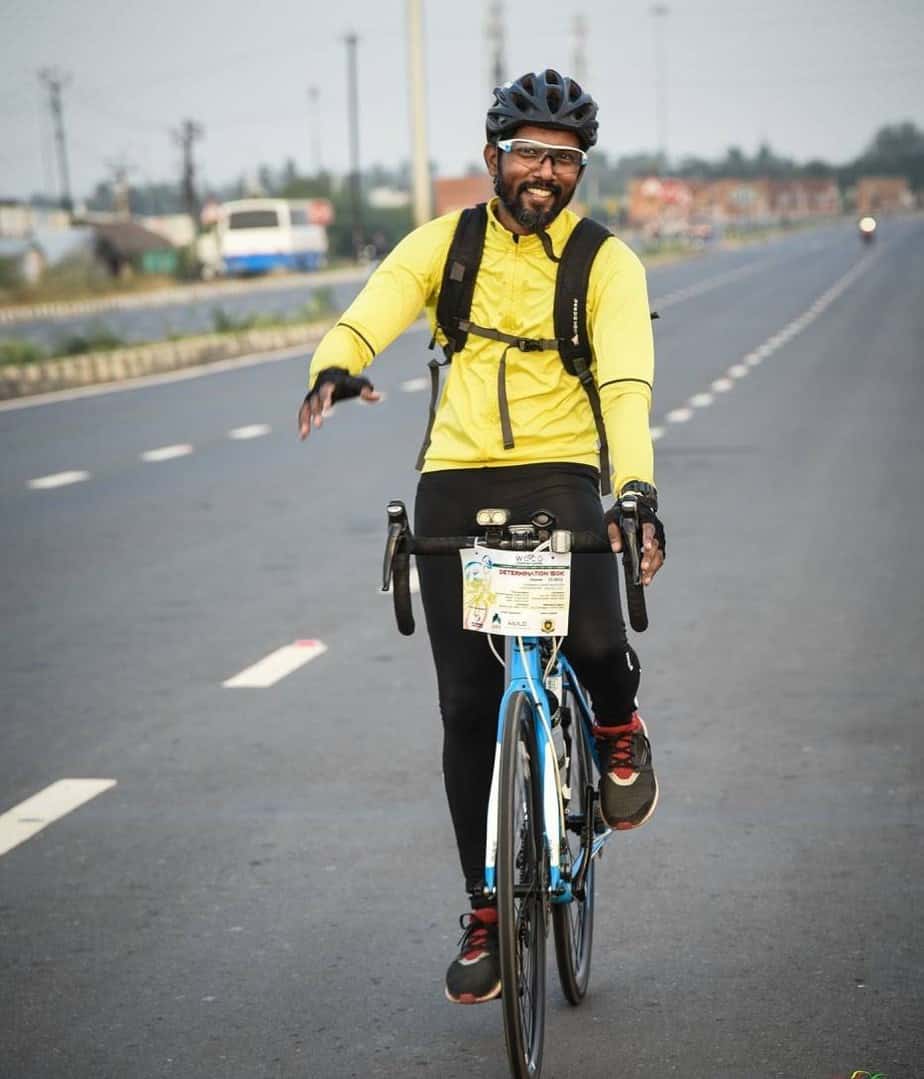
Felix John, Bicycle Mayor of Chennai
As the Bicycle Mayor, what are your ambitions for Chennai?
To put to use the existing bicycle tracks in Chennai, to ensure new tracks and cultivate the habit of cycling among citizens.
BYCS aims to ensure that fifty per cent of trips in the city are cycling trips. How do you plan to achieve this goal, given the current infrastructure for cycling in Chennai and safety concerns?
It is an ambitious target. We need to take the city’s infrastructure, culture and mindset of people into consideration. In Amsterdam, people’s movement ushered in an era of urban cycling; the city now has more cycles than the population. The city is planned in such a way that it is uncomfortable to use four-wheelers.
But, in India, we still take pride in owning a car. The cycle is considered a poor man’s vehicle in India. Over the years, the number of children cycling to school has plummeted in Chennai. The infrastructure is not conducive for cyclists. But are we putting the existing cycle lanes to the best use? With no takers, the first bicycle track laid at K K Nagar has become parking space. Parents are also concerned about the safety of their wards. Cycle ridership in the city will increase only when children re-initiate it.
On a scale of one to ten, how would you rate the cycling infrastructure of Chennai? And why?
Five. Chennai’s infrastructure has evolved only to cater to motorbikes and cars. The 17.5 km cycling lanes in the city, constructed under the Smart City project, are filled with potholes. A lot of the roads have defunct streetlights obstructing visibility for cyclists. Safety is the primary concern. A lot of cyclists were robbed of their belongings in the city.
What changes in the city’s NMT policy, do you think, will boost cycling?
It is too early to bring a policy level change. It is more of a chicken and egg situation. I cannot demand cycle-friendly lanes when there are no cyclists. Behavioural change among citizens can be a game-changer.
How do you plan to engage with the local government?
I have collaborated with organisations such as ITDP to understand the nitty-gritty of Chennai’s transportation. I haven’t made an effort yet, but I would like to team up with Chennai Corporation to motivate and engage the public in cycling.
What percentage of Chennaiites cycle? Do you have any data?
Cycling culture in Chennai started in 2009 and now there are more than 3000 active cyclists in Chennai, who pedal during leisure and to stay fit. This number is larger than other metros such as Bengaluru and Mumbai.
|
Want to get started, but unsure how to? Here are some tips from your Bicycle Mayor
|
What are the favourable roads for cycling in Chennai?
All the roads in Chennai are favourable for cycling in the early mornings. OMR used to be perfect for cyclists, but traffic congestion now makes it really difficult for the community. East Coast Road, Outer Ring Road, Loop road at Island Grounds, Sardar Patel Road are among the favourable roads.