A park unlike any other! The city is revolutionising play time for children with the Infinity Park in Santhome, Chennai’s first ‘inclusive’ park, which was opened to the public on December 17th. The unique sensory park is a haven for children with its design lending itself to playing by touch.
The park has been created to provide a space of leisure for all children, with or without any disabilities. The various elements in the park have been crafted to make it disabled-friendly and welcoming for children of all ages.
The project is a partnership between the Disability Rights Alliance and NGO Kilikili, and has been designed by CityWorks. It has been funded by the Greater Chennai Corporation and Chennai Smart City Limited. The goal was to have a play space tailored to the needs of children with disabilities; one that allows them to enjoy all the offerings without any hindrance to access.
“Govinda Rao, DC Works, was very keen to execute this project. It was his idea from the time he had served as DC Education. As far as the Smart City Mission is concerned, this aligns with the goal of improving access. Chennai is one of the cities with a comprehensive NMT policy and other elements that support greater access for all. Wherever possible, we would like to provide access to everyone. The park is a pilot to test these new ideas and if successful, it can be replicated across the city at various other parks,” says Raj Cherubal, CEO of Chennai Smart City Limited.
What the park offers
A sea of parked vehicles greets anyone turning into the 4th Trust Link Road in Santhome. The park is situated between the Amma Canteen and the State Resource Center for Inclusive Education under Sarva Shiksha Abhiyan. The resource center is a government school and a disability-therapy centre that also hosts a variety of workshops for trainers from all parts of the state.
The entrance is accessible by wheelchair for all. The colourful facades and murals in various parts of the park immediately draw a child’s attention as she enters the space. There is a tactile wall with tiles that have paintings embossed. The play area is divided into various sections, each with specially designed equipment.
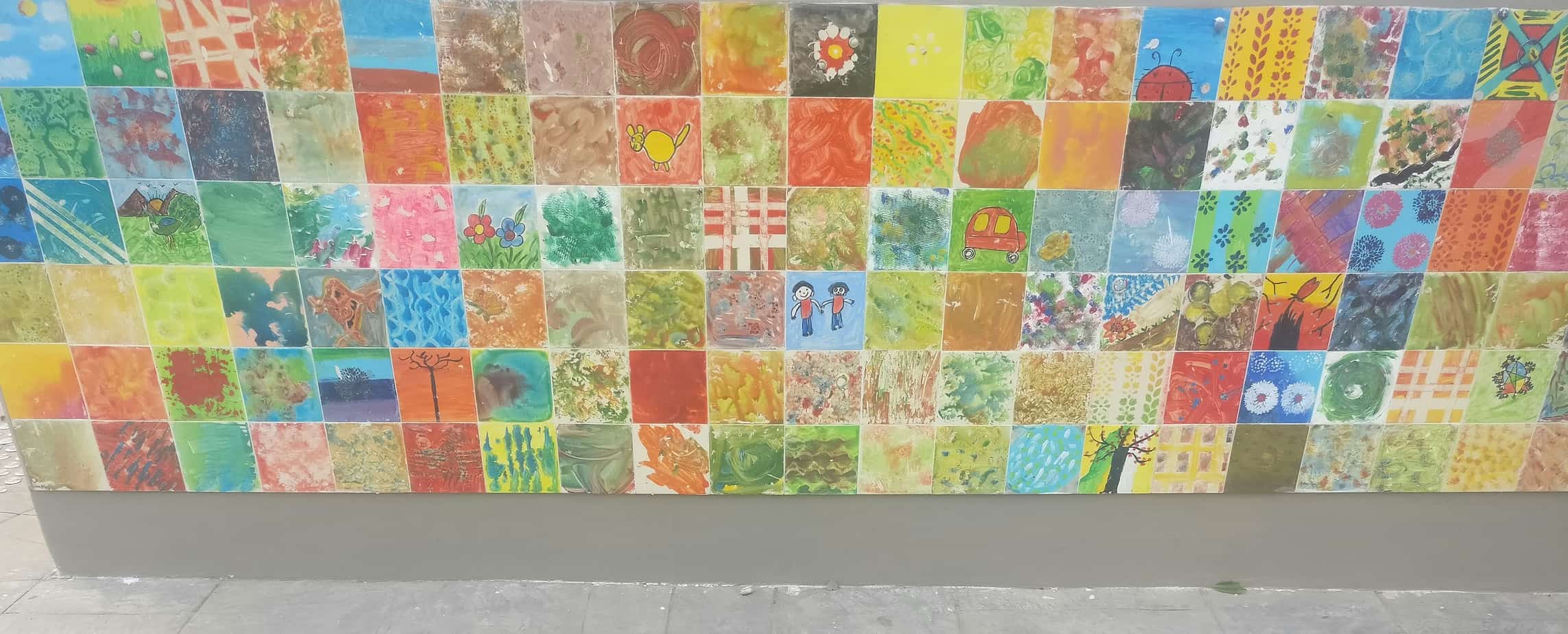
Tactile walls at the entrance to the park. Pic: Aruna Natarajan
The highlights of the park include an infinity walkway that comprises various elements such as sand, pebbles and fibre. There is also a sand bank that is accessible even to those who use a wheelchair. Auditory elements have been incorporated, with hung bamboo shoots combining to make pleasing sounds. There are games such as the aadupuliyaatam and Snakes-&-Ladders installed a small distance away from the main play area. A basketball court with hoops at various heights is also seen at the far end of the park.
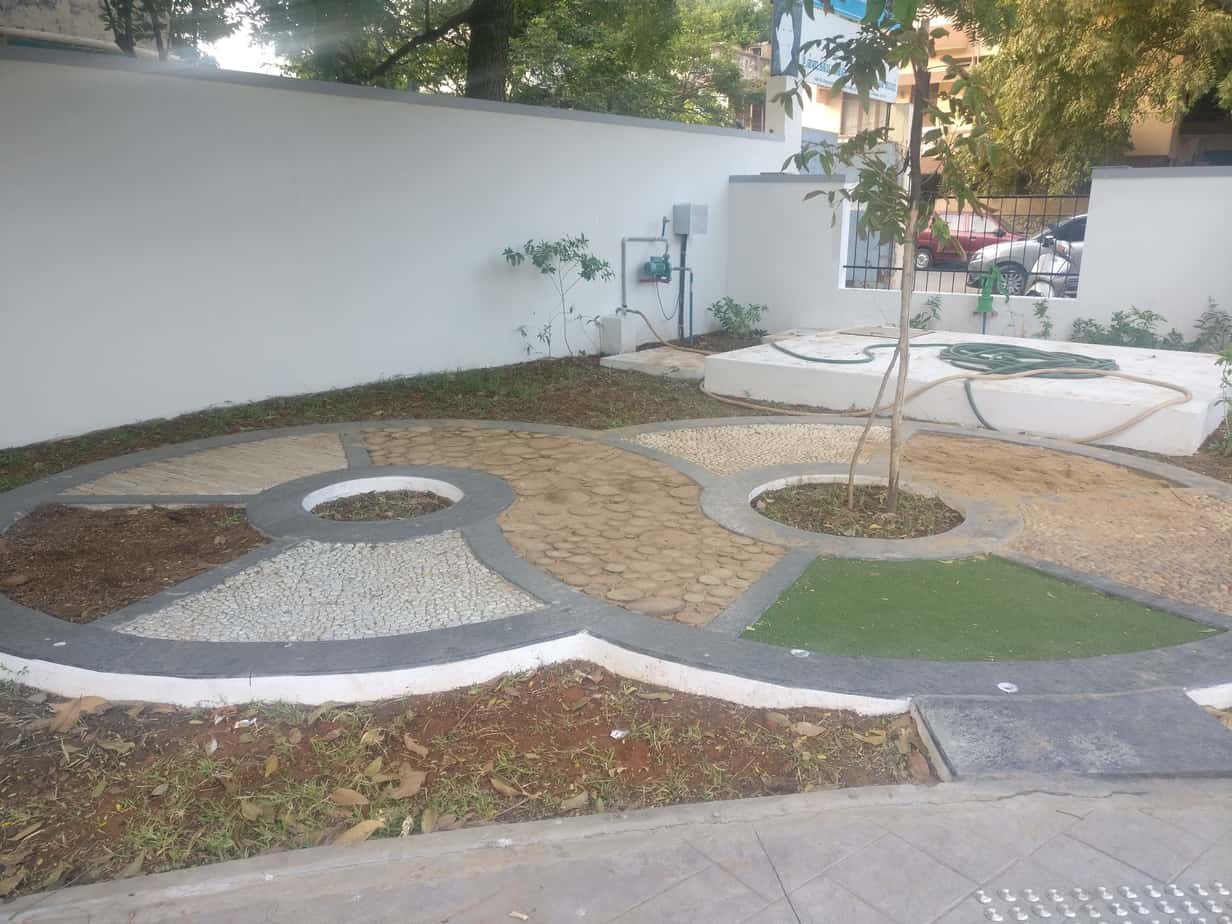
The infinity walkway with various elements such as pebbles, sand and fibre. Pic: Aruna Natarajan
The swings have been modified to accommodate wheelchairs and the merry-go-round too can has been placed at a lower level for easy access. There are ladders that require focus and concentration for use, designed to help children with ADHD. The park also has small blocks lined with pebbles, rubber and fibre that the children can leap between to get a better sense of distance, direction and depth.
The floor of the play area has a rubber surface to prevent any kind of injuries. The entire space is painted with vivid and welcoming colours in order to increase its visual appeal for children. There is also a herb garden in the works that will create a soothing smell within the park.

Blocks placed apart to help children judge distance, height and depth. Pic: Aruna Natarajan
Behind the scenes
The park has been three years in the making. The wheels were set in motion for Chennai’s first sensory park when the DRA approached Kavita Krishnamoorthy of Kilikili, an alliance of parents of children with special needs. Kilikili has been working to create inclusive play areas for the past 12 years with successful projects in Bengaluru and Nagpur among other cities.
“CityWorks is behind the design and execution of the project, with inputs from civil society to make the park accessible to all. The Corporation of Chennai was also very keen on making this a reality,” says Kavita.
On the vision behind the park, she says, “Ideally, every park should have features that are usable by all children and are accessible by wheelchair. This space was created as there are very few such spaces in the city, with the existing parks being unsuitable for children with special needs.”
While the park is growing in popularity, children enrolled in the adjoining state resource center have been among the first to benefit, having their own entrance to the park. “We will be gathering feedback from the people using the park over the coming months to make modifications to the design based on their experience. The Corporation has also been very open to getting inputs from users. The idea is to create this as a model park. The state resource centre sees many visitors from other districts and we hope that the park can inspire them to create their own.”
Scaling up
While the sensory park has been created from the ground up in an open space, making all existing parks inclusive and disabled-friendly might prove to be a challenge. Kavita says, “We were able to design various elements from scratch for the park to make it inclusive. Existing parks have many constraints, mainly free space. Then there is a challenge to create friendly equipment that can be used by all children. Hopefully this park can serve as a model for other parks which can embrace at least some of these elements in their design.”
The Infinity Park is a hit among visitors, both children and their parents. The mother of a 14-year old with symptoms on the autism spectrum says, “ We have been coming to the park for the past three days. I am unable to take my son to most places as people are not welcoming or friendly. He also gets very restless. But this park has been excellent for him. He really enjoys walking on the walkway and using the swing. It is close to his school, so I am able to bring him frequently. I hope there can be more such spaces in the city.”
With the Corporation of Chennai reportedly scouting for a location for a similar park in North Chennai, one hopes more children will be able to access inclusive play areas in the future.