On Bhogi, people discard old and derelict things and look for new things that signal change or transformation. At dawn, people light a bonfire with logs of wood, other combustible stuff (mainly knick knacks that are no longer useful at home).
We knew it was coming. The burning of random stuff in the name of tradition. The pollution on Bhogi day. The itching eyes, burning throat, breathlessness..
But it turned out to be much worse than last year. Probably because we actually have a winter this year. so cooler temperatures, combined with zero wind this morning, caused a dense impenetrable blanket of smog over the city this morning. What a nightmare start to the day!
Is this really tradition? Is this how we have always celebrated this wonderful festival of love and prosperity? Time for a rethink. Here are some pictures and comments from citizens across Chennai
“They really should have some government directive for this. Can’t breathe.” Padma Mahadevan, Thiruvanmiyur
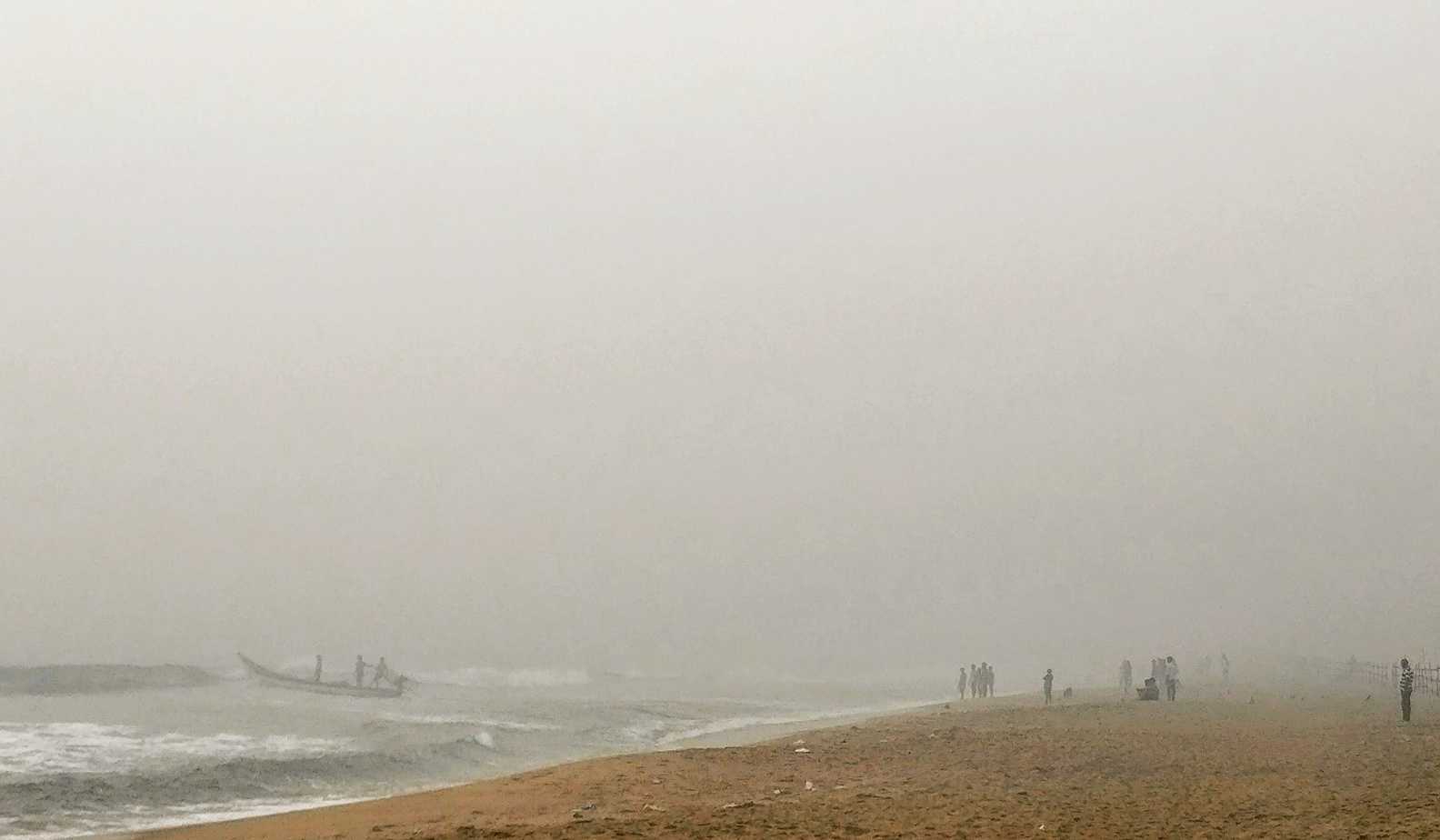
A gloomy smoggy morning at Thiruvanmiyur beach. Pic: Padma Mahadevan
“Does tradition have to mean pollution, health hazard and public inconvenience?.. When there are a million beautiful, meaningful, and harmless ways to celebrate…”Anupama Shivaraman, Lloyds Road
“I should anticipate this and leave Tamil Nadu for a few days in future. This is hell for asthmatics.” Suma Jacob, Kotturpuram
“Two birds collided outside my window this morning. I have never seen anything like this before. Can you imagine how bad the visibility must have been? – Pradyun Iyer, Thoraipakkam
“So dangerous to be driving this morning. Even at 7 am, I can’t see the road ahead of me. Now I empathise with my Delhi friends.” – Archana Stalin, K K Nagar
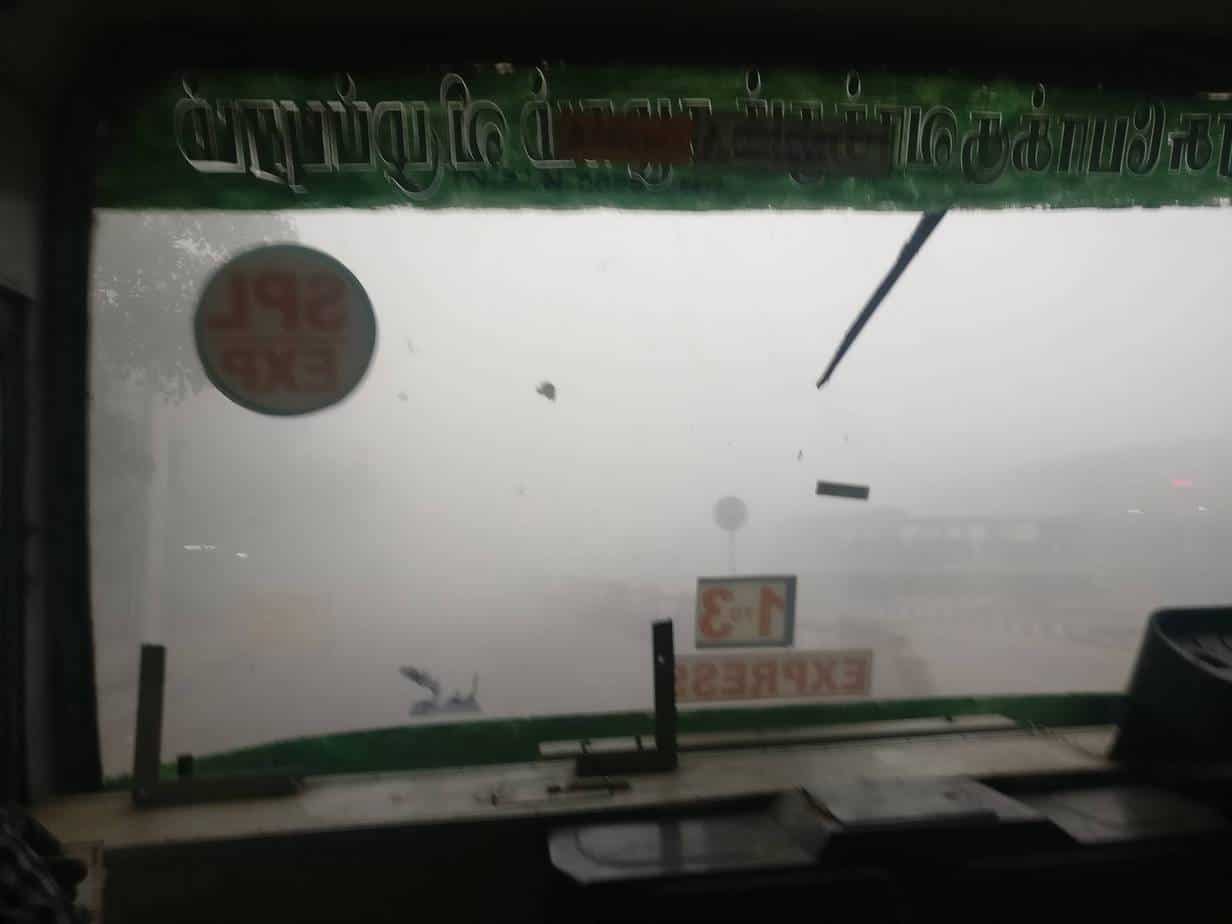
A view from a car navigating Koyambedu bus stand, near zero visibility. Pic: Archana Stalin
“At 10 am, the sun looked like the moon. Never seen this in Chennai before.” Vishwa Radhakrishnan, Madipakkam
You are inspiring my friend. Keep up the good work!