“In our current challenging situation, we’re taking life one day at a time,” shares Kusum Bhagat, an elderly tribal woman residing in Devichapada, a village near Film City in Aarey. Kusum, currently recovering from blood cancer, finds herself in an ongoing battle to protect her family’s ancestral farmland from being turned into a film set.
She talks about the struggles of her family with tears in her eyes, while standing on guard next to the farmland, worrying if people from Film City will start the construction work. “We take turns standing guard, and I’ve been on duty since this afternoon. They could arrive at any moment and seize our land,” she says.
According to Kusum, there were no prior notices or proper communication before the attempt to take their land, a claim disputed by Film City.
Aarey is a 1,300-hectare forest area near Mumbai’s Sanjay Gandhi National Park (SGNP) in Goregaon, known as the city’s green lung. It’s home to various plant and animal species that coexist with tribal communities. Established in 1977, the Film City, or Dadasaheb Phalke Chitranagari, on Aarey’s outskirts, is one of India’s largest film studio complexes, spanning 520 acres.
However, the city’s development plans have often clashed with the rights and livelihoods of the tribal communities resulting in conflicts with authorities over the years.
Ancestral farmland
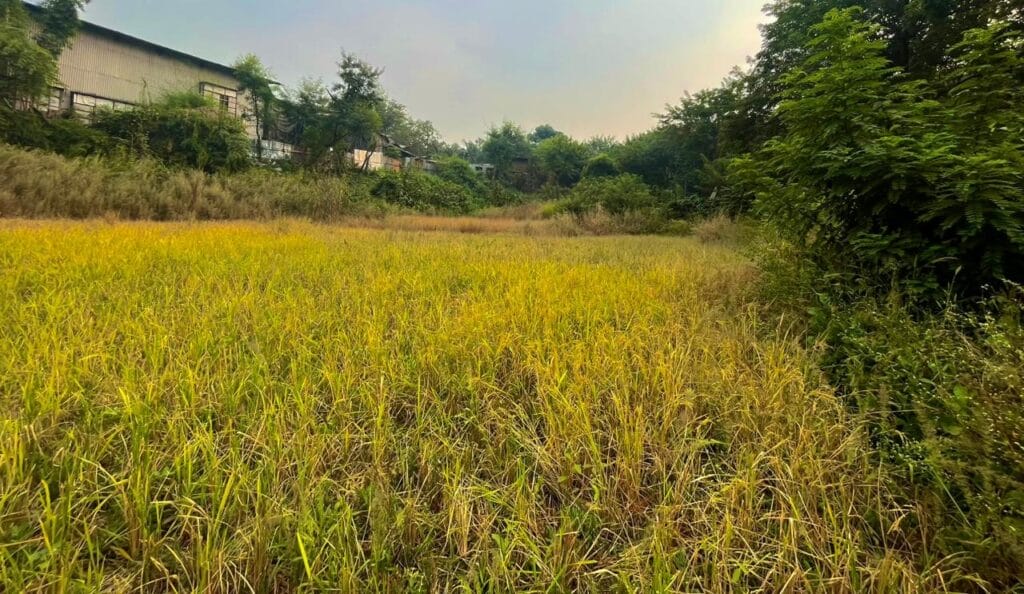
The farmland, as per Kusum, is the property of her husband, Kisan Bhagat. They’ve been cultivating it for as long as they can recall, growing rice and vegetables every year. “Last year, we couldn’t cultivate any crops because I was battling cancer, and the family was preoccupied with hospital visits. This year we cultivated rice, but the film city authorities told us not to grow any crops on our farm,” she said.
The Film City claims ownership of the farmland and intends to construct a set for a TV series. Kisan previously worked in the Film City’s security department. His son says, he was suspended over this land conflict. “My father refused to surrender the land for the film set, leading to his suspension by his employers. He’s now unemployed, and we’re on the verge of losing our land,” his son, Nitin Bhagat said.
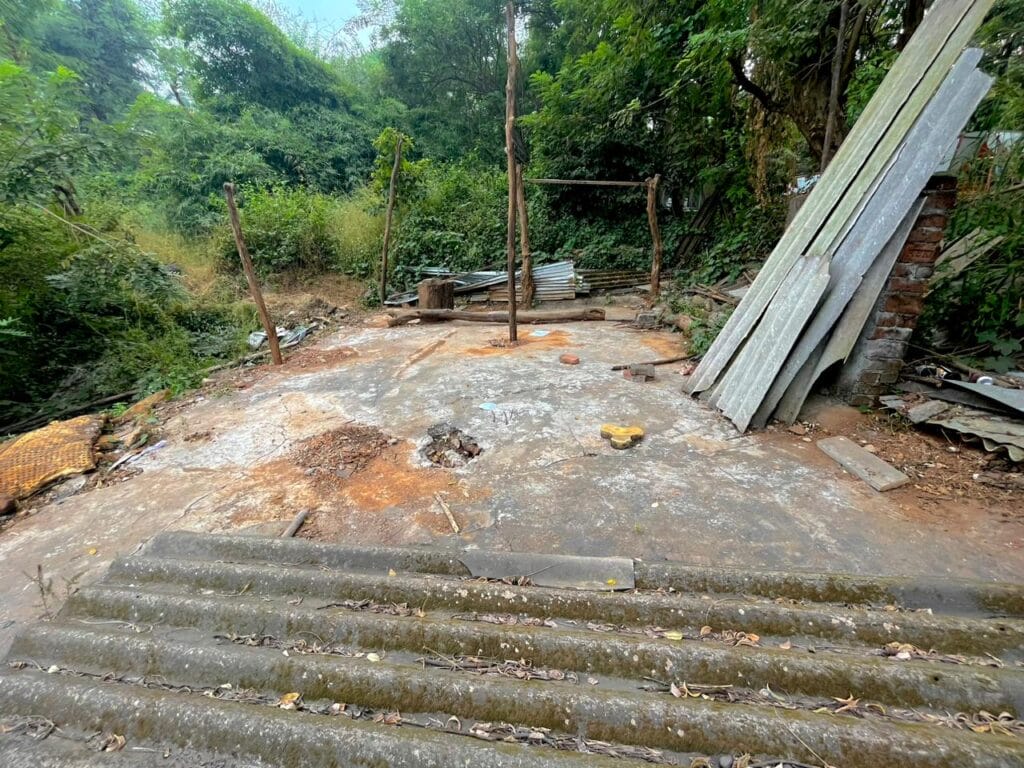
Next to the farmland, there was a storage shed where Kisan and his family rested and had their meals during farm work. This shed was also destroyed by the authorities.
Law that protects the tribals
“Despite residing in the same area for generations, many tribals lack the necessary documentation to claim land ownership, with some even lacking registered identity proofs. However, the Forest Rights Act (FRA), 2006, was enacted to protect their rights and prevent displacement,” said Amrita Bhattacharjee, an environmental activist, who is part of the Aarey Conservation Group (ACG), and has been working for the tribals of the city.
The FRA recognises the rights of forest-dwelling tribal communities and the forest resources on which these communities are dependent for a variety of needs, including livelihood, habitation, and other socio-cultural requirements. The Act encompasses the Rights of ‘Self-cultivation’ and ‘Habitation’, which are regarded as individual rights and community rights.
According to Kisan Bhagat, the Film City could give him compensation and take his land but he does not want to give up on his land as he has the right to protect it.
Read more : Aarey tree felling: A reluctant green signal allows MMRCL to axe more trees
Legal action
Kisan and his family lodged a complaint with the Aarey police against the Film City authorities, alleging that they had forcibly entered his property and conducted a bhoomi pujan (groundbreaking ceremony).
However, the Aarey Police stated that no FIR had been registered in response to their complaint.
“Kisan Bhagat and his family have submitted their individual land claims under FRA 2006. Until the government reaches a decision on these claims, no one is authorised to access the land. Any such entry would be considered a criminal offence under the Atrocities Act,” said Amrita.
“Additionally, there are legal documents dating back to the 1960s (before the establishment of Film City) that prove their ownership of the land. These documents show that they have paid land taxes to the Aarey CO’s office and are considered as a valid proof of their ownership,” she added.
Present predicament
Kisan Bhagat and his family are fighting to keep their ancestral land, a struggle shared by many tribal families. As they wait for their land claim to be approved, the Bhagat family stands guard, hoping to secure their future.
According to Amrita, the Film City authorities have currently stepped back from commencing work on the farmland. However, Kisan and his family continue to be concerned that the authorities could arrive at any moment, prompting them to take shifts in guarding the farmland.
“I worry for my children and grandchildren. We are not highly educated, and our farm is our lifeline. If it’s taken away from us, we are uncertain about our long-term survival,” says Kusum, who has been on guard since morning and will remain there until nightfall.