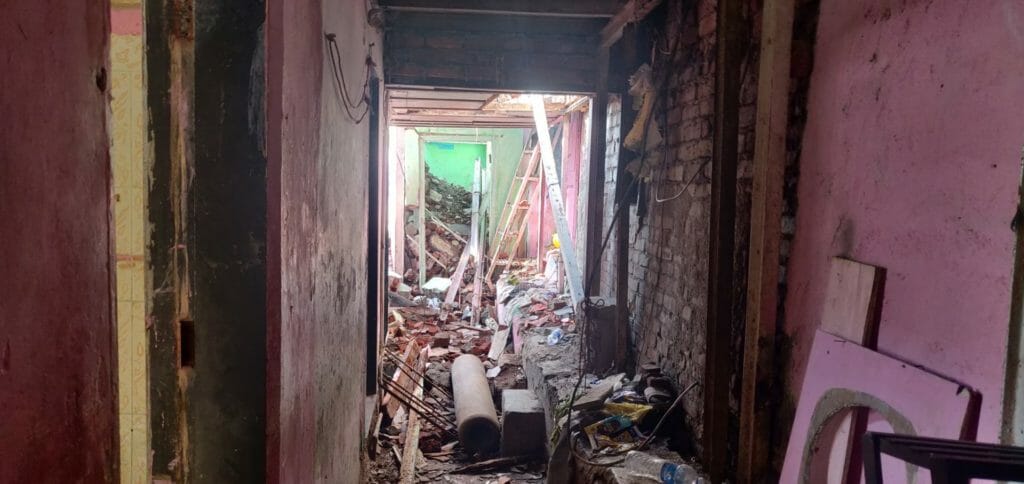
The Brihanmumbai Municipal Corporation (BMC) began the demolition of illegal structures inside the 800-year-old Mahim fort on October 13th to begin restoration work. However, not all of the 267 families are happy about the decision of the civic body to rehabilitate them to Malad or Kurla. Many believe leaving the G/North ward, under which Mahim fort falls, would deprive them of their livelihoods and make access to schools difficult for their children.
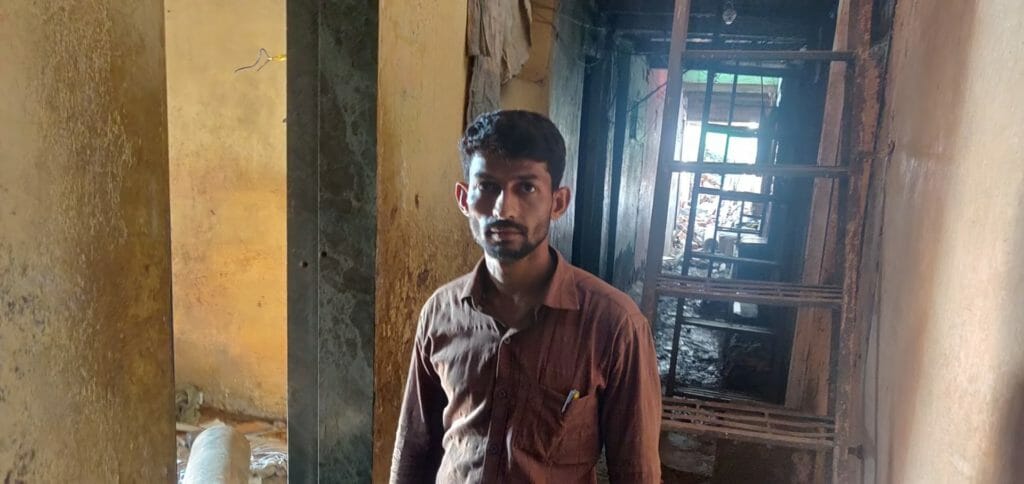
38-year-old Samir Sheikh, who has been living in the area all his life, points at a demolished house inside the Mahim fort and says his family lived there when he was born. “We later moved to another house within the fort,” he says. Families like that of Sheikh have been living inside the Mahim fort premises since the 1960s and 1970s. Out of the total 267 families, 222 are considered eligible for Project Affected Persons accommodation.
This is for the first time since independence that the fort is being restored to its original glory. After the demolitions, BMC will appoint a heritage consultant to survey the area and come up with a detailed restoration plan and cost.
Spread across an area of 3,796 sqm, the fort is currently under the control of the customs department. It is a protected structure under the Maharashtra Ancient Monuments and Archaeological Sites and Remains Act, of 1960. The fort was built in the 12th century by king Pratap Bimb and was an asset during wars, as it is set up along the Arabian sea. It was briefly controlled by the Portuguese before it went to the British.
Mahim Dargah helps with food, income
Walking distance from the fort is another historic monument, the Mahim Dargah of Sufi saint Makhdoom Fakir Ali Paru (also known as Makhdoom Ali Mahimi), built by the Sultan of Gujarat, Ahmed Shah, in 1431.
“I look after other people’s shoes at the dargah and make a living,” Samir says. Like him, many who live at Mahim fort are either employed with shops around the dargah or have their small-time businesses in the vicinity. Residents in the area say people started living here one after the other because of the dargah.
Wasim Qureshi, who works as an electrician in the area, says, “Rich people don’t live in shanties, the ones who live here are low-income families. A lot of people depend on the dargah for their two-time food.”
‘Our children go to schools near Mahim fort’
The concern for many is a large amount of donation that they may have to pay schools elsewhere to get their children enrolled. “Children of all those who will be rehabilitated go to school here. They had told us they’ll help with admissions in schools there but nothing like that has happened,” Qureshi says.
The families say they do not have a problem vacating the houses but want alternative housing in the nearby area. “We would happily leave then but now we will be compelled to spend Rs 100 a day on commute plus they are asking for maintenance charges in the new building. We can’t afford all of that,” Sheikh says.
Read more: A walk around Lallubhai Compound shows what authorities forget before rehabilitating families
Claims of broken promises
Aaditya Thackeray and the BMC has been planning for it since 2021. In November last year, the civic body surveyed to estimate the number of encroachments that will have to be demolished.
Both Sheikh and Wasim claim that at the time Thackeray had promised them rehabilitation in the same vicinity. “Now he is gone, that government is gone. BMC told us this (housing in Malad or Kurla) is what they can offer and asked us to take it or find something else,” Wasim says.
In August, Bharatiya Janata Party’s G-North ward president had written to Deputy Chief Minister Devendra Fadnavis requesting his intervention in the manner BMC has planned rehabilitation of the residents. “The residents of the fort have been living there for fifty years and their means of livelihood, children’s school, and medical treatment facilities are near the fort. It is because of this that the inhabitants of the fort are facing a lot of hardship as they are being shifted to Malad,” the letter reads.
Not all are unhappy
48-year-old Mohammad Salim is a flower seller near the Dargah. He is a former resident of the Mahim fort slums and now lives in a building in Malad. “It is true that there are now additional travelling costs and maintenance costs. But we are getting to live in a flat,” he says.
“Some people can’t afford it so they have a problem with it. But many like me can. We have lived in shanties all our lives, now we will be away from the hassle that comes with it,” he says.
Assistant Engineer on the project, Jagannath Gavhane says, “BMC can only allot them houses where land is available. Everything has been done with their approval. Some of them have also been allotted houses in Kurla which is not very far from the fort.”
Gavhane says all illegal structures inside the fort are situated in narrow lanes where no machinery can reach. “It’ll all be manual demolition and so it’ll take a little over a month to clear up everything.” The extent of damage to the fort because of illegal housing will be known after the demolition work is completed, he says.