“It was 12:05 in the night. Some people were awake, some were asleep,” says Rafiq Shaikh, recounting the landslide that struck Kurar Village in Malad on July 2nd, 2019, killing 32 of his neighbours and washing all their houses away. “It was raining heavily and water had entered our house, so we were awake. Perhaps that’s the only reason we made it out alive,” he says.
The retaining wall of the Malad Hill water reservoir, towering over their houses in Pimpri Pada and Ambedkar Nagar in Kurar Village, collapsed under the pressure of 300 mm of continuous rainfall. It was like a dam had been let loose and all the water it held rushed down the hillside.
Directly in its line of flow were around 300 kaccha houses.
“Ghar ka ghar pura saaf ho gaya (Whole houses were washed off),” he says.
For the next three years, Rafiq and 70 other families continued to call the area home; rebuilding their flimsy houses of metal sheets, tarpaulin and bamboo. Every monsoon, they lived with the fear of a similar incident repeating itself.
Finally, on August 22nd, they were shifted one km away, to a seven-storey Slum Rehabilitation Authority (SRA) building in Appa Padda, Malad.
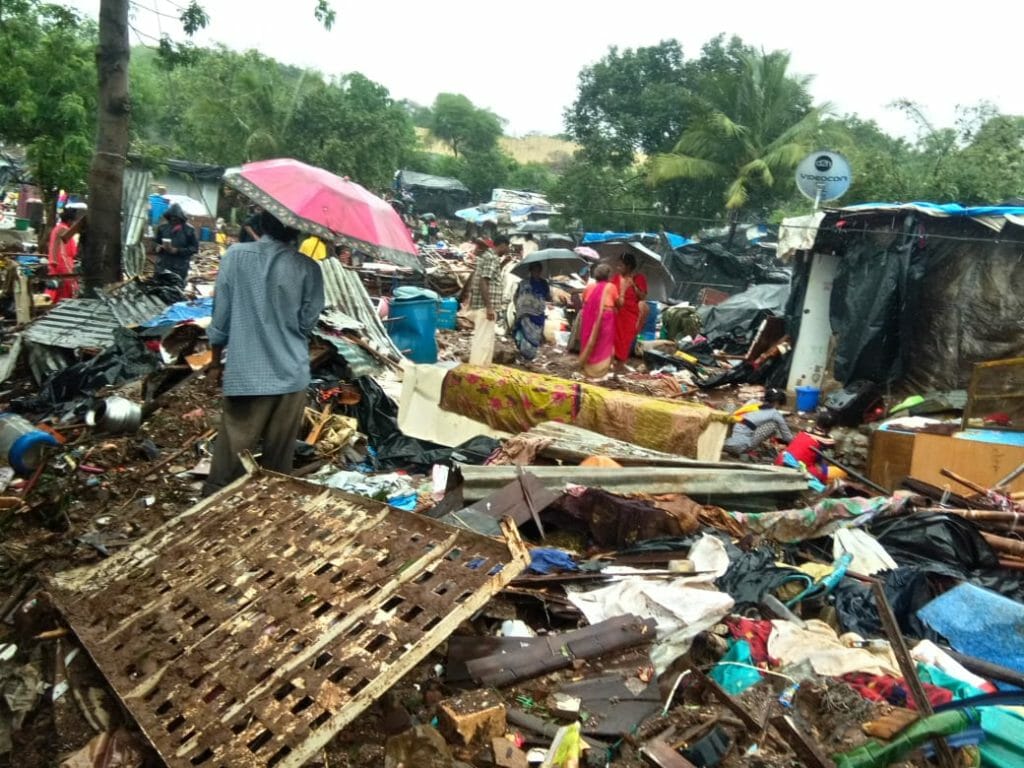
The aftermath of the landslide
The location of the landslide in Malad, Ambedkar Nagar and Pimpri Pada in Kurar Village, is on land under the jurisdiction of the Forest Department. While the retaining wall divides the reservoir on the higher side of the hill, nearly 4,000 hutments lie on the wayside. Many of them have been there for decades and have a longstanding rehabilitation promise, ordered by the Bombay High Court in 1997.
“Our houses are made of plastic and bamboo and the Forest dept doesn’t allow us legal electricity and water connections,” says Anish Yadav, a resident whose house was partly crushed by the landslide. “Half of our house broke, but in our area at least 100-150 houses washed away with the water.” Anish and his mother escaped death but were among the 130 people who sustained injuries.
The Maharashtra government, Forest Department and Brihanmumbai Municipal Corporation (BMC), at this point, acted promptly. The then-CM Devendra Fadvanis ordered an inquiry into the wall collapse; he directed a compensation of Rs five lakh for those who lost kin, to be doubled by the BMC. The government took the responsibility for all medical expenses and rehabilitation of those who suffered in the disaster.
Read more: A walk around Lallubhai Compound shows what authorities forget before rehabilitating families
Unfavourable rehabilitation
The favourable response was short-lived. Just as quick as the government took upon their rehabilitation, the BMC revealed the destination: Mahul, 30 km away and called a “dangerously polluted area” by the Bombay High Court.
Many residents, including Anish and Rafiq, refused. “The area is 20 km away from Chembur station,” he says, stating pollution, distance to work, and education of children as factors unfavourable for moving.
But despite the opposition, 86 families agreed to the move within two months of the landslide.
“They were in a state of fear due to the deaths,” says Bilal Khan, from the housing rights NGO Ghar Bachao Ghar Banao. “If they didn’t accept the house in Mahul, they also worried that they would not get a house anywhere else,” he adds.
During heavy rains, the residents were evacuated to municipal schools. This was far from smooth.
“We were made to stay in the municipal school for four months, but we were not given any facilities, food or water. We would have to cook at home, and take it to the school to eat,” says Rafiq. When the residents would return, they would inevitably find their kachcha houses in tatters, and have to get to fixing them again.
A sluggish process
For the remaining residents, rehabilitation was a while away. “They kept telling us, we’ll give it tomorrow, in two days, in ten, in a month, etc,” says Anish. “Sometimes it was a survey pending, or a verification, or the annexure,” he adds.
“The process takes time,” says Bilal, alluding to other rehabilitation projects in the city. Every step is time-consuming; from getting the government on board with the rehabilitation, implementation, and bureaucratic formalities. That the landslide in Malad fell within forest territory added an extra layer of coordination. The Forest Department facilitated the rehabilitation, and the BMC provided the houses.
Vinod Mishra, a BJP Corporator from the P/North ward, blames the MVA government in power for the three-year delay. “In 2019, the then-CM Devendra Fadvanis reserved an area in the Aarey Forest for them. The process and annexure took up to three months, but then the government changed,” he says.
Frustrated with the years in limbo, hopeful residents began dharnas (protests) in 2021 for almost 100 days. They camped outside the MLA Sunil Prabhu’s office in 2022, only to be detained by the police. Both Anish and Rafiq credit Bilal and Vinod for helping them.
“When the government changed again, they took it up immediately,” says Vinod.
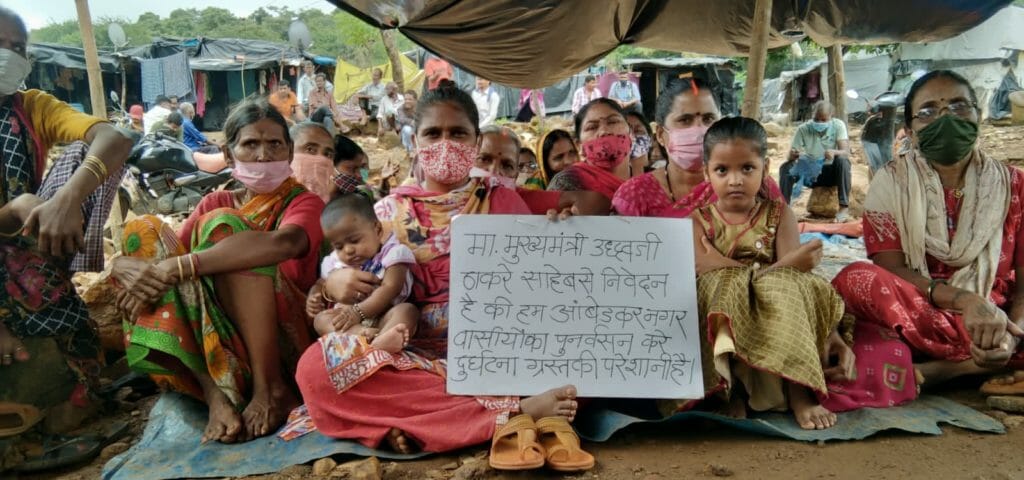
The situation right now
In their new 225 sq ft houses, the rehabilitated families can now breathe a sigh of relief. A concrete structure protects them, and they now have water and electricity connections. But several things remain amiss.
“The BMC has given the houses to us temporarily and excluded us from the society,” says Anish. “Thoda sa bhed-bhav kiya hai (They’ve discriminated against us a little),” he chuckles. The clause leaves them with no say in the management of the society.
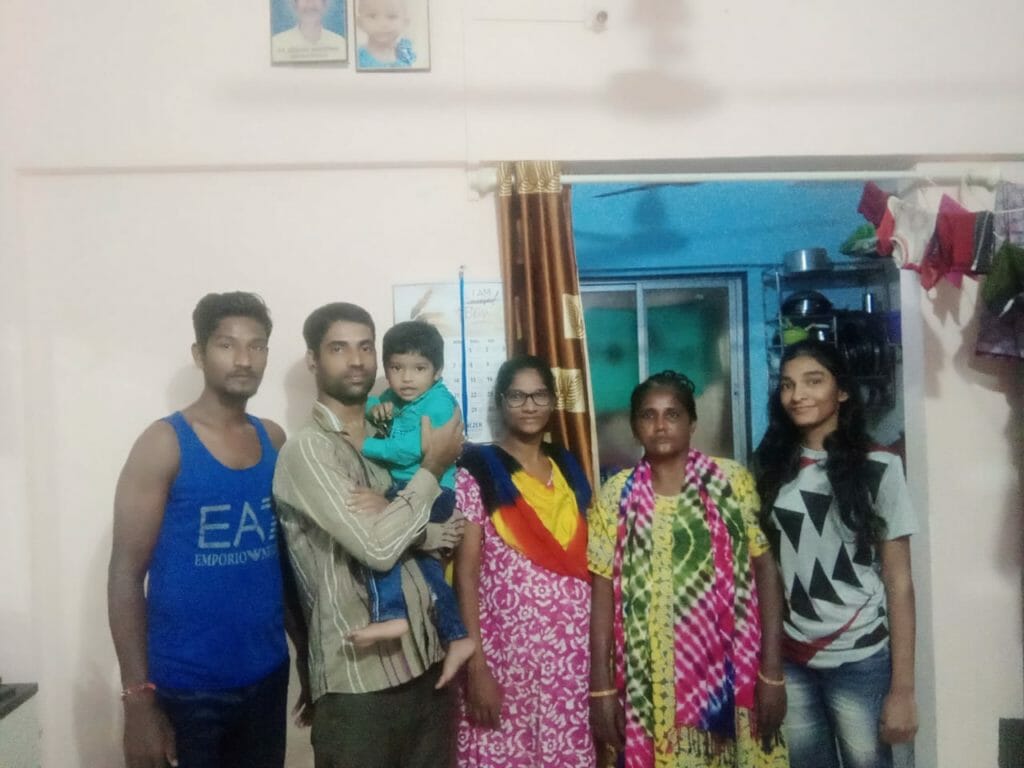
Vinod insists that although temporary, the accommodation is more or less permanent; the residents won’t be moved out until they are given permanent rehabilitation elsewhere, which is unlikely. At GBGBA, Bilal plans to raise the matter in court, asking for a reversal of the society order and a guarantee of permanent housing. Once done, the organisation will shift its focus to the families that stay stranded in Mahul.
Sanjog Kabare, assistant municipal commissioner of P/North ward and G Mallikarjuna, chief conservator of forests, did not respond to repeated calls.