Ketan Kothari, his wife and his neighbour, are visually-impaired and above 45 years of age. When they tried to approach various centres for vaccination in western suburbs of Mumbai, they ended up going to three centres and got turned down for various reasons. The centres were too crowded with high risk of contracting the infection, no special facility for people with disabilities or simply did not have vaccines.
Kothari is one of thousands of disabled/specially-abled people, who are facing a number of difficulties while coping with the pandemic and now with vaccination. From accessing the web portals for registrations to requesting for passes for ongoing treatments, managing without caregivers and so on, Covid-19 has had an impact on this section of population that is yet to be understood fully.
“We could not register online as the site is not friendly for the blind computer users. Also, no state helpline is equipped to deal with the specific problems of disabled patients, their parents and caregivers,” says Kothari. “Disabled people, who cannot maintain social distance and need to perform their day-to-day work and who do not have any able-bodied assistant need the vaccine on priority but are left in the lurch. At these vaccination centres, treatment meted out to us (PWDs), depends on individuals, who are managing at that time. Some are supportive, some are not. I am very disappointed in the government of India for not recognising us a high-risk group and making vaccines available early on.”
Read more: COVID-19 second wave: Why no one saw this coming
The Government did not announce any special measures for persons with disabilities (PWDs) while announcing vaccines for senior citizens, or those with comorbidities. Among the categories were listed as co-morbidities, one was about disabilities such as multiple disabilities requiring high support needs or intellectual disabilities.
However, disability rights activists have been pointing out that PWDs are a high-risk group, and recognised as such globally, because of dependence on caregivers and inability to maintain social distancing. Rahul Ramugade, a wheelchair-bound cricketer and swimmer, says disabled people have been confined to homes for over a year and need to be assisted to receive vaccines even if they register. “Even if the centre is on ground floor and there are a few steps to be climbed we have to call people to lift the wheelchair and take us, which compromises Covid precautions. Special provisions and facilities, such as time slots, are needed otherwise the risk of contracting Covid is very high.”
Tony Kurien, who is visually-impaired, says people like him find it hard to maintain social distance because they rely on tactile cues for mobility. He says, “There is a correlation between disability and poverty. It is highly likely that most disabled people are not well-off. How will they pay for this in private hospitals and how will they manage the crowds in general hospitals?
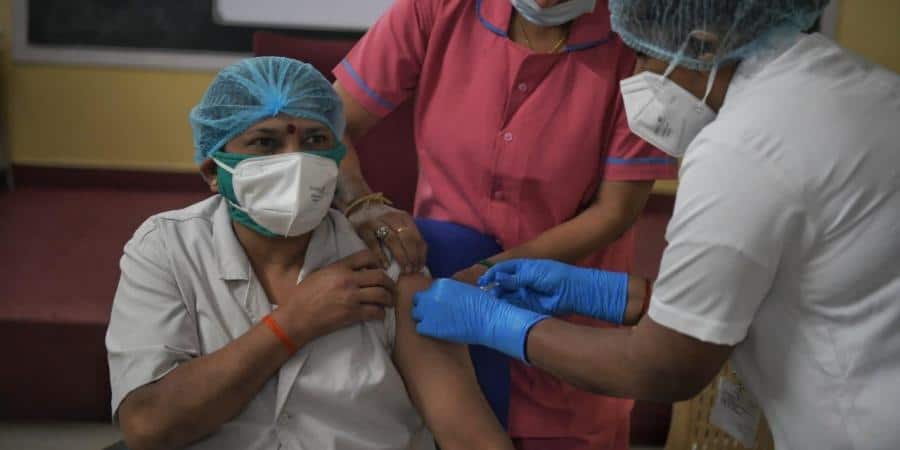
Helping people with disabilities
Recognising these challenges, Adventures Beyond Barriers Foundation, has organised a vaccination drive for People With Disabilities in Mumbai after May 1, when vaccination opens for all above the age of 18. “Persons with Disabilities (PwDs) have been the world’s worst-affected minority during the current pandemic. Along with being highly susceptible to COVID-19, PwDs are struggling to get vaccinated due to immense logistical/ financial issues. Adventures Beyond Barriers Foundation (ABBF), a non-profit committed to disability inclusion and empowerment is working to facilitate the vaccination process for PwDs living in Mumbai. We are arranging all logistical support to ensure hassle free experience at vaccination centres and specific vaccination camps for PwDs and their caregivers who meet the eligibility criteria,” the Foundation said in an appeal.
Divyanshu Ganatra, founder of ABBF, who is India’s first blind solo-paraglider and a neuro-scientist/psychologist, says they are tying up with hospitals and are willing to do partnerships to conduct camps in specific locations too. “The spectrum of people with disabilities is huge and everyone has unique challenges. From autism to those who are immobile, everyone faces unique challenges and are extremely vulnerable to the pandemic. We will try to vaccinate as many as we can with the help of hospitals. Presently this is for Mumbai but if we get enough funds and are able to connect with hospitals and volunteers in other cities, we will organise in other cities too. It is a financial and a logistical challenge for PWDs.”
Siddharth, who is wheel-chair bound and is helping Ganatra to organise this drive says, “It is important to recognise the needs of many PWDs for medical treatments on a daily basis. Vaccinating them and their caregivers will go a long way in protecting them from catching Covid 19 infection. Most of the caregivers, who are constantly with PWDs for all the tasks, don’t have the financial capacity for vaccination in private hospitals. They should also be recognised along with PWDs for getting the vaccines as soon as possible.”
ABBF’s appeal for registering with them for the vaccine is mentioned below.
(To get this support for a PwD, fill in the form below and our volunteers will get in touch with you. *If you are, or know a person with a disability in Mumbai who needs COVID vaccination, please fill in this form:*
https://forms.gle/1bJGMNrUXR4DREiWA If you have trouble filling the form, please call our volunteers on the following numbers: Charmaine : 9820249152, Vaani : 9987021213)
They are also raising funds for organising this drive and other Covid relief work. The link to that is also mentioned below. https://abbf.in/project/Covid19-pwd-relief
Also read: