With consumption demands growing like never before, industries are rising in every corner of the world to meet our ever-growing wants. Of course, it is nice to be able to afford and enjoy everything we desire. All seems good till we cast a glance at the enormous amounts of waste generated by the intensive consumerist process.
In India, many of the socio-cultural and religious practices we follow often result in a lot of waste and mess.
As we leave the January festival season behind, we find spring fast approaching.
Colours and joy
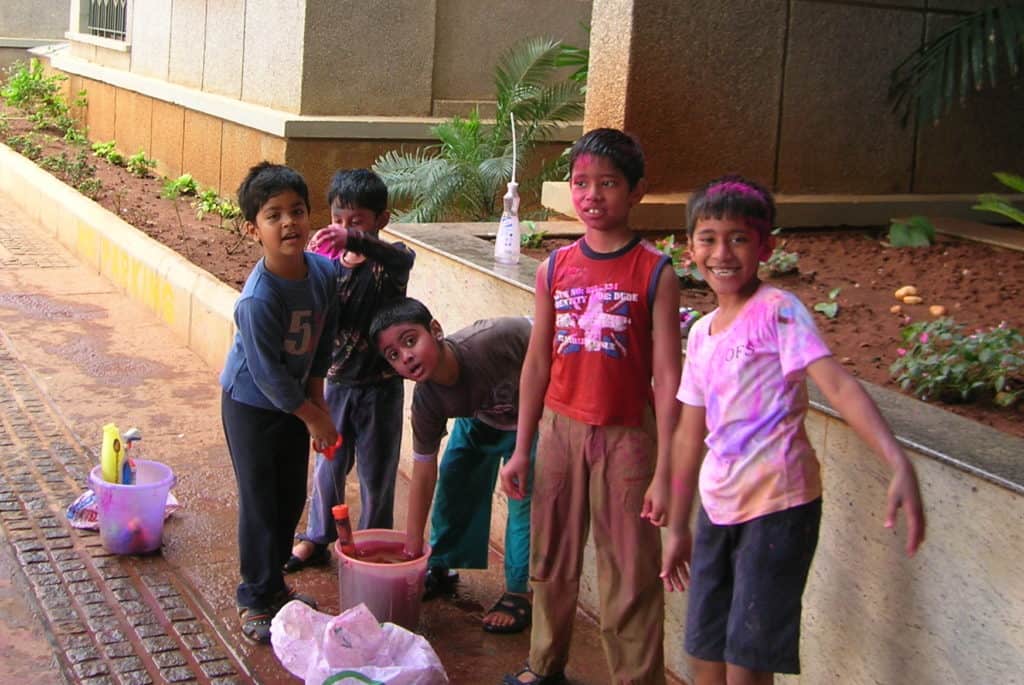
Holi, the festival of colour, is one of the important festivals in March. It is celebrated with coloured powders and coloured water. Over the years, water gun and balloon battles have become common and in the weeks leading to Holi, we find the local shops stocked with a variety of options.
Small Made-in-China plastic packets have replaced balloons. Filled with water, the packets are chucked with force and they usually burst on impact. Painful stings, wasted water, and there’s a whole lot to clean up.
We are at an environmental precipice now, but before we fall off, there are many good Samaritans, doing their bit to curb the ill-effects of dangerously high interference with the environment.
Last year, this time, the pandemic was still not quite upon on us in Mumbai, so we were lucky to have been able to celebrate it, but in a different way.
Read more: Photo essay: keeping Diwali diyas burning all year long
Natural Holi colours
The residents of Riviera Tower in Kandivali East decided to play Holi with natural colours. Chemicals and toxins present in artificially manufactured colour are harmful to the skin and they inevitably cause damage to the environment. We keep reading about it but most often do nothing. Instead of trying to source the natural colours, they decided to make their own colours – using flowers!
Weeks before the festival, residents started procuring “pooja” flowers and garlands that were offered to the gods and discarded – from houses and temples in the neighbourhood.
For many evenings, the children of the building were lured away from balloon throwing, and involved in the process of preparing the flowers to get converted to powder.
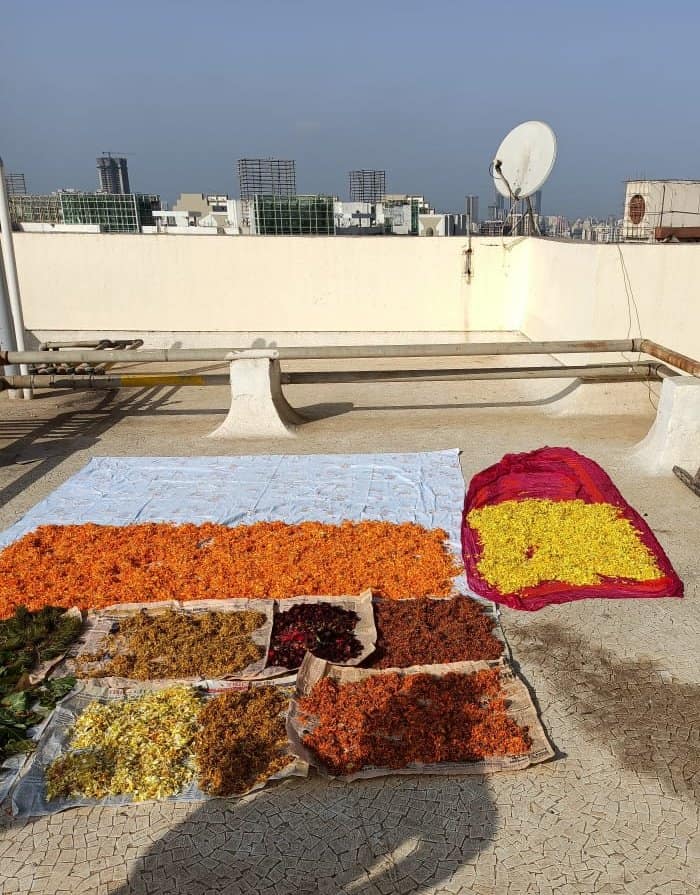
First the flowers needed to be removed from threads of the garlands. Then they were sorted by colour. The petals – orange, yellow, white, pink, red, were separated from the calyx and stalks, that were used to give the green colour.
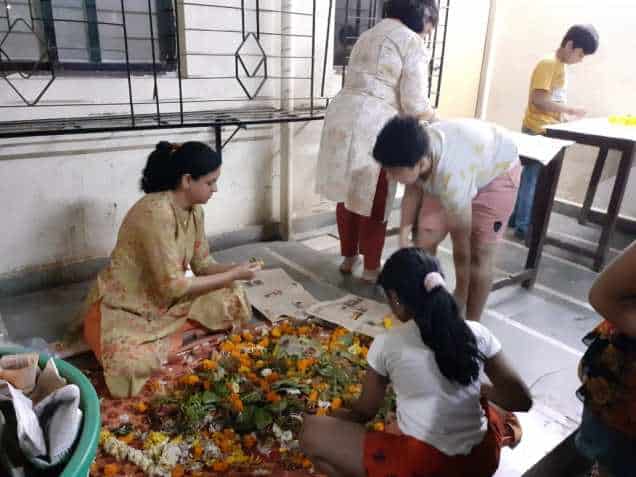
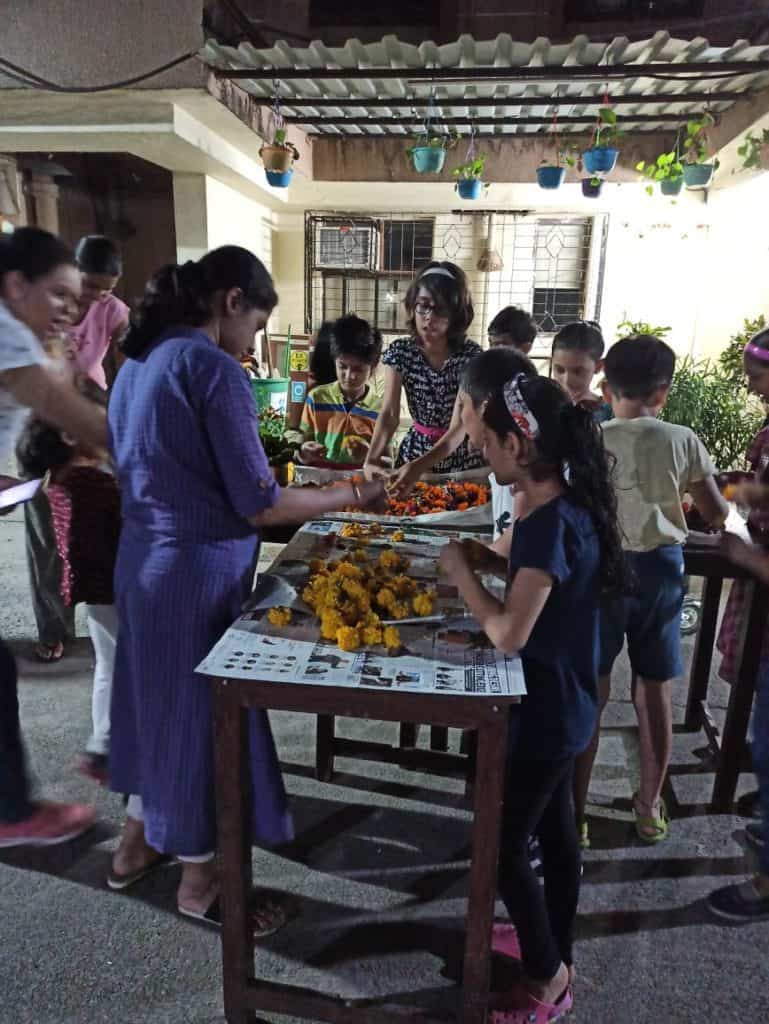
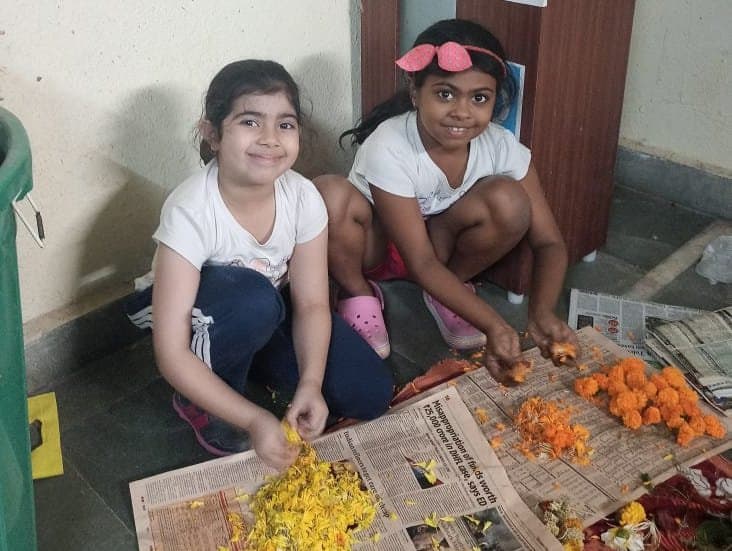
The flowers were laid to dry on the building’s terrace for 3-4 days. Once dry, they were ground into a powder. We found that if ground along with small quantities of flour it gave the powder some bulk when using it like “Holi” colours.
The residents of the building said that these natural homemade colours looked and felt exactly like what they were used to. The Holi celebrations were as memorable as previous years, and definitely more responsible.
Make your own colour
As Covid-19 is still all around, Holi this year is likely to be quite subdued. We’re better off without any big group parties, and definitely safer with natural colours and staying water-free.
It’s a good time to start the process of making your own Holi colours so that by the time the festival is here, you are all ready and set.
Also read: