In considering sustainable urban mobility as a solution to urban transport, one parameter that is constant is the Volume to Capacity ratio or V/C ratio. Why is this? Traditionally, transportation engineering in urban areas has taken a bottom-up approach. In other words, it follows an infrastructure supply-based approach, and critical to this is the V/C ratio.
This ratio is calculated using Passenger Car Unit (PCU) for every road in the given urban area to identify hotspots of congestion, so as to figure out infrastructure-based interventions like road widening, flyovers/underpasses, elevated road corridors, etc.
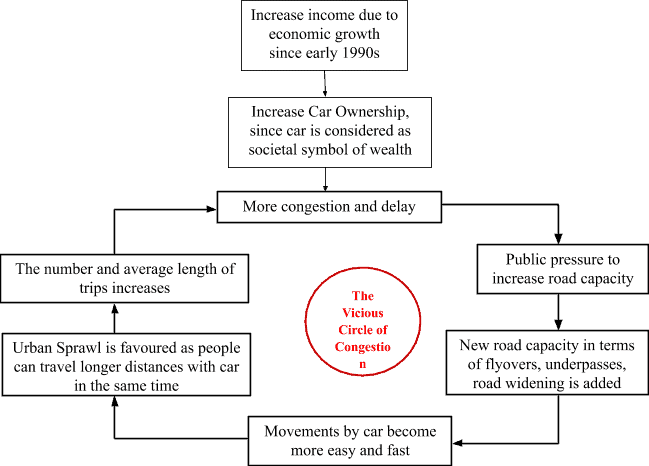
But over time, such interventions have proven to be only short-term solutions, and hence, not sustainable in the long run. This approach does not solve the problem of traffic congestion; instead, it only shifts the point of traffic congestion from one location to another.
Moreover, this also encourages higher personal vehicle ownership and use (cars, two-wheelers, etc.), and results in more kilometers travelled by motorised modes. This further results in higher petrol and diesel consumption, leading to higher tailpipe emissions of pollutants. Ultimately, citizens face negative health impacts due to higher exposure to pollutants, thereby bringing down the liveability of cities.
Current car ownership levels in Indian cities is still much lower than the saturation levels observed in developed economies like the USA. Road infrastructure measures adopted only lead to increased car ownership and usage. This is the primary reason why such measures fail, as extra road spaces created get filled within no time.
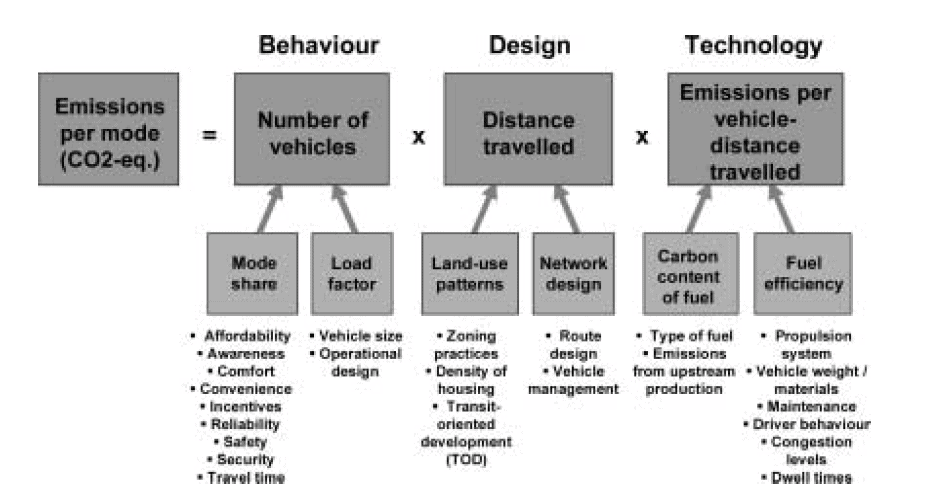
The vicious circle of congestion in Indian cities created due to a infrastructure supply-based approach is detailed in Figure-1, whereas figure-2 shows the framework for identifying and evaluating Green House Gas (GHG) emissions from the transport sector.
Considering these factors and taking a cue from the National Urban Transport Policy (NUTP) of India — ‘focus on moving people rather than vehicles’ — it is high time to abandon this bottom-up and supply-centric approach using PCU-based V/C ratio, and adopt a predominantly top-down approach with primary focus on active management of travel demand.
This top-down approach essentially focuses on minimising the total vehicle kilometres travelled (VKT) by all motorised modes. Hence it will also make cities more liveable.
Keeping this in mind, the following questions become essential during the review and selection of transport improvement proposals in any Indian city, including Bengaluru.
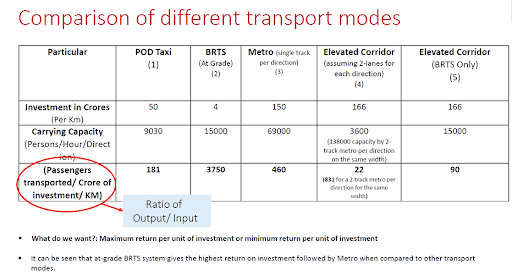
- Maximising returns on investment: What would be the increase in person capacity – in terms of the number of passengers carried per hour per direction (PPHPD) – per unit of investment made in the proposed transport intervention? This parameter ensures value for the money invested in creating infrastructure, by maximising the person capacity gained. For an example, see Figure 3 below.
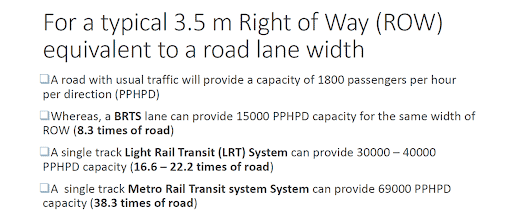
- Scaling the investment: What is the increase in person capacity, in terms of passengers per hour per direction (PPHPD), per unit of space width added by the proposed intervention? This parameter ensures that we maximise the use of additional space through maximum person flow. Take a look at Figure 4 below.
- Impact on fossil fuels: What kind of effect will this have on fossil fuel consumption, from an ecological standpoint?
- Impact on pollution: How will this affect air and noise pollution in cities where this is implemented?
It becomes vital to answer these questions scientifically and objectively to arrive at urban transport interventions that are sustainable. Unbiased discussions for sustainable mobility solutions will not only solve core issues of congestion and travel time delays, but will also have the potential to significantly arrest pollution and climate change.
Very simple and effective narration!!!