SUNDAY JAM is a uniquely informal musician’s meet that is part of an on-going endeavor by Guruskool (regd) to support musicians. Every first Sunday of the month, music bands meet at Guruskool’s farm space in Nelamangala (about 33 kms away from Bangalore city) to share, perform and jam.
Maraa, a media collective introduced theatre to the SUNDAY JAM in the month of October, and with this we hope to build a culture of theatre into this space. The idea was to create a space for short performances- self-written texts, stories, ideas, concepts and improvisations.
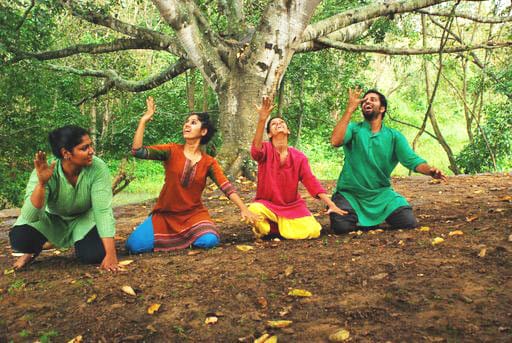
Towards building an arts collective, we hope to open the space to dancers, painters, designers, carpenters, sculptors, writers and other kinds of artists and complement one another. The lines between specializations and disciplines are blurring, we wish to create a space where artists can collaborate, improvise, critique, share and learn. We also create an open forum to bridge distances between the audience and the artist through discussion and dialogue.
We believe that there may not be one definition for an artist or an art form. We have witnessed theatre performances by scientists, a theatre group comprising of engineering professionals, activists and theatre artists. Over the months, we hope that the emerging community will try to re-look at art and its manifestations.
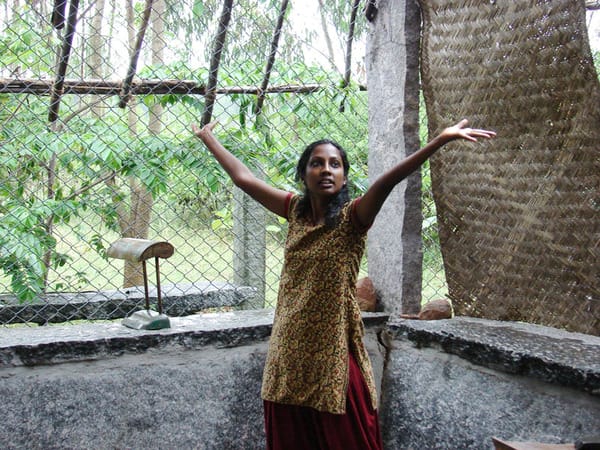
This is a process that you can contribute to, decide along with and take ownership for. If you wish to perform, express, share, listen, watch, please get in touch! These open performances could be self devised and can last anywhere between 5 seconds to 15 minutes. We are also open to readings, talks and films on topics of your interest. Call us to confirm participation.
The second theatre jam is round the corner, November 2nd. Artists and participants meet at the farm in Nelamangala around noon and organically unwind. Support the idea by riding out there, engaging with performers and thus supporting theatre. Performances will begin by 12:30 pm at the Guruskool Farm.
Ride with the performers:
The performers leave town from BMTC Bus stop, Platform 22 to Nelamangala Bus stop. on 2nd November, at 10.00am. There’s a bus every 10 minutes. Call us when you get here on 9880755875 or 9343763497. Email: info [at] maraa [dot] in
The Route: Take the Yeshvantpur route out of town, after a straight ride of about 25 km. Take left at the Mangalore turnoff near Nelamangala then the first right (after about 500 m) and proceed for about 5km till you get to a bridge. After the bridge there is a small village – tore moodalapalya (tore is kannada for stream) Turn left into the village and proceed about 500m to reach Guruskool. Ask for Gopal’s farm in the village if you get lost. ⊕