1,697 citizens from Chennai took an oath to embrace source segregation yesterday (May 12th), during a door-to-door campaign conducted by Citizen Consumer and civic Action Group (CAG), in collaboration with Greater Chennai Corporation (GCC). The campaign was conducted in three locations in Chennai — Anna Nagar, Adyar and Royapuram.
The day began with a gathering of people at three different venues. Besides the regular walking population, Anna Nagar Tower park bustled with residents, volunteers, conservancy workers and corporation officials for the event. The Kasturba Nagar Community hall in Adyar and Anna Park in Royapuram also saw good crowds, comprised of people from different age groups and backgrounds, all eager to bring about important changes in waste management.
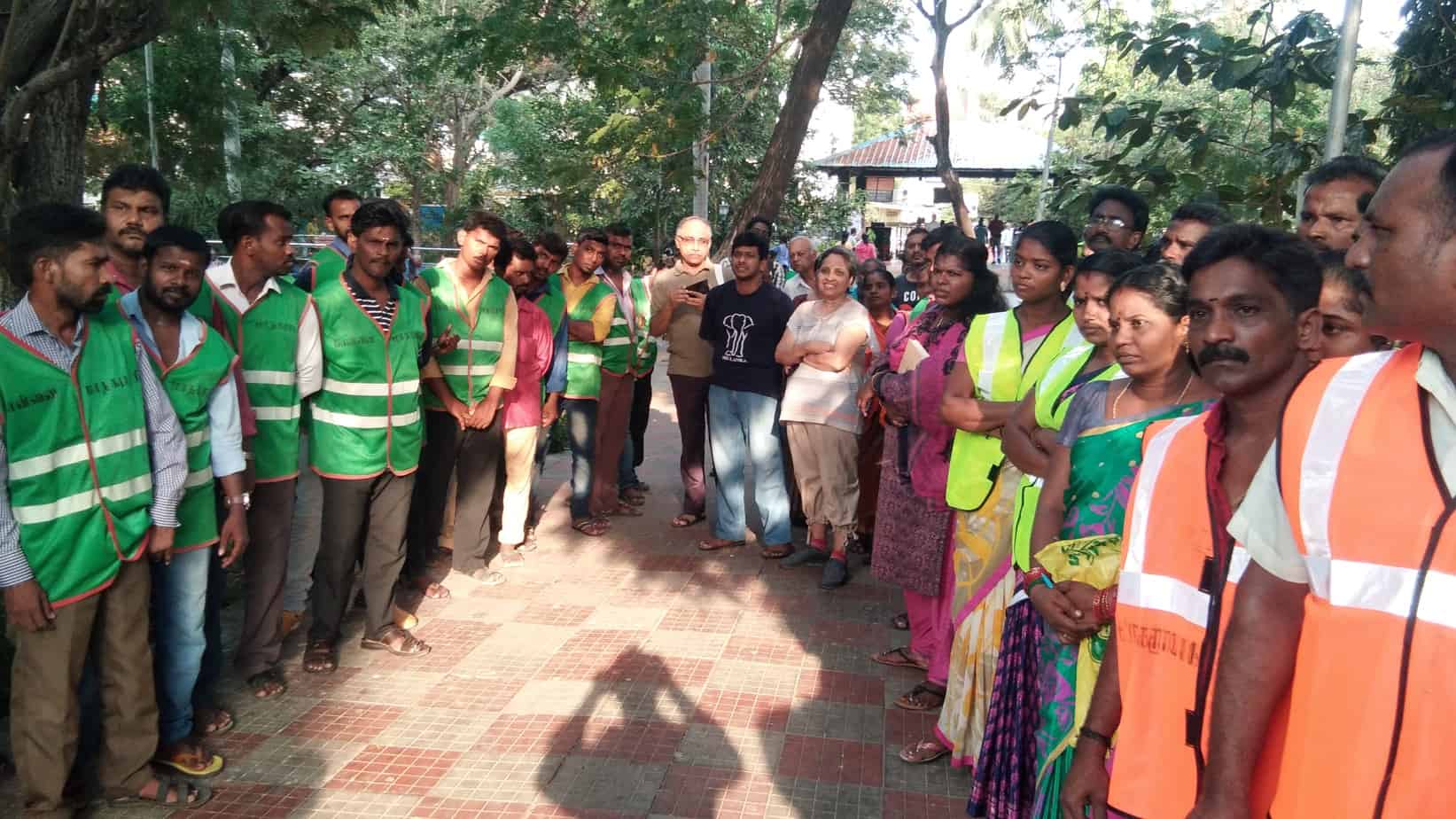
Participants at the Anna Tower Park on Sunday morning. Pic: M Varsha
It was a sense of responsibility that brought the people to these venues on a Sunday morning. The message conveyed was nothing new, but an important mandate of the Solid Waste Management (SWM) Rules, 2016: segregate waste at source.
The event was interactive, as the public discussed the challenges they face in source segregation. “We segregate waste. But how does it serve the purpose when the conservancy workers mix it up in the bin?” questioned C Saritha, a resident of Royapuram.
“This door-to-door to campaign is the first fundamental step taken by our organisation towards a cleaner and better city. We want to ensure decentralised garbage management in Chennai and the Corporation Commissioner G Prakash is also interested in it. This marks the first initiative of a full stretch pilot study on decentralised waste management,” said Gabriel, a CAG researcher.
Explaining the scenario in waste collection that requires an immediate solution, Gabriel said that conservancy workers are demanding money to do their job in many places. “Citizens willingly give money to the conservancy workers to help them. A few workers are now demanding the money. This has to be changed,” he added. These discussions also helped to sensitise conservancy workers.
Exchange of information
After a preliminary discussion on waste strategies and issues such as the above involving all those present, the door to door campaign commenced.
This is the first time Anna Nagar residents saw such an awareness programme, and one that attracted such positive responses. “I was always concerned about disposal of the waste generated at home. Regardless of what others in my area were doing, I always segregated my waste. Also, I compost the biodegradable waste and use it for my garden,” said Siva Kumar, an Anna Nagar resident.
The people cooperated with the volunteers, who also clarified their doubts regarding segregation and management. Sathish Kumar, a volunteer and worker in the Greater Chennai Corporation, said, “A few houses were locked and a few citizens were not responsive to the campaign. That did not stop us.”
The response
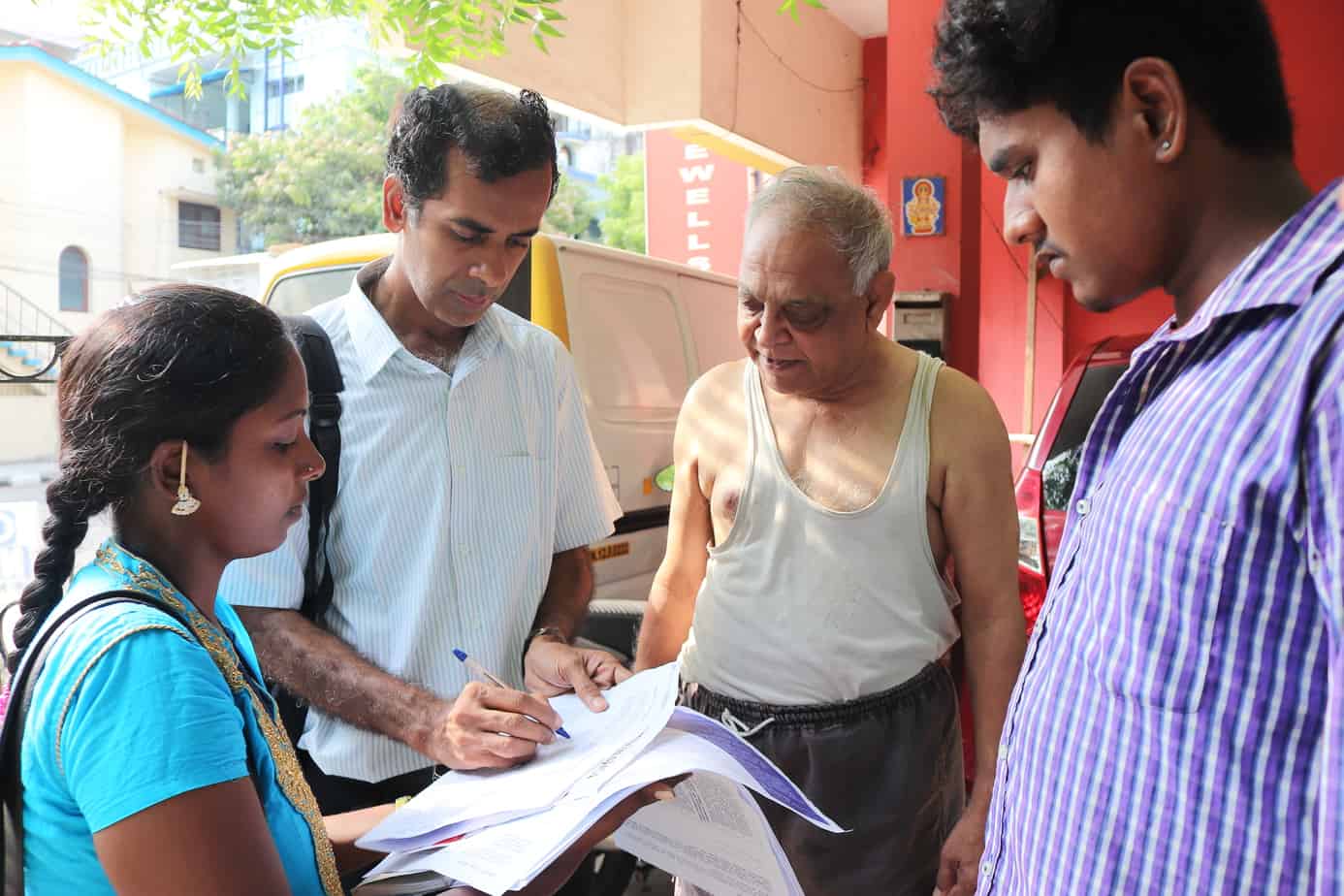
Adyar residents take part in the campaign to segregate waste. Pic: Sri Loganathan.
“The campaign surely has had a good effect on the residents, as we went around all streets in Adyar to talk to every resident individually at their doorsteps,’’ said S.Sridharan, President of Residents of Kasturba Nagar Association (ROKA), Adyar.
Satyarupa Sekar, a member of zero waste campaign said that a clean city is not only the responsibility of the public, in fact it is the duty of officials and corporation too. “Soon, all the dump generated will be decomposed in a proper way in Chennai,’’ she said.
There were also residents in Adyar who personally talked to the officials regarding the irregular visits of garbage collectors in the area and were assured that their dump would be regularly cleaned hereafter. “We were initially unhappy about the irregular garbage cleaning in our area, but when I talked with the volunteers regarding this, I was quite happy to see their positive response,’’ said Heema, treasurer of ROKA.