Wildlife film screening, photo fest marked August

Two wildlife events that marked the month of August, are featured by our columnist Deepa Mohan, in her column.

The third week of August ended with a wildlife event and a wildlife/conservation festival, both of which I thoroughly enjoyed.

The first was the screening of “Cobra King”, a documentary on the King Cobra made by Sandesh Kadur of Felis Creations

It was Gowrishankar of Kalinga Centre for Rainforest Ecology narrating the life cycle of this iconic reptile of the Western Ghats.

I cannot yet find the documentary on the net ( has it not yet been released to the wild, like rescued snakes are…?), but here is another video on the same snake from the same film maker:

Here’s a young mother giving her son a reassuring touch during the intense parts of the film:
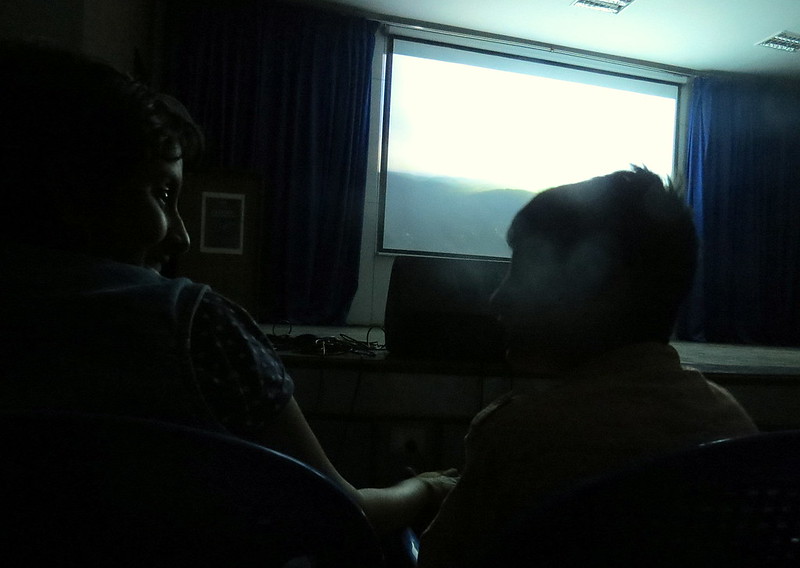
IMG_7513

Here is the team who created the film:

IMG_7530

The other event is one that is turning from a wildlife photography event into an annual festival that celebrates various wildlife conservation, while also indicating how much still needs to be done.

The Nature in Focus Festival

IMG_7546

Kalyan Varma, one of the co-directors of the festival, compered the event, and a smorgasbord of people associated with wildlife documentation and conservation spoke at the event.

Sale of art and crafts at the event:
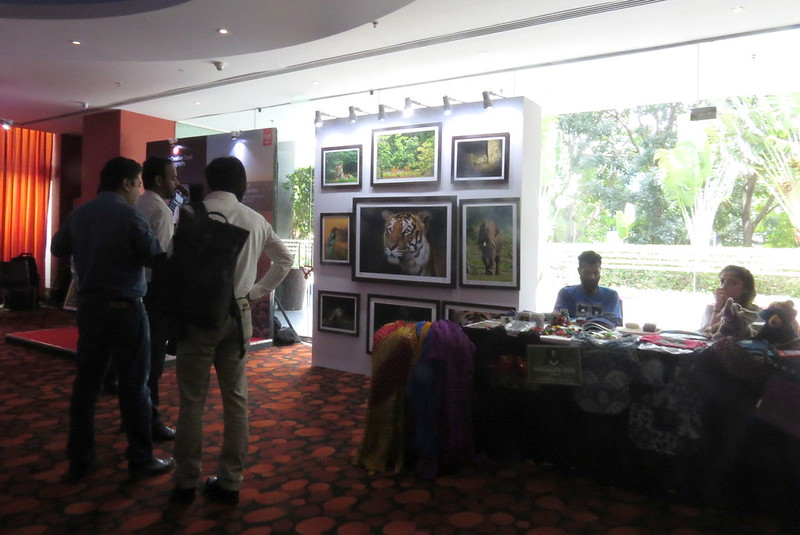
IMG_7542

Here’s Dhimant Vyas  talking about his journey as an illustrator, in conversation with Rohan Chakravarty, an award-winning wildlife cartoonist, who later spoke (with humour, of course!) about his craft as a tool in conservation.
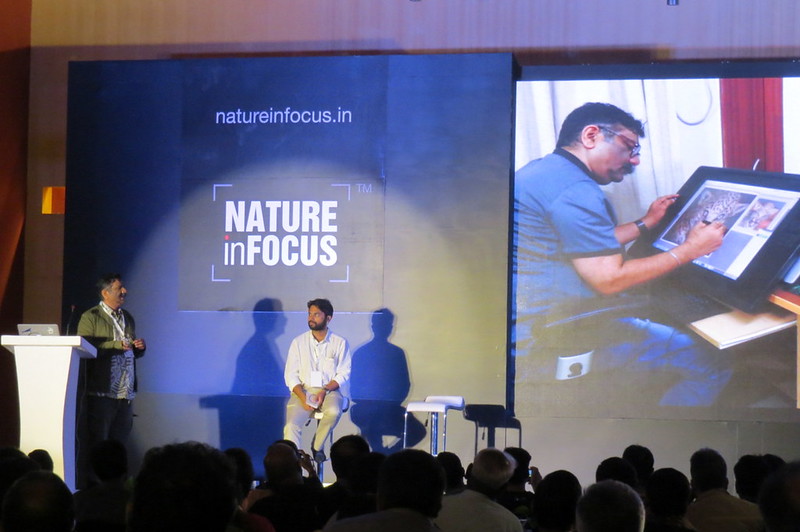
IMG_7551

Dhimant and others, enjoying the event:

IMG_7556

It’s a big measure of the increasing importance of this festival that it is now drawing speakers and participants from all over the world.

A section of the audience:
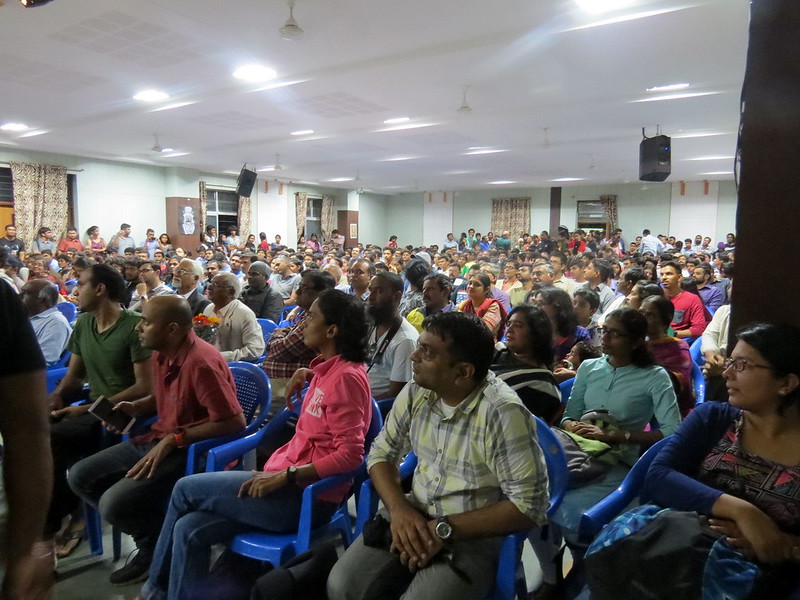
IMG_7514

Two of the award-winning photographs:
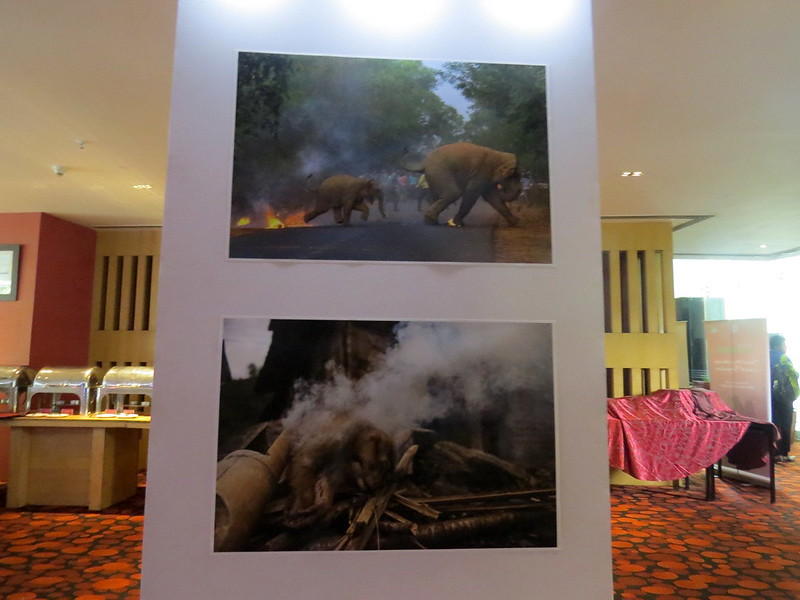
IMG_7547

An expert birder and photographer looks at the images on display:

IMG_7548

Though the major part of my wildlife experience will always be the actual visits to the forests and wilderness, such events celebrating wildlife and conservation help people like me listen to many voices both of the creatures who share this Earth with us, and the committed people who carry those wild voices to many urban dwellers who feel out of touch with the natural world.

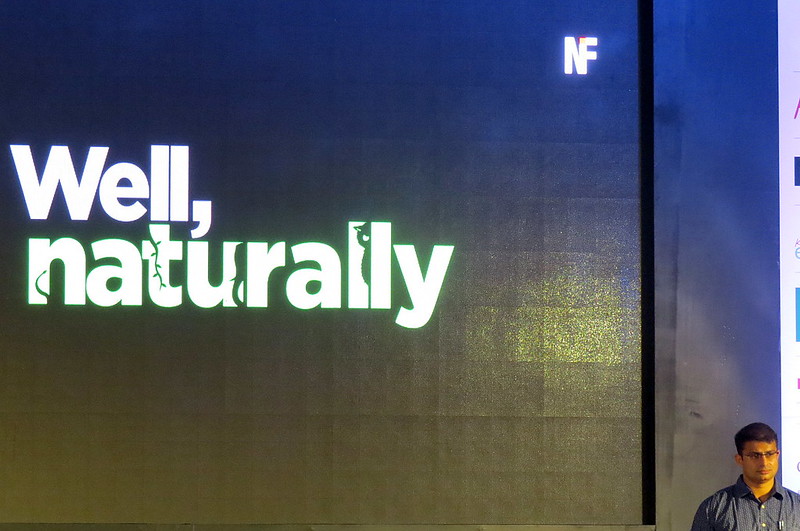
Well, naturally!
IMG_7545

Comments:

  1. Shankar HN (Haranahalli) says:

    Well documented Deepa.

  2. Savan Kheni says:

    Very good initiative……

Leave a Reply

Your email address will not be published. Required fields are marked *

Similar Story

Pallikaranai Marsh’s Zone of Influence: Threat or shield for South Chennai?

Pallikaranai Marsh acts as a buffer against Chennai floods. Protecting homes and ecology around it needs a proper ZoI, not weak rules.

Every monsoon, South Chennai goes underwater. The only sponge that soaks up all that rain is the Pallikaranai Marsh, yet around it, 8,619 hectares of land face severe flood risks. Despite this, the State has offered to protect only a fraction of that land.  On October 9th, the Tamil Nadu State Wetlands Authority (TNSWA) told the Madras High Court  that the marsh's interim Zone of Influence (ZoI) is just 36 survey numbers, covering 128.19 hectares. The next hearing of the case is on November 11th.  Scattered "protection"  These plots lie in bits and pieces across seven villages, from Pallikaranai to Perumbakkam.…

Similar Story

Blocked Kovalam-Nemmeli wetland channels risk disaster for South Chennai; Conservationists urge action  

Barriers built for the Mamallan Reservoir block Buckingham Canal water flow, vital to keep the wetland alive, avoid floods and sustain fishing families.

In Chengalpattu district, the main water channels of the Kovalam-Nemmeli coastal wetland, which drains a catchment of more than 270 square kilometres, have currently been blocked. Barriers that obstruct water flow have been built across Chennai's Buckingham Canal at three places: Thiruvidanthai-Vadanemmeli, near the Nemmeli-Thiruporur bridge, and Saluvankuppam. Earlier, we explored how the Mamallan Reservoir causes serious damage to the wetland’s ecology and how fishing livelihoods are affected. Field investigations by the Wetland Conservation Network have recorded the blockages preventing tidal exchange in the Buckingham Canal.           According to officials, these barriers were put up to enable construction of the Mamallan…