Wildlife film screening, photo fest marked August

Two wildlife events that marked the month of August, are featured by our columnist Deepa Mohan, in her column.

The third week of August ended with a wildlife event and a wildlife/conservation festival, both of which I thoroughly enjoyed.

The first was the screening of “Cobra King”, a documentary on the King Cobra made by Sandesh Kadur of Felis Creations

It was Gowrishankar of Kalinga Centre for Rainforest Ecology narrating the life cycle of this iconic reptile of the Western Ghats.

I cannot yet find the documentary on the net ( has it not yet been released to the wild, like rescued snakes are…?), but here is another video on the same snake from the same film maker:

Here’s a young mother giving her son a reassuring touch during the intense parts of the film:
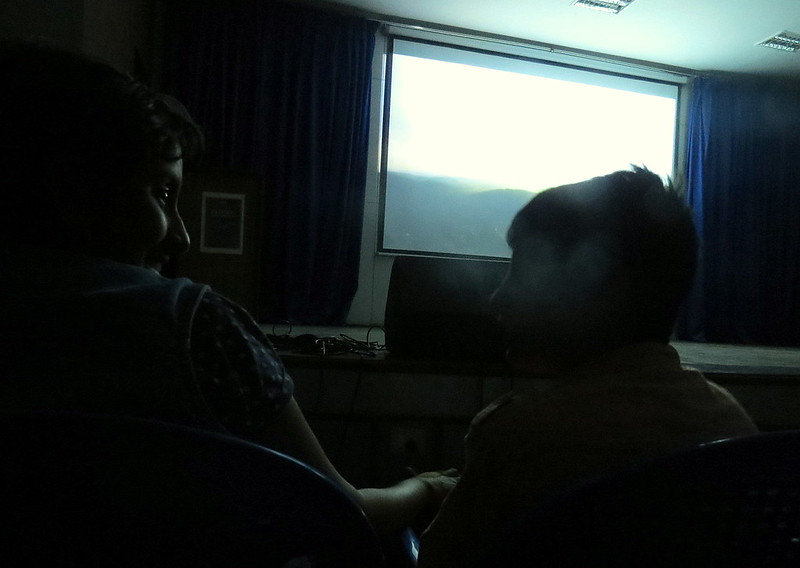
IMG_7513

Here is the team who created the film:

IMG_7530

The other event is one that is turning from a wildlife photography event into an annual festival that celebrates various wildlife conservation, while also indicating how much still needs to be done.

The Nature in Focus Festival

IMG_7546

Kalyan Varma, one of the co-directors of the festival, compered the event, and a smorgasbord of people associated with wildlife documentation and conservation spoke at the event.

Sale of art and crafts at the event:
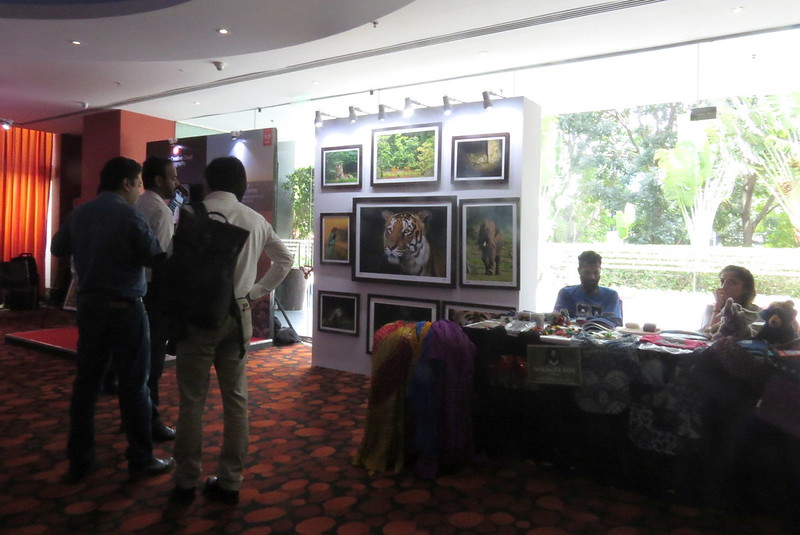
IMG_7542

Here’s Dhimant Vyas  talking about his journey as an illustrator, in conversation with Rohan Chakravarty, an award-winning wildlife cartoonist, who later spoke (with humour, of course!) about his craft as a tool in conservation.
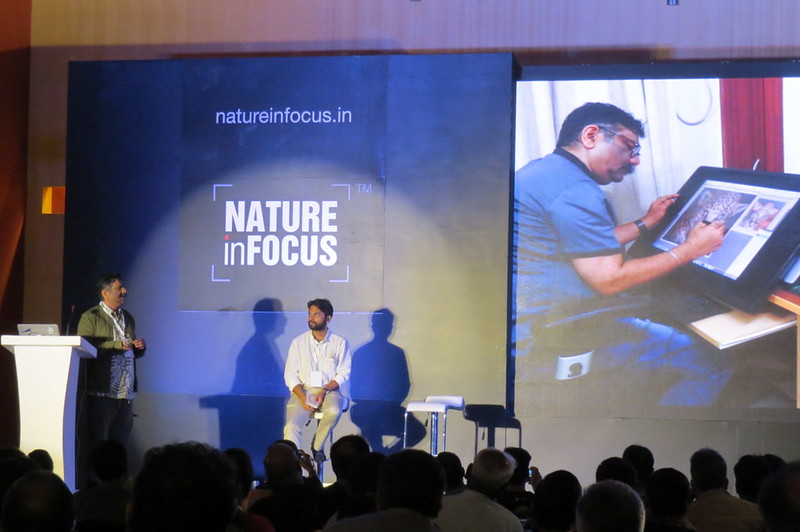
IMG_7551

Dhimant and others, enjoying the event:

IMG_7556

It’s a big measure of the increasing importance of this festival that it is now drawing speakers and participants from all over the world.

A section of the audience:
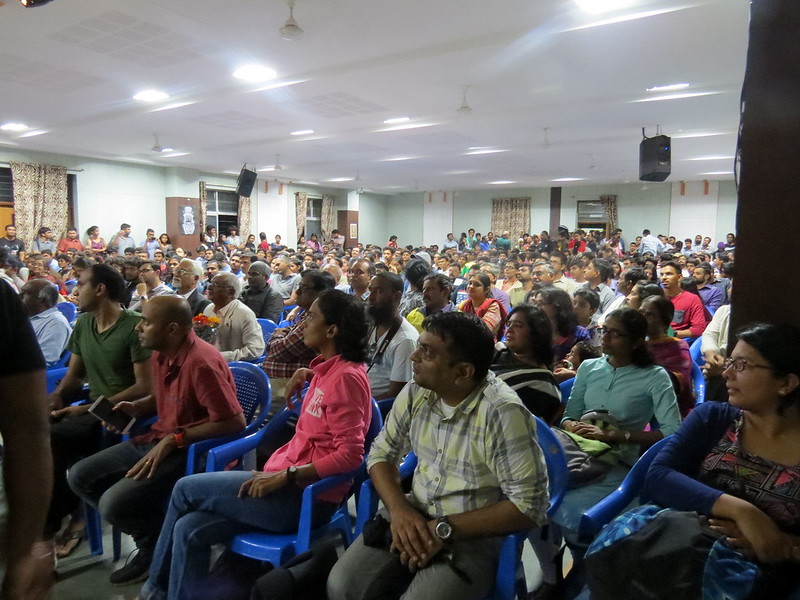
IMG_7514

Two of the award-winning photographs:
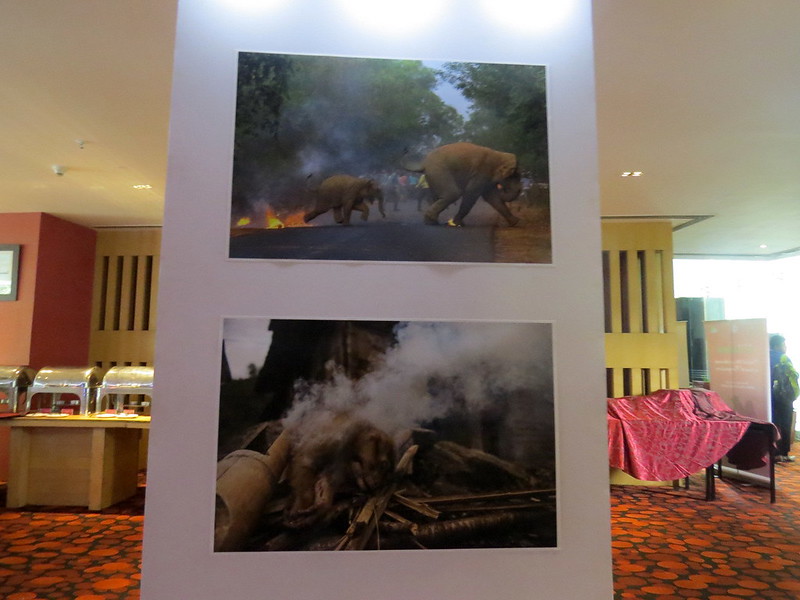
IMG_7547

An expert birder and photographer looks at the images on display:

IMG_7548

Though the major part of my wildlife experience will always be the actual visits to the forests and wilderness, such events celebrating wildlife and conservation help people like me listen to many voices both of the creatures who share this Earth with us, and the committed people who carry those wild voices to many urban dwellers who feel out of touch with the natural world.

Well, naturally!
IMG_7545

Comments:

  1. Shankar HN (Haranahalli) says:

    Well documented Deepa.

  2. Savan Kheni says:

    Very good initiative……

Leave a Reply

Your email address will not be published. Required fields are marked *

Similar Story

The future of Bengaluru’s lakes: How to ensure effective community-led restoration

Clear bye-laws, neighbourhood participation and NGO accountability can save the city's ecological spaces.

Citizen lake groups have historically played an important role in protecting the city’s lakes. The erstwhile Bruhat Bengaluru Mahanagara Palike (BBMP) has a long history of engaging with citizen groups. Citizen-led lake groups have long played a crucial role in acting as “watchdogs” of Bangalore’s lakes. They are often the “first responders” to problems that emerge in water bodies. They have raised alarm bells around illegal encroachments and often help coordinate between agencies to monitor rejuvenation efforts. They foster community awareness on lakes and are often able to innovate new solutions. The most recent version is the Kere Mitra (Lake‑Friend)…

Similar Story

The city and its lakes: Decoding the decline of Bengaluru’s waterbirds

Analysis of 14 Bengaluru lakes shows migratory waterbirds are disappearing faster than residents due to poor urban lake management.

Lying at an altitude of 920 metres in the rain-shadow area of the Western Ghats, Bengaluru’s geography and climate do not support a perennial natural water source. Instead, a north-south ridge divides the city into three primary valleys: Hebbal, Koramangala-Challagatta, and Vrishabhavathi. Rainwater draining down these slopes feeds a network of small streams — forming a cascading lake system that the city historically relied on for its water supply. During the Open City biodiversity datajam held in December 2025, our group examined the ecological trends around Bengaluru's lakes. Data on insects, spiders and flora on platforms like iNaturalist were insufficient…