Wildlife film screening, photo fest marked August

Two wildlife events that marked the month of August, are featured by our columnist Deepa Mohan, in her column.

The third week of August ended with a wildlife event and a wildlife/conservation festival, both of which I thoroughly enjoyed.

The first was the screening of “Cobra King”, a documentary on the King Cobra made by Sandesh Kadur of Felis Creations

It was Gowrishankar of Kalinga Centre for Rainforest Ecology narrating the life cycle of this iconic reptile of the Western Ghats.

I cannot yet find the documentary on the net ( has it not yet been released to the wild, like rescued snakes are…?), but here is another video on the same snake from the same film maker:

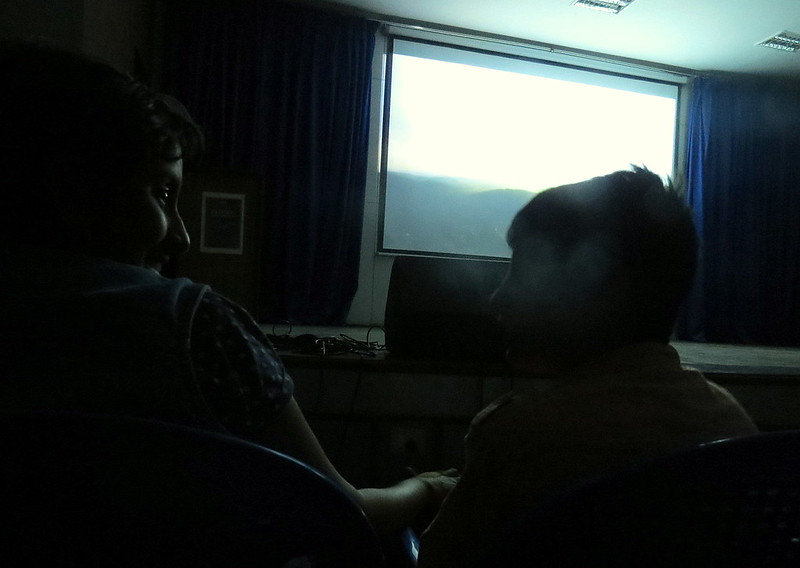
Here’s a young mother giving her son a reassuring touch during the intense parts of the film:
IMG_7513

Here is the team who created the film:

IMG_7530

The other event is one that is turning from a wildlife photography event into an annual festival that celebrates various wildlife conservation, while also indicating how much still needs to be done.

The Nature in Focus Festival

IMG_7546

Kalyan Varma, one of the co-directors of the festival, compered the event, and a smorgasbord of people associated with wildlife documentation and conservation spoke at the event.

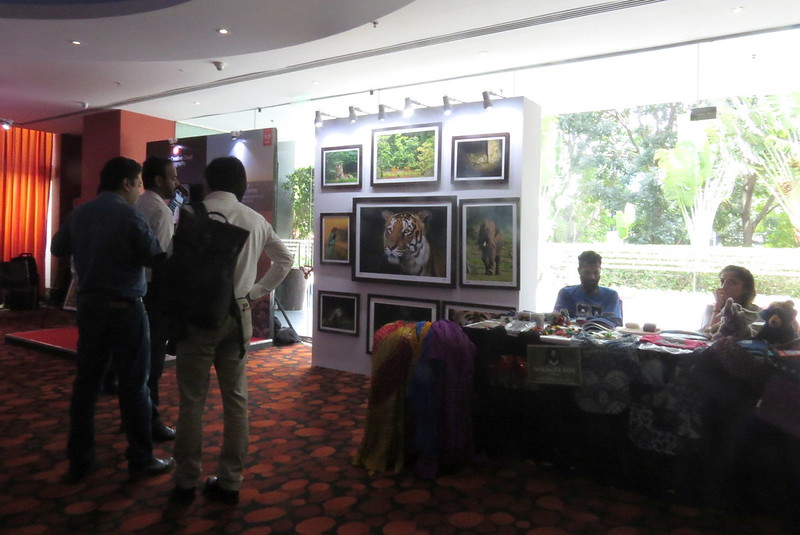
Sale of art and crafts at the event:
IMG_7542

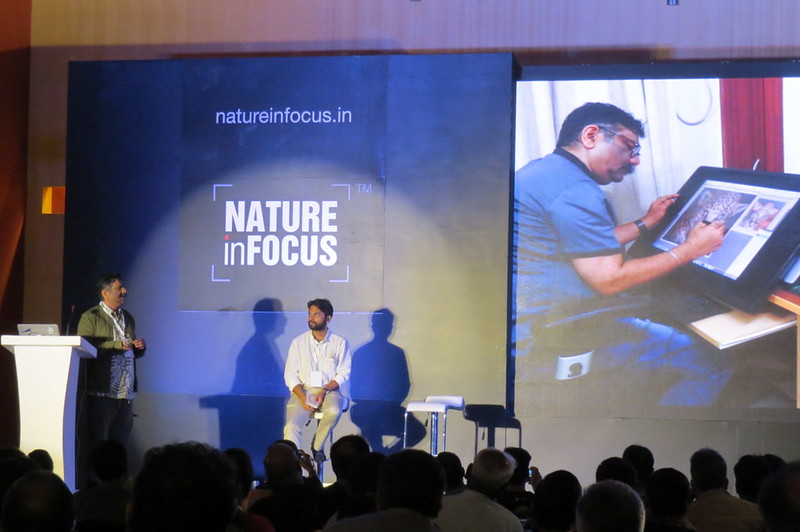
Here’s Dhimant Vyas  talking about his journey as an illustrator, in conversation with Rohan Chakravarty, an award-winning wildlife cartoonist, who later spoke (with humour, of course!) about his craft as a tool in conservation.
IMG_7551

Dhimant and others, enjoying the event:

IMG_7556

It’s a big measure of the increasing importance of this festival that it is now drawing speakers and participants from all over the world.

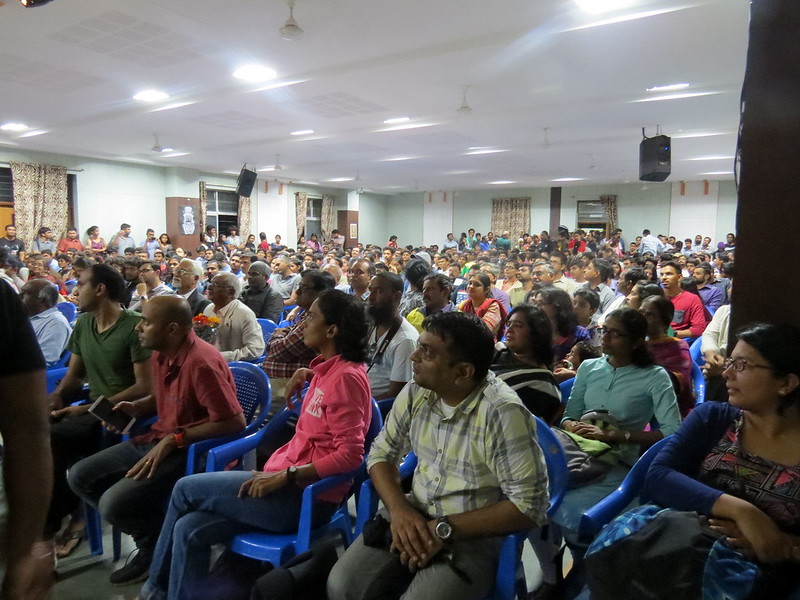
A section of the audience:
IMG_7514

Two of the award-winning photographs:
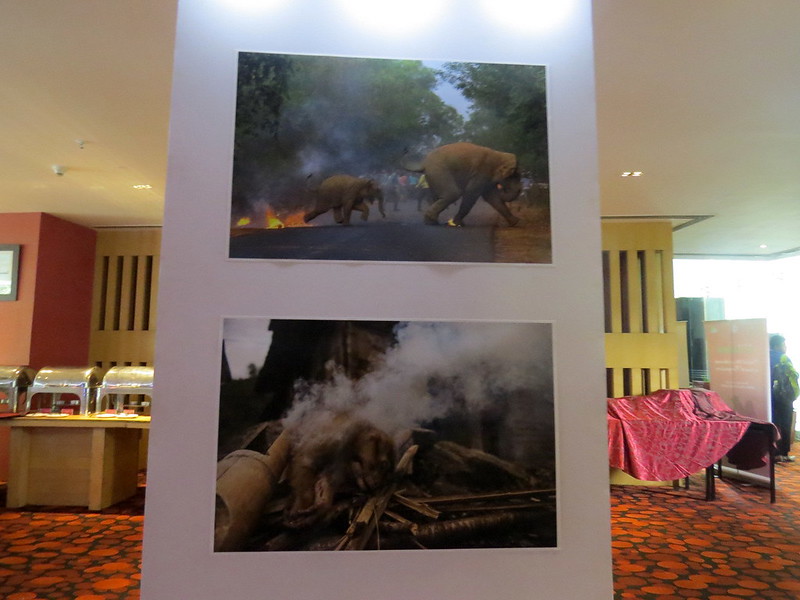
IMG_7547

An expert birder and photographer looks at the images on display:

IMG_7548

Though the major part of my wildlife experience will always be the actual visits to the forests and wilderness, such events celebrating wildlife and conservation help people like me listen to many voices both of the creatures who share this Earth with us, and the committed people who carry those wild voices to many urban dwellers who feel out of touch with the natural world.

Well, naturally!
IMG_7545

Comments:

  1. Shankar HN (Haranahalli) says:

    Well documented Deepa.

  2. Savan Kheni says:

    Very good initiative……

Leave a Reply

Your email address will not be published. Required fields are marked *

Similar Story

The wild in the city: What citizen scientists tell us about Bengaluru’s biodiversity

Spatial and temporal biodiversity patterns, as observed by citizen scientists in the city during 2016-2025, were studied at a datajam in December 2025.

Imagine you’re out on a morning walk, phone in hand, when you spot a butterfly you’ve never seen before. You snap a photo, log it into a citizen science app, and voila! You’ve just contributed to crucial biodiversity monitoring. This isn’t just a hobby; it’s part of a global movement where ordinary people collect, record, and sometimes analyse data about plants, animals, and ecosystems. Citizen science stretches the reach of ecological research. Every observation adds to unique longitudinal datasets that reveal phenology — periodic events in the life cycle of a species — along with species distribution shifts and population…

Similar Story

Air quality management is a governance problem, not just an environmental one

Despite massive funding, Indian cities face weak governance, poor data, and limited capacity, as air pollution continues to worsen.

Indian cities are struggling to breathe. Air pollution is a year-round governance challenge. In 2024, 35 of the 50 most polluted cities globally were in India, with PM2.5 concentrations above 66.4 μg/m3. This is at least 13 times the World Health Organization (WHO) guidelines and at least 1.6 times the National Ambient Air Quality Standards (NAAQS) in India. Citizens continue to bear the brunt of worsening air quality, and urban local governments (ULGs) are at the forefront of the problem, being primarily accountable for their citizens' first mile. While they do have a role to play in addressing this threat,…