Numbers of tuberculosis patients are sharply rising in Mumbai. And that is good.
According to Brihanmumbai Municipal Corporation data, the city records 45,000 new patients a year on average. However, last year, it was down to less than 1% of that.
The health department authorities at BMC say that Covid-19 and Tuberculosis (TB) have similar symptoms. Therefore, if TB patients go unchecked in times of the pandemic, the number of patients of Covid-19 may also increase as they are difficult to differentiate.
TB is a bacterial disease, which mainly affects the lungs. The bacteria that causes TB spreads when an infected person coughs or sneezes. Most people who are infected with the SARS CoV-2 virus have similar respiratory symptoms. “Therefore, we have instructed all the civic-hospitals in the city to check patients who have recovered from Covid-19 for TB also. Since the symptoms are similar, patients who have recovered from Covid-19 can be prone to Tuberculosis. We want to double check patients even if the number of patients for TB increases,” said Dr Daksha Shah, Deputy Director Health department of the BMC.
Door-to-door screening
BMC officials also say if not diagnosed at the right time, TB patients may be exposed to SARS CoV2. This led the BMC to start door to door screening in certain areas in the city.
“Door-to-door screening was initiated due to the lockdown, the movements of people were restricted. BMC had begun screening for TB patients from the end of last year of 2020. The drive has begun in the month of December 2020 as we managed to deviate ourselves from Covid-19 to other crucial infectious and life endangering diseases like Tuberculosis,“ adds Dr Daksha .
When health officials began going door to door, the number of patients rose.
A team of two health workers, including anganwadi staff are sent for door-to-door screening. The health workers collect sputum samples. They send people for free chest X-ray to the local civic hospital as Sewri TB hospital is partly functional due to renovation, says Dr Daksha.
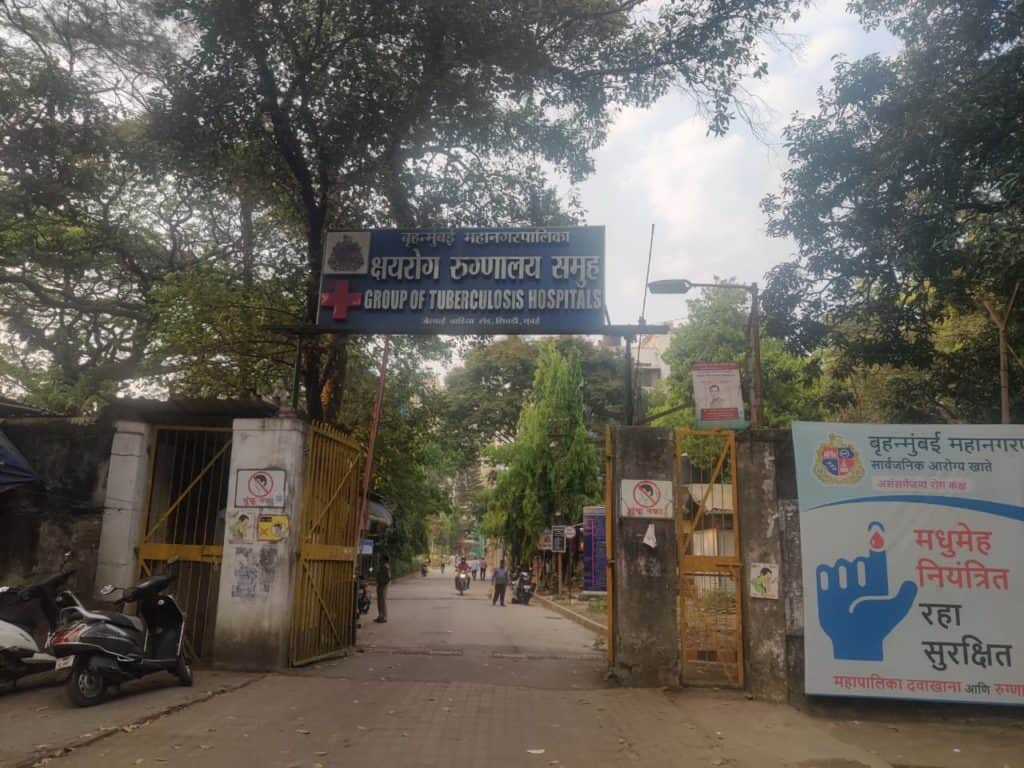
As per the BMC data recently only 248 of 37,000 TB patients who have gone through treatment currently in Mumbai were also infected with Sars Cov 2, the virus that causes Covid-19. Thus, in past three-months TB patients have started returning to the country’s largest civic TB hospital in Sewri, Mumbai. Not only that the BMC had started door to door screening with its 50 lakh volunteers including BMC staff from health for the patients of TB and leprosy.
Worldwide phenomenon
Last year, the World Health Organization (WHO) had given directives to all the countries with possibility of high TB burden to ensure that essential health services and operations are continued to protect the lives of people with TB, says Suresh Kakani, Additional Municipal Commissioner (BMC).
“The patients were discharged even as their treatment was ongoing last year fearing a COVID19 infection. Screening drives were initiated so as to identify patients and treatment can be started in the initial phase of disease,” says Kakani.
“The patients suffering from TB have vulnerable lungs and if they contract Covid-19 infection chances of their survival goes down. Hence identifying a TB patient in pandemic and keeping their immunity high is much needed and essential part of the health department,” said Dr Namita Bhui Medical Superintendent, Sewri TB Hospital.
In the year 2019, Sewri TB hospital had witnessed about 60,000 patients and in the year 2020 overall the city witnessed 60,680 TB patients. In 2019, the Out Patient Department (OPD) at Sewri hospital had witnessed daily 16-17 patients and 2-3 deaths daily on average, said the Superintendent of Sewri TB hospital.
In Mumbai, total 90,000 tests were done in screening out of which 49.98 lakhs people were from slum pocket areas and high-risk zones of Mumbai city. Out of which persistent cough and weight loss was observed in 9619 people. And 505 people tested positive for TB and are treated in the civic hospitals.