Sandwiched between the swanky Bandra Bandstand and posh Carter Road promenades lies the rocky patch of Chimbai beach, that continues to be a source of dirt and squalor.
Though the Brihanmumbai Municipal Corporation (BMC) regularly cleans the narrow sandy stretch with dumpers and JCB machines, the beach continues to stay dirty and unattractive, unlike the promenades on both sides, that have become vibrant and popular community spaces.
A survey by NGO ReefWatch Marine Conservation had named it to be the filthiest of the ten beaches of Mumbai.

46-year-old Pravin Gohil who has been staying here since his birth, says that once upon a time, the beach was spaciously spread out with clean sand that attracted visitors.
Chimbai’s urban wildlife
Today, there is just a very narrow strip of sand, only about 100 metres wide and even that is lined with garbage and dirt.
Many single-storied houses, a temple, and many fishing boats lie stranded on the rocky patch there.
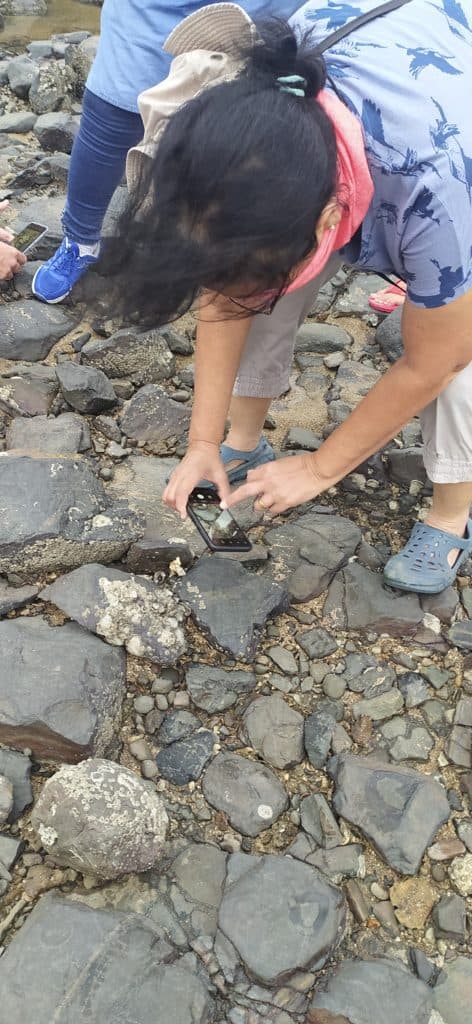
Biologists survey marine life and puddles among the rocks during low tides – including, the barnacles lining the stones, the edible shellfish stuck to the rocks that get scrapped and the many snails that suck in the polluted seawater.
At the jetty, fishermen sit on boats repairing their nets. The rock ponds house the shellfish, while puddles around the mangroves strewn with plastic and thermocol waste, still continue to attract the egrets and wader birds.
“The animals on the beach are an indicator of the quality of the beach,” says V Shubhalaxmi, founder and director of Ladybird Environmental Consulting (LEC),a social enterprise involved in rejuvenating the beach especially its marine life. “On one side of the jetty since the sewage pipes bring in the dirty water that attracts the barnacles, the snails and the Nerites, while on the other side of the jetty, the clean salty sea water attracts the crabs. Their absence is also a determining factor of high pollution levels.”
Rejuvenating Chimbai
The program of rejuvenation of Chimbai beach was taken up by United Way Mumbai in 2019 and involved marine biodiversity survey, bioshielding and community engagement. “Chimbai is not a typical beach in that sense but it is very important biologically. Unfortunately, there are lot of shanties around, with no proper waste disposal, open defecation and effluents discharged in the sea. The sea currents, too, bring in the floating garbage that gets caught in the mangroves,” notes Issac Kehimkar, formerly with the Bombay Natural History Society (BNHS) and now a partner with LEC.
Kehimkar, better known as the butterfly man of India because of his extensive work on them, says it is critical to address issues of marine pollution as the rock oysters, clams, crabs, shell fish etc that suck in the pollutants, impact us directly by turning up at our dining table to harm our health.
No fish to catch
The Chimbai, which was a thriving fishing community, is today facing the onslaught of pollution and urbanisation. “Initially, trawlers fished here. But, due to the depleting water levels and fishing turning into a cost-intensive profession, not a single fishing trawler survives here today. Fishing only takes up with a few small boats that tend to venture only closeby for fishing,” says Pravin Gohil, who hails from a Gujarati fishing community, now repairs air-conditioners.
“Earlier, we had a big area where we would put our fishes out for drying on bamboo sticks. However, as the buildings came up, residents would complain to BMC against the foul smell emanating resulting in the BMC personnel coming here to confiscate our fishes. Such regular actions took their toll on the dry fish business that eventually came to a complete halt,” recalls Gohil.
Living by the sea
Change has not been easy either for those who came in to reside here attracted by the idea of living by the sea. “Many like us shifted here due to the love of the clean sea here. Today, things have turned around so badly that the beach itself is a dirty place, the sea of filth with no sand and one cannot even stroll there. Earlier, the sea waters would touch our building compound wall, but today the sea waves stop way farther away,” says Adil Vaid, a resident of the Beach View Apartments.
Kehimkar says that cleaning up of the beaches will only lead to cosmetic changes unless the root cause of the dirt in the beach, the discharge of effluents, is addressed.
Local Congress corporator Asif Zakaria says that the dynamics of the area is such that it is not possible to connect all houses to the city’s sewer network. “We do have the Chimbai pumping station nearby. Only a few nallas or the drain networks discharge their waste waters here, otherwise there is no untreated sewer waste being dumped in the sea here,” he says. “We did propose beautification plans like plantations, constructing pathways and even beautification around a Cross there. But, those plans could not be taken up due to opposition from the locals there, who do not want any change in the status quo in the area.”
Zakaria says, as of now, the BMC does regular comprehensive beach clean-up using JCB and dumpers and lighting up the beach to make it more safe and secure.
“Once upon a time we would take our fish to the market for sale. Today, things have turned around so drastically that we now have to go to Colaba market to buy fish in order to sell it locally,” says Gohil.
This is a very well written and insightful article. Good amount of research and facts are presented. Mumbai needs citizen journalists like you to keep our city beautiful. Keep up the good work