Webinar alert: Living with Metro construction — addressing safety concerns

Namma Metro can be a safe, clean and sustainable mode of transport, but how much importance is given to safety during its construction?

In a tragic incident in early January this year, a mother and her two-year-old son passed away when an under-construction metro pillar reinforcement structure in Outer Ring Road (ORR), near HBR Layout, collapsed on them. This led to righteous outrage among citizens. Questions were raised not only about safety at the metro construction site but also about the roads in front of the Metro stations. How safe is it to walk and cross the roads while construction is going on? How challenging is it to commute to metro stations? How much importance is given to fire safety? How are dust and noise pollution issues addressed?

Residents affected

Metro station construction also affects residents living around the site. What issues do they face? Have they noticed cracks in their houses? The fire that erupted in March 2022 at Bamboo Bazaar, next to the Shivajinagar Metro site, had spread to homes. Resident Shahid Rahman lost his house in the fire. Another resident’s grandson had to be admitted to the hospital for oxygen support due to inhalation of smoke.


Read more: How commute can be easy, safe during Metro work on ORR


There are solutions

Citizen Matters wrote about how commute can be safe and easy during metro construction work. The article details pointers for BMRCL to consider and make changes that will provide significant relief to pedestrians and motorists, alike. But what safety audits have been carried out? What could be done better to ensure accidents do not happen again?

To address these concerns, Citizen Matters Bengaluru, has organised a webinar, titled ‘Living with Metro: Addressing safety concerns’, which will be held on January 24th, 6 pm onwards. It will be livestreamed on YouTube.
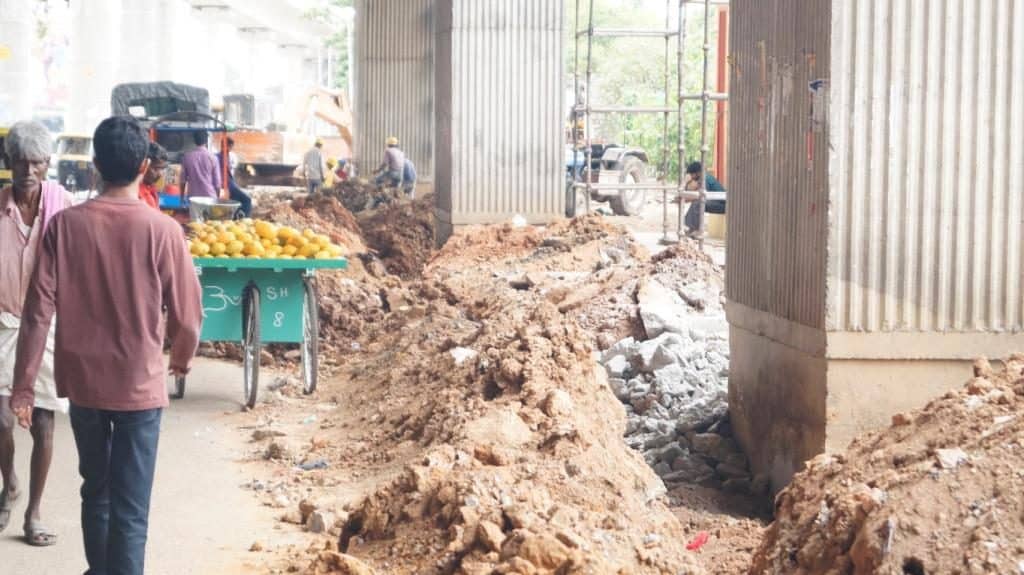
Construction debris under metro pillars.
Debris and garbage under the Namma Metro lines, near Banashankari temple. Pic courtesy: B.PAC

Event details

  • Topic: Living with Metro: Addressing safety concerns
  • Date: 24 Jan 2023
  • Day: Tuesday
  • Time: 6 pm onwards
  • Watch: Livestream of the webinar on Citizen Matters, Bengaluru YouTube channel
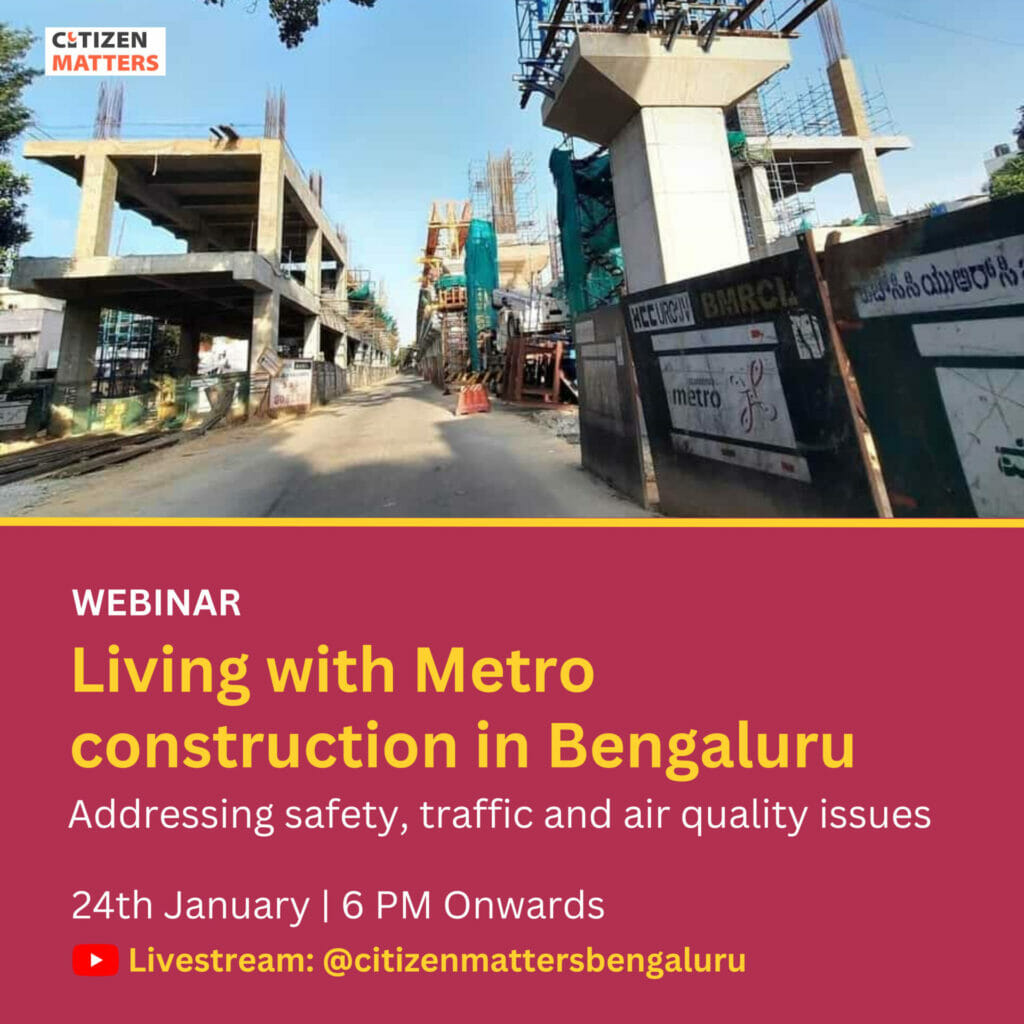
Poster with date, time and streaming details of event 'Living with Metro Construction'
Tune in to the livestream on Tuesday, January 24th on the Bengaluru YouTube channel

Read more: Metro sites causing health hazards for workers; employing children – Citizen Matters, Bengaluru


Speakers:

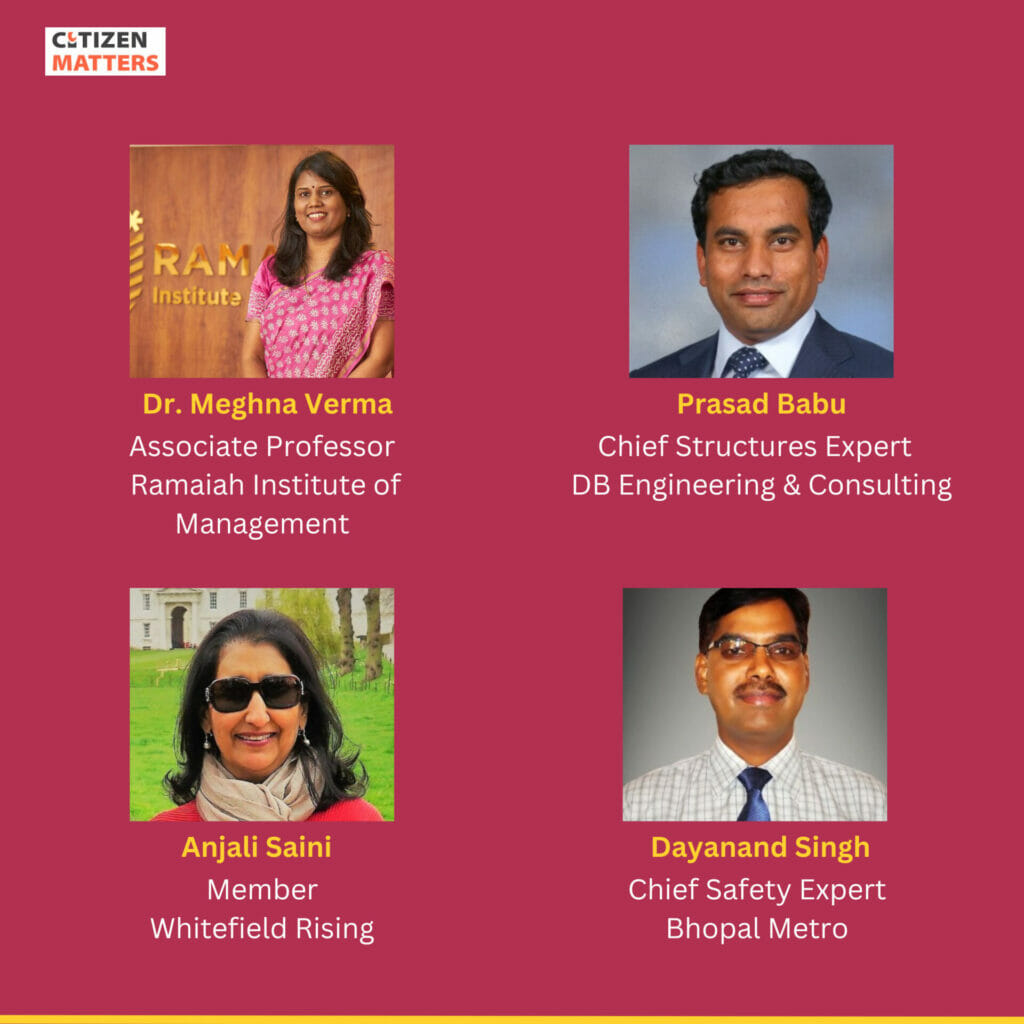
  • Mr Prasad B Babu – Chief Structures Expert
  • Dr Meghna Verma – HoD Department of Marketing and IB Head, Centre for Sustainability, Ramaiah Institute of Management
  • Mr Dayanand Singh – Chief Safety Expert Bhopal Metro
  • Anjali Saini – Member, Whitefield Rising
  • Moderators – Meera K and Sandhya Bhat
Poster showing the panellists for the event 'Living with Metro Construction'
Panellists for the event

Note: The article was updated with new information after it was first published

Also read:

Leave a Reply

Your email address will not be published. Required fields are marked *

Similar Story

Bengaluru’s flood alert system: Good for rescue, not prevention

Cities like Agartala use the system to prevent floods, but factors including low drain capacity make this difficult in Bengaluru.

Bengaluru's flooding story often circles around its age-old stormwater drainage system conflicting with rapid urbanisation. The Bruhat Bengaluru Mahanagara Palike (BBMP) has been actively utilising data from flood alert systems, but only for rescue and evacuation, and not for mapping flood patterns or preventing floods. Also, though the data is publicly accessible, little is being done to create public awareness about it.  “I was stuck in a traffic jam three kilometres away from my office in Manyata Tech Park when I got an office alert about inundation there. If only flooding information was timely and accessible, it would save so…

Similar Story

Retaining walls fail to provide flood respite for Mumbai’s riverbank residents

Retaining walls, built to prevent Mumbai’s rivers from overflowing during monsoons, have not changed much for residents staying along the Dahisar.

Following the disastrous deluge that hit Mumbai on July 26, 2005 and claimed 419 lives, the state introduced several measures to prevent such flooding in the future in Mumbai. The Chitale Committee, which was commissioned to find solutions for flooding in Mumbai recommended a series of measures, such as improving Mumbai’s hydrological planning to help the city’s rivers find their way into the sea and prevent them from overflowing into the city and endangering lives during the heavy Mumbai monsoons.  While this exercise mostly called for rejuvenating the rivers, one of the first moves by the authorities involved building retaining…