For over two decades, residents along Chennai’s Old Mahabalipuram Road (OMR) have been fed a steady diet of promises about piped water supply. From desalination plants to reservoirs, successive governments have announced grand projects that would finally quench the IT corridor’s thirst. Yet, as of January 2026, OMR residents are still struggling with inadequate piped water and are forced to rely on expensive private tankers or depleted groundwater that grows more brackish each year.
The original promise
It began with hope. In July 2004, the then Finance Minister, P Chidambaram, announced central government support for a desalination plant near Chennai. When he reiterated this commitment in the 2008-09 Union Budget, allocating ₹300 crore and mentioning a Tamil Nadu proposal for a public-private partnership plant, OMR residents had every reason to believe relief was coming.
It was this promise and hope that led to the development of East Coast Road (ECR) and OMR between 2005 and 2010. The message was strengthened with these areas being brought under the Greater Chennai Corporation and Chennai Metro WSSB.
The Nemmeli desalination plant, eventually approved by the Cabinet Committee on Economic Affairs in January 2009 with a massive Central Government grant of ₹871.24 crore, was positioned as a game-changer for southern Chennai. The project documentation explicitly listed OMR areas including Sholinganallur, Thoraipakkam, Perungudi, and Semmenchery among the beneficiaries.
A trickle, not a flow
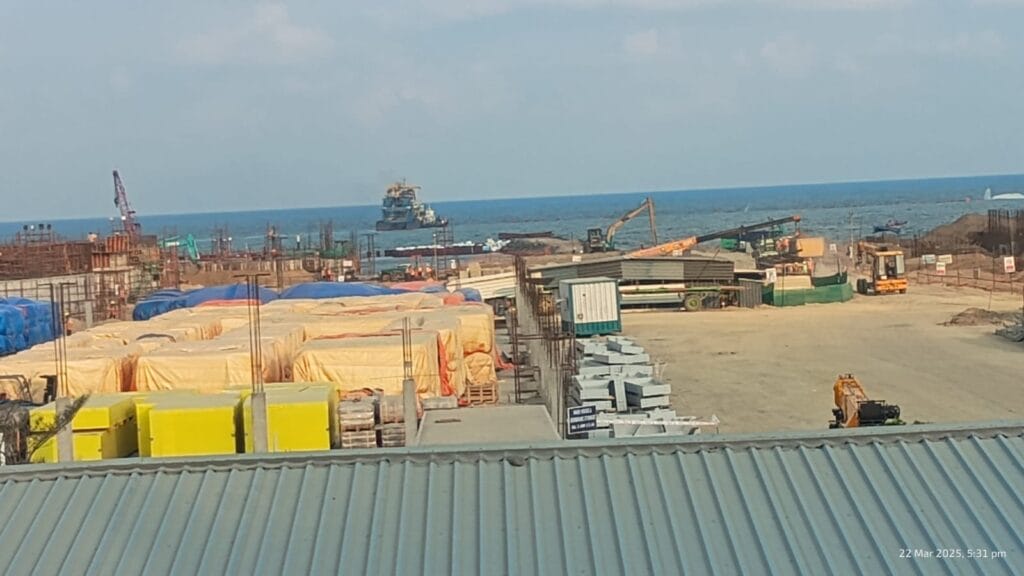
When the 110 MLD Nemmeli Phase 1 plant finally became operational in 2013 after construction delays, OMR received water, but how much remains unclear. The plant serves a sprawling service area across southern Chennai, with no transparent allocation data indicating which portion specifically reaches the IT corridor versus other neighbourhoods.
With no piped connections and infrastructure, it was clear that the Nemmeli water was reaching the core city, bypassing the areas it was meant to serve.
The picture became clearer and more disappointing, with the 150 MLD Phase 2 Nemmeli plant commissioned in February 2024. Of its entire capacity, only 15 MLD was allocated for the IT sector, industries, a few streets and a handful of apartments between Sholinganallur and SRP Junction, and Perungudi. That’s a mere 10% of the plant’s capacity, despite the 49-kilometre pipeline carrying desalinated water passing directly through the heart of the OMR corridor.
The majority of the 150 MLD plant’s precious desalinated water flows instead to 14 other urban areas including Velachery, Alandur, Pallavaram, Medavakkam, and Madipakkam. When we, the OMR residents, questioned this distribution, they were told to wait for the upcoming 400 MLD Perur desalination plant, yet another promise on the horizon.
The crisis deepens
The inadequacy of OMR’s water infrastructure became starkly evident in June 2025, when Metrowater supply to OMR and Sholinganallur areas was slashed by 75% due to tanker operation restrictions.
Residents who had paid lakhs in property taxes and invested crores in homes found themselves scrambling for water, two decades after the first desalination plant was announced for their benefit.
Read More: Silence and uncertainty shroud OMR water supply projects
The latest promise
Now comes the newest grand announcement. In the Tamil Nadu Budget 2025-26, the state government unveiled plans for Chennai’s sixth major reservoir, a massive 4,375-acre project in the Kovalam sub-basin sandwiched between ECR and OMR. The reservoir will hold 1.655 tmc of freshwater and supply 170 MLD to “southern Chennai and fast-growing peri-urban pockets.”
On paper, it sounds promising. The ₹471-crore project will tap inflows from 69 upstream irrigation tanks, create a 17.71 sq km freshwater lake, and add much-needed capacity to Chennai’s stressed water infrastructure. The Water Resources Department has even floated tenders worth ₹326 crores to begin construction.
But for OMR residents who have lived through two decades of promises, the announcement rings hollow. Even if CRZ approvals come swiftly, construction will take years. And given past experience, there’s no guarantee that OMR will receive its fair share of the 170 MLD supply.
A pattern of neglect
The story of OMR’s water crisis reveals a troubling pattern. Infrastructure projects are announced with fanfare, with OMR areas prominently featured in service area maps and press releases. Central and State governments allocate thousands of crores. Plants are built, reservoirs are excavated, pipelines are laid, often passing directly through the IT corridor.
Yet, when it comes to actual water allocation, OMR consistently gets shortchanged. The reasons vary: older established neighbourhoods get priority, industrial demands take precedence, and political considerations favour other constituencies. The result remains the same. India’s premier IT corridor, home to global technology giants and thousands of high-value residential properties, cannot guarantee its residents a consistent piped water supply.
The cost of broken promises
The impact extends beyond inconvenience. Water from private tankers costs anywhere from ₹900 to ₹2,000, depending on season and scarcity. Residents and businesses spend lakhs, sometimes crores, annually on water they were promised would flow through government pipes.
Commercial establishments along OMR face operational uncertainties. Residents’ welfare associations spend countless volunteer hours managing water crises rather than focusing on community development. Property values are impacted by water insecurity, an ironic twist in a corridor marketed as Chennai’s growth engine.
Read more: Waiting for water: Thoraipakkam residents demand speedy implementation of CMWSSB scheme
ECO-Watching the reservoir
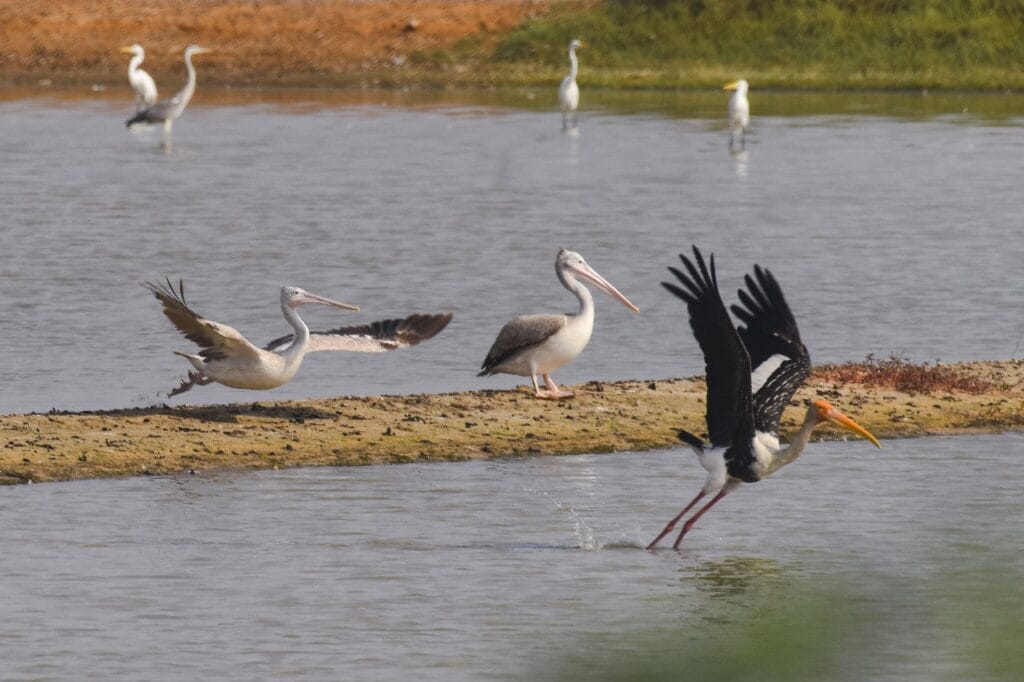
Moreover, having been instrumental in starting the ECO-WATCH group under the Federation of OMR Residents’ Association (FOMRRA), where we survey and audit the work done in eco-restoration projects, I cannot ignore the environmental impact of the Kovalam reservoir project.
Residents and fishers in the area have opposed the project, fearing flooding and livelihood issues. We understand that the Tamil Nadu State Coastal Zone Management Authority has hastily granted the Coastal Regulation Zone (CRZ) clearance for the reservoir without conducting essential hydrological, geological, salinity, biodiversity, and groundwater studies demanded by the technical expert committee. And, being avid birders, we will miss meeting the 200-odd species that we regularly photograph in this region.
What OMR residents deserve
Going forward, OMR residents and their associations must demand more than vague promises of “southern Chennai” supply:
- Transparent allocation commitments: Exact MLD allocations for OMR areas specified in project documents before approval.
- Proportional distribution: Allocation based on population, tax contribution, and current supply deficit.
- Independent monitoring: Quarterly public reporting of actual water supplied to each area versus commitments.
- Timeline accountability: Clear construction milestones with penalties for delays.
- Alternative arrangements: Interim solutions while waiting for long-term projects to materialise.
Accountability, not just announcements
Twenty-one years separate Finance Minister Chidambaram’s 2004 announcement from the 2025 Kovalam reservoir proposal. An entire generation of OMR residents has grown up amid water scarcity, broken promises, and the frustrating sight of water pipelines passing overhead while taps run dry. The Kovalam reservoir may well be built. The question is whether, like the Nemmeli desalination plants before it, it will become another infrastructure project that OMR residents funded through their taxes but from which they barely benefit.
For OMR, home to IT professionals, entrepreneurs, families, and communities who have transformed this corridor into an economic powerhouse, the demand is simple: stop making promises and start delivering water. Not announcements, not project launches, not ribbon-cutting ceremonies, but actual, consistent, adequate piped water supply. Anything less is not just a policy failure. It’s a betrayal of residents who have waited patiently, paid their dues, and watched their corridor grow while their taps stayed dry.
Kahlil Gibran once said that “pain is the breaking of the shell that encloses understanding” — so our pathos has cracked the shell, and words have poured out — in prose and poetry.
Who will quench our thirst?
One more promise, one more plan,
Blueprints bloom on a barren land.
Pipelines hum, the posters gleam,
Yet water flows only in dreams.
From Chidambaram’s word to Kovalam’s cove,
Decades drift by with promises wove.
As steel, sand, and concrete rise high,
Water when flows… just passes us by.
We built this corridor, glass and gold,
Trusting the stories our leaders told.
Our sweat and tears won’t quench our pain,
We buy our water, pray for rain.
Announcements ripple, fond and grand,
But truth lies parched beneath this land.
For every drop, we pay and plead –
A generation’s thirst, a broken creed.
So, tell us now, before hope runs thin,
Who will quench our thirst… and when will it begin?
Unless we organise ourselves and protest nothing is going to quench our thirst.
This is election season .Best time is to fight now .