Organising a plant/tree/insects walk in the Arekere Reserve Forest was as interesting as taking a group for a birding or wildlife trail… In fact, it was more so, indeed, because a very knowledgeable and enthusisastic group came all the way from R T Nagar!
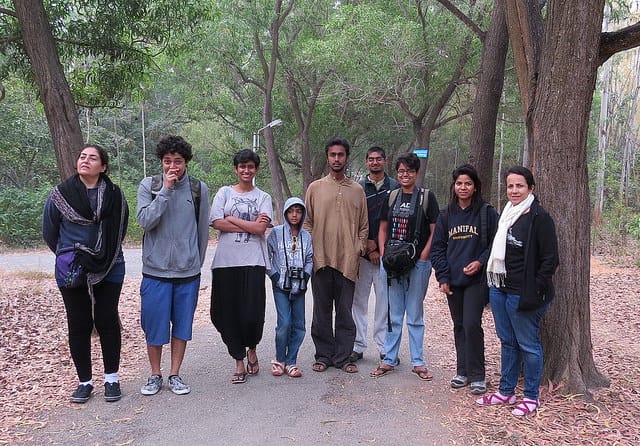
It was a walk where all of us pitched in with what we knew.. and it wasn’t even a walk, it was a slow inching forward, looking around and down, instead of the “up” of a birding trail.
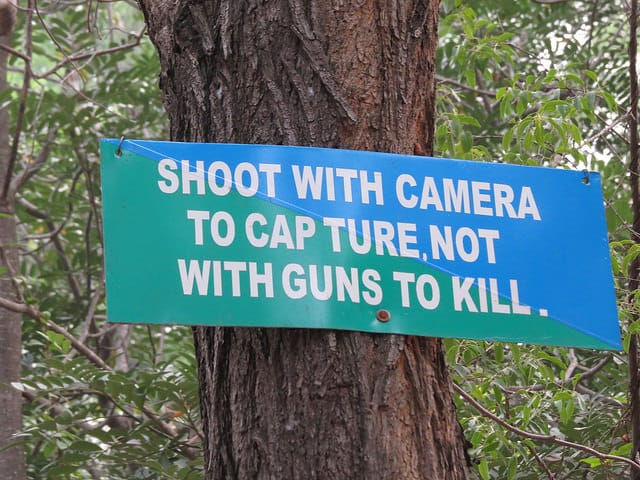
The Forest Department (the blue/green boards are theirs) has gone to town with the slogans, nailing them to the trees… this seemed especially meant for me and the other camera-toters:
Ganesh and Janani, who are botantists, started off identifying the madhunAshini creeper which I had seen earlier on my Banavasi visit.
Here’s the creeper:
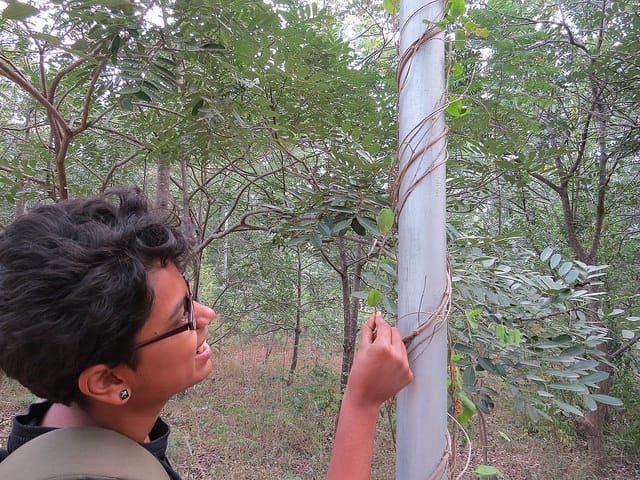
(er, the creeper is on the right)
And Janani and Ganesh are offering us honey to compare the before-and-after-chewing-the-leaf tastes:
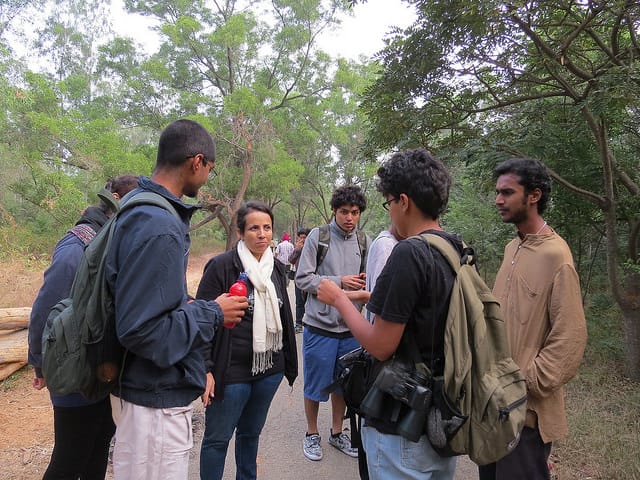
Ganesh showed us the Simarouba tree and sent us this link to Dr Joshi’s work on its cancer-curing properties.
Janani keeps a meticulous, well-drawn field trip record:
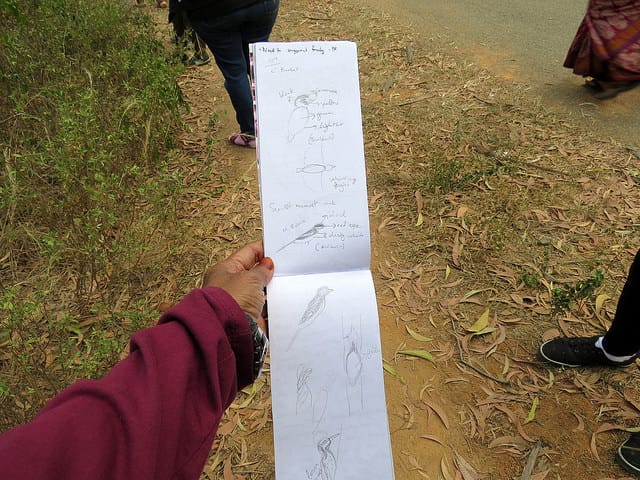
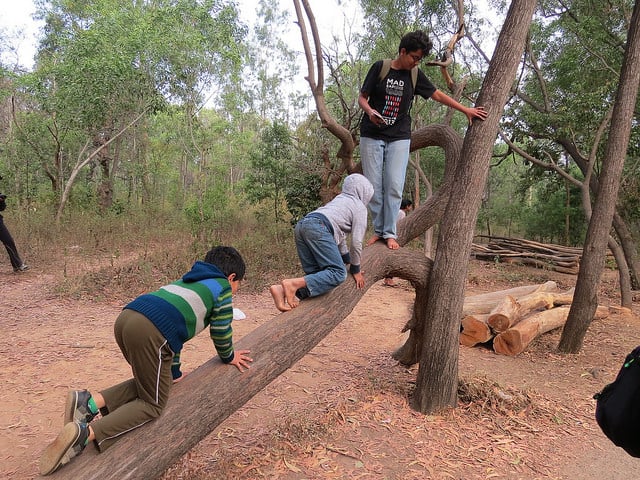
She often conducts an initiative called GreenConnect, where she gets groups of people to connect to trees. Here she is, with the children, enjoying one accommodating tree:
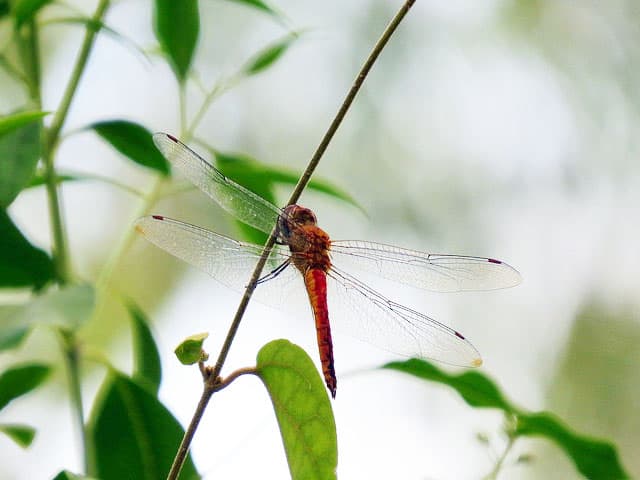
Other things caught our attention too. Here’s a Dragonfly, the RUDDY MARSH SKIMMER:
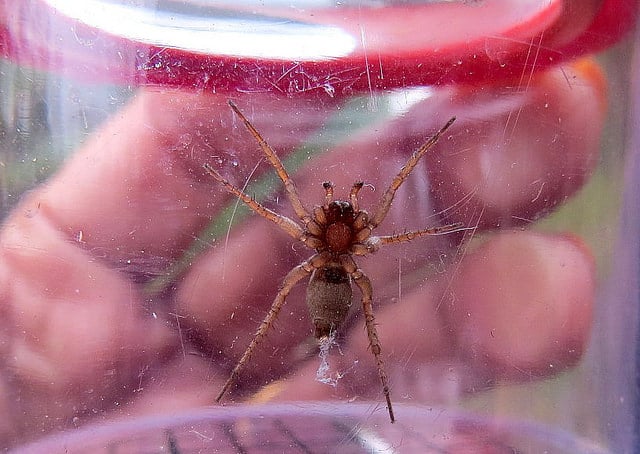
Pranav was excellent at putting little creatures into the “bug box” for observation, for a while, and then releasing them. He got this beautiful spider, with a little silk still attached to her spinerets….
Then it was replaced by a little cockroach, probably one that is in the fields and not our domestic (yeuughh) one to which my love of wildlife does not extend.
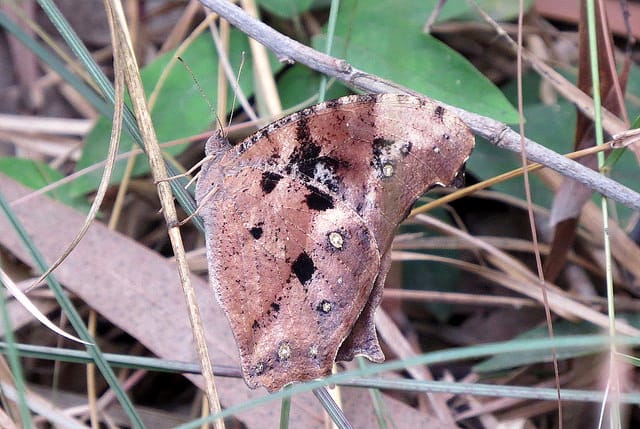
We saw this dry-season form EVENING BROWN looking for all the world like a dry leaf.
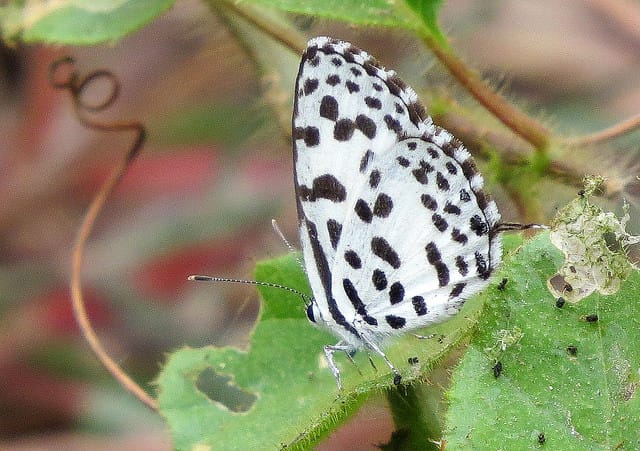
This TINY GRASS BLUE was so very difficult to see in the grass… such a tiny beauty!

There was a COMMON PIERROT too.
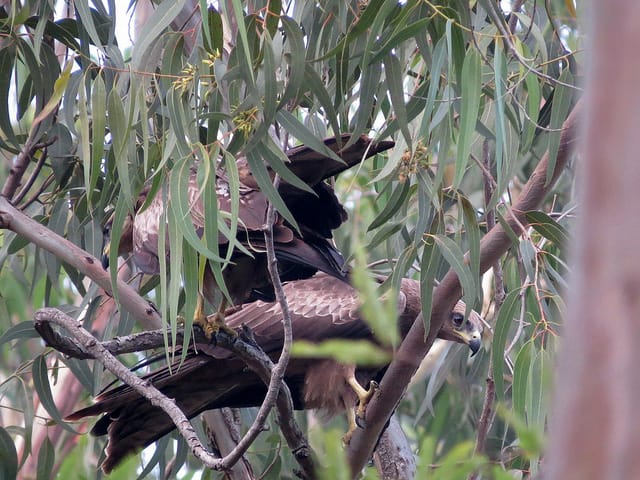
We heard a huge racket from the Eucalyptus trees and found these BLACK KITES mating and also bringing materials to start building their nest.
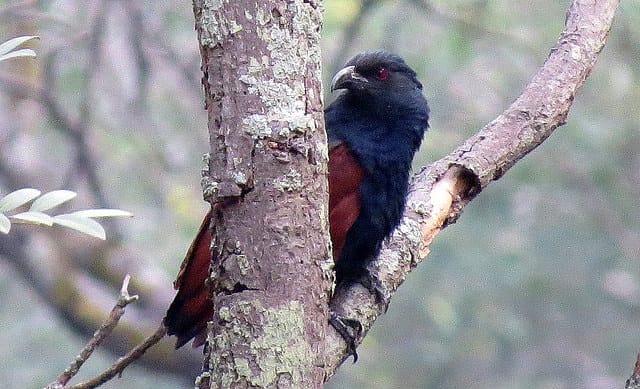
Rewati did the bird spotting (I was literally jobless on this walk!) first, a Shikra and then this beautiful GREATER COUCAL:
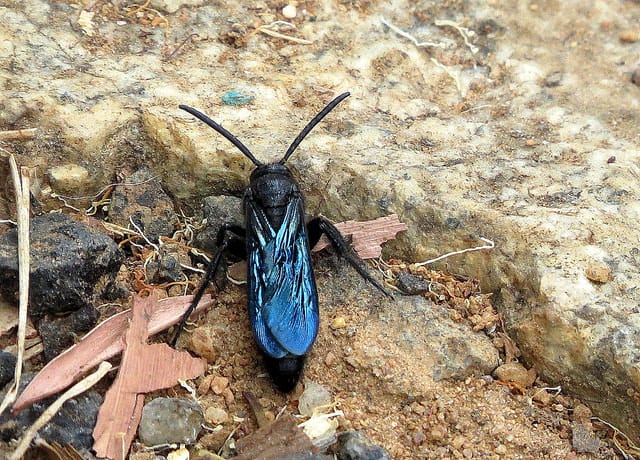
On the way out, I was able to spot this exquisite Scoliid wasp.
My FB album is here.
I hope you’ve enjoyed this nature trail as much as we did!
Related Articles
Umbrella Fishing by Painted Storks!
Plastic can be dangerous in many ways
The rock on which Bengaluru sits