Once the Dahisar toll naaka starts using FASTag from January 1, the city would go completely cashless in toll collection. Although, there is still some distance to go before Mumbai becomes fully high-tech. Since electronic toll collection infrastructure is yet to be set up, the toll collection personnel will scan FASTags with handheld scanners.
Four other toll points – Airoli, Vashi, LBS Marg and Eastern Express Highway- had the option to pay both through cash and FASTag. Dahisar was the entry point, where only cash was being collected.
FASTag, a Radio-frequency identification technology-enabled electronic toll fee collection (ETC) system, has been made mandatory for all vehicles across India from January 1, 2021. The ETC has been enabled at all the 537 toll points across the country.

With 38 lakh vehicles registered in the city in January 2020, Mumbai has the highest vehicle density in the country with 510 cars per sq kms as against 108 cars per sq kms of Delhi. FASTags at tolls might ease the traffic jams to an extent.
Officials of the Maharashtra State Road Development Corporation (MSRDC), which oversees the toll collection for Mumbai through its agent, MEP Infrastructure Developers Ltd (MEPIDL), say Dahisar had a space crunch.
“Currently, there are 17 lanes operational there and we plan to augment with 12 more lanes. Besides, the strip being too narrow, the upcoming Metro-8 project has a pillar coming up right at the toll collection point. There is no place to set up the electronic toll collection infrastructure at Dahisar,” says Vijay Waghmare, joint managing director of MSRDC.
The infrastructure for digital toll collection are permanent set-ups and cannot be installed and shifted later. The import of the toll machinery had also been delayed due to the Covid-induced international freight restrictions. “Currently, we are unable to go ahead because the Metro plans have not yet crystallised,” he adds.
MSRDC tried to acquire a plot, which was used to house the now defunct Octroi (tax) collection centre and is currently lying unused. The Brihanmumbai Municipal Corporation (BMC) that owns the land, could lease it out on rent in public interest to build extra lanes to clear the logjam. The other side of the road has private buildings on it and hence cannot be used for expansion. Paucity of land for expansion and delay in getting land on rental lease basis has held up the entire process, officials say.
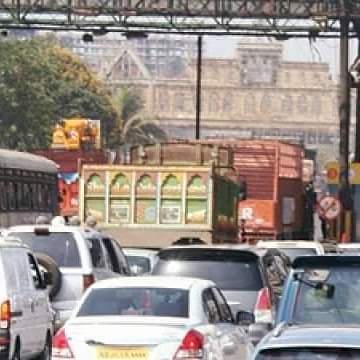
Therefore, they plan to use handheld scanners. It is a relief to the thousands of vehicles that cross the Dahisar toll point every day as cash collection had resulted in serpentine queues at the toll point leading to huge delays especially during the lockdown. Since train services stayed inaccessible for many people, the office-going traffic had spilled onto the roads, further aggravating the situation.
Ravi Raj Dhiria, a resident of Mira Road on the outskirts of Mumbai, spends Rs 80 everyday as toll fee to travel to his office at Andheri. “Though I had subscribed to FASTag sometime back, I was never able to use it at Dahisar,” he says. This will change for him in a few days.
Reaching government coffers
About 2.2 crore vehicles across the country have adopted FASTags. In November 2020, the transaction count of FASTag stood at Rs. 2102.02 crore, according to National Payments Corporation of India (NPCI), which handles payments and settlements infrastructure across India.
Nitin Gadkari, union minister for roads transport and highways expects toll collections in India to reach Rs 34,000 crore per annum by March, 2021. He expects the new GPS-enabled toll collection system to bring in toll income worth Rs 1,34,000 crore in the next five years.
FASTag implementation itself is not a very smooth process. In January this year, right before lockdown, the Union government allowed 65 toll dedicated FASTag lanes across the country to convert to hybrid, to accommodate the long queues at the cash-paying lanes.
Four of Mumbai’s five points were found to be high traffic density points, and thus were granted this facility.
“FASTag comes with scanning issues. At some other toll booths, I have come across laser beams that fail to read the FASTags and the personnel actually get us to move our car back and forth to ensure proper reading. Fed up, I have started holding the FASTag in my hand rather than paste it on the windshields,” says Dhiria.
Hi Ravi
Nicely written
None of the authority is bothered to clear the long traffic jams at dahisar toll. No planning, no management. Moreover the BEST bus stop at toll is adding more jam and problems to people. Only common people has to suffer everyday after paying so much of taxes.