From regular meetings by political parties, to cultural festivals, panel discussions or programmes in schools — hundreds of events are hosted in the Chennai metropolis every day. While they add much to the vibrancy of life in the city, it is undeniable that these events typically increase the burden of waste on our landfills.
Starting from the promotional phase to actual conduct, piled up thermocol, flexi boards, plastic sheets and various other forms of waste, many of them highly toxic, are generated during the life cycle of any event. Ironically, even many environmental events use flex banners and serve food in plastic or disposable plates and bowls.
However, as awareness rises, the trend of zero waste or minimum waste is slowly gaining currency in Chennai. Among the pioneers is the widely acclaimed Urur Olcott Kuppam Vizha, which is actually a ‘zero-waste’ event — a fact that is often overlooked in the hype over the vizha as an arts festival trying to break the elitist shackles of traditional, classical Carnatic art forms.
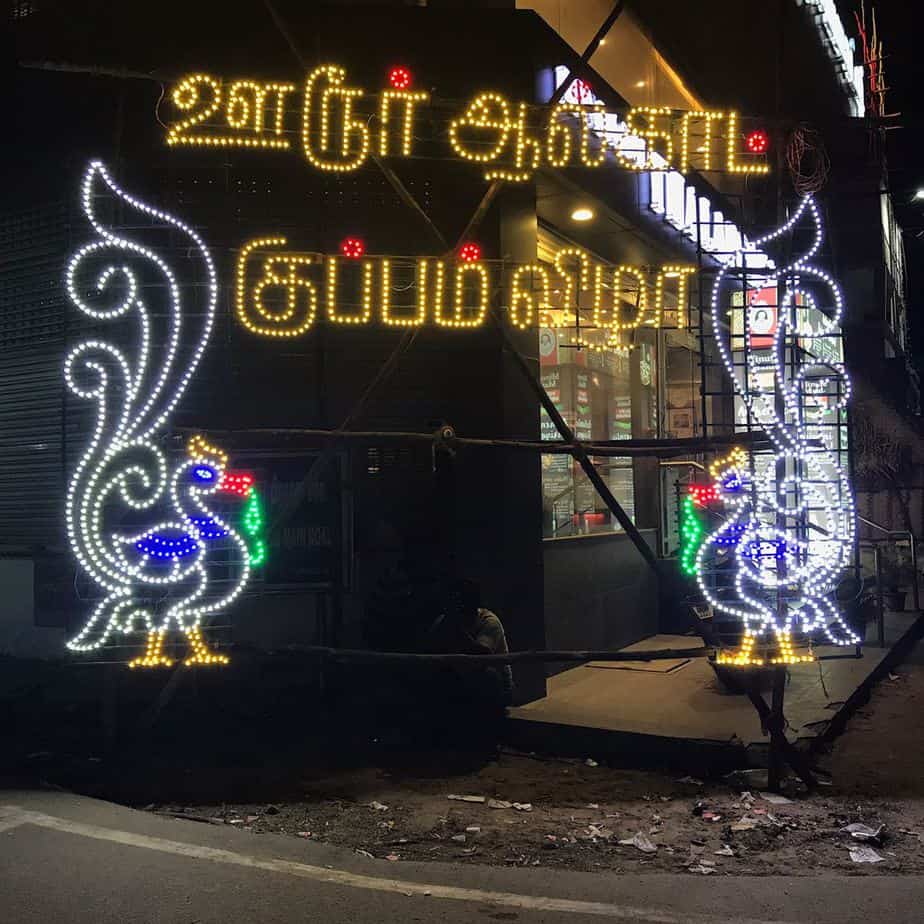 The eco-friendly event has consistently demonstrated the dedication and sensitivity of the organisers, who prioritise nature over the petty comforts of audience. A cloth banner with hand-painted words welcome the audience to the festival.
Dharmesh Shah of Gaia, an organisation working on zero waste and a member of the Vettiver collective that organises the event said, “By using cloth banners, we got rid of the flex culture. Flexes contain Polyvinyl Chloride, which when burnt releases dioxin, one of the most toxic chemicals banned by the western countries.”
The entire concept of the Vizha is focused on environmental sustainability. You would not find a single shop in the vicinity to buy a water bottle. There are no plastic containers or liners to serve the food. Palm leaves replace plastic plates at the food section. “Tumblers were used in water stations and tea stalls. We had employed people to clean the used tumblers. This effort saved us from relying on plastic or paper cups,” says Archana Sekar, a member of the Vettiver Collective.
The concept of ‘reuse’ is practically implemented by the team, as the decoration material and the banners are used every year.
A printed press release with the schedule and details of the speaker is given out in almost all events. But the organisers of the vizha broke away from the culture with a shift to technology. “Why do we have a SmartPhone? We did not print out the booklets, since the schedule is online,” added Archana. They also relied on local vendors to borrow the equipment needed (for example, speakers) to reduce the ecological footprint in transportation.
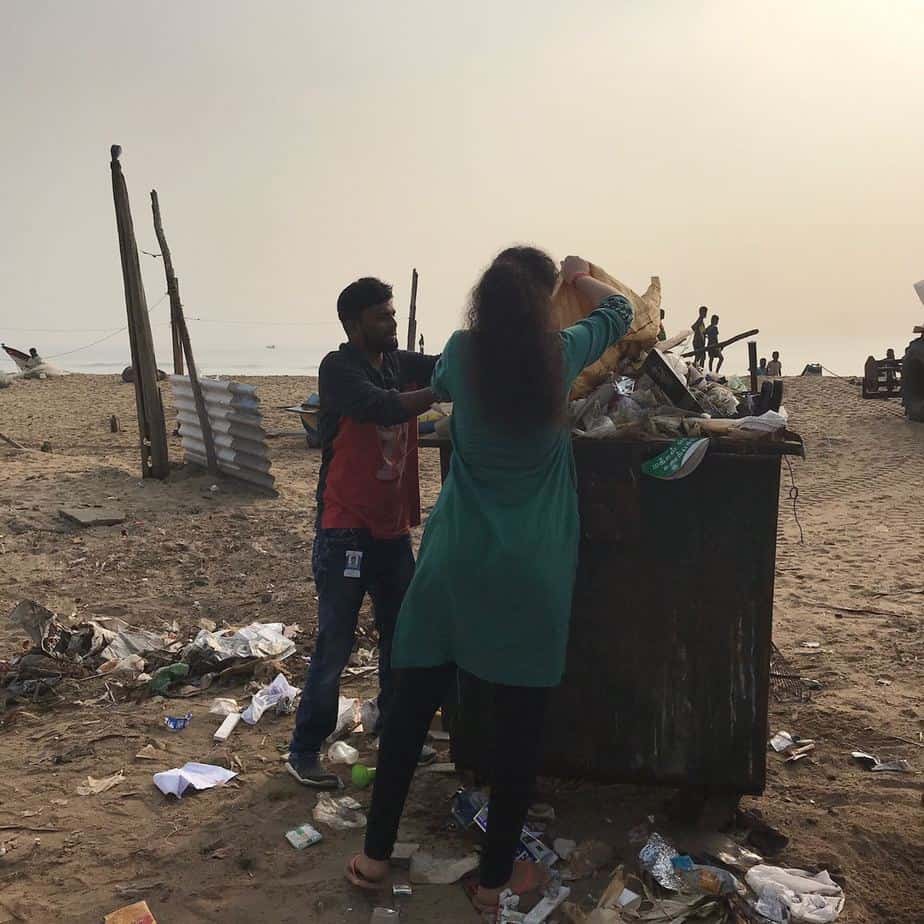
Volunteers clean the space at the event. Credits: Archana Sekar
A collaboration with the student community, like-minded activists and senior citizens has made the Vizha such an eco-friendly event. Students from the KFI school prepared the handmade decorations, which shall be reused in successive years. According to the event organisers, it is better to generate less or no waste rather than cleaning it up.
“A total of 25 students volunteered at the festival, as part of the waste management project. They were highly sensitised to the zero waste initiative. It is important to inculcate environmental values from a tender age,” said Yoshida Menon, coordinator of the global citizenship programme in Chettinad Hari Shree Vidyalayam.
However, there are still a few hiccups. The screen printed T-shirts require the use of colour dyes, which is not entirely eco-friendly. “No event can be completely zero waste. We are constantly exploring options to do it better,” Archana said.
Inspired by the eco-friendly ways of the Vizha last year itself, Don Bosco Institute of Communication Arts had conducted an inter college fest which also generated zero/minimum waste. “Despite embracing zero waste philosophy in the previous festivals, we never really promoted it as one. The main mission this time, is to inspire people, so that we see many more zero-waste events. We have seen that there has been an effort among the student community to follow suit,” said Archana.
It is nice to see this urur olcott vizha becoming more eco friendly and more inclusive of different communities.this vizhal is being celebrated every year. If urur olcott kuppam becomes more eco friendly hamlet besides just the vizha being ecofriendly, that would be the great change and the value added culture this vizha could bring