Using tricolour where images of gods fail!

Will tricolour deter people from dumping waste in vacant plots? Josephine Joseph tries a unique method to stop people from dumping.

It’s been a year since we moved to this home in ISRO Layout. A terrace for the kids to play, another terrace for our Kambha / stand-in pot and yet another one for my terrace garden plot. Perfect? No. What set off the home-happiness balance was the empty plot next door. It’s been a year long journey of attempts to locate the owner, getting BBMP to stop dumping in the site and stop burning garbage and dry leaves in the site. Telling the PKs, calling the BBMP control room, catching supervisors in action setting fire to garbage piled up.
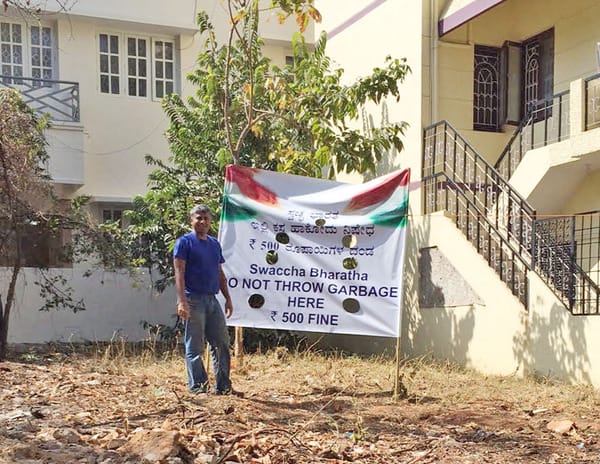
We finally paid a bomb and got it ‘cleaned’ (clean is an extremely subjective word). We got a banner printed, we did contemplate pictures of Gods or popular faces to instill the fear of God, but since we didn’t have any allegiance to them we hoped the hint of the tricolor will work. What we did maybe clutching on to straws, may be a short term but we had to try. The whole exercise of chasing and then doing it yourself does take its toll mentally, so I give my other half more than cent percent marks for seeing it through till here!
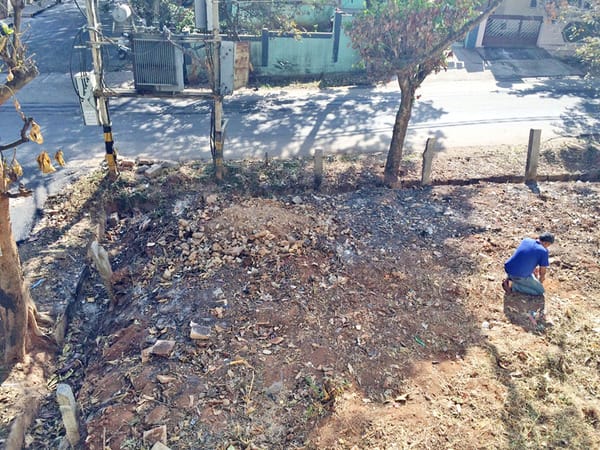
We have no clue what we have brought upon ourselves. Lighter wallets for sure, but with the hope that at least for a few weeks or months even, our home and that of all the neighbours around is smoke free and healthy!

Related Articles

All it took was Rs 850/- to fix the ugly spot in Church Street
The Ugly Indian releases blackspot fixing report card

Comments:

  1. frg says:

    Please post the image used to print the banner online for public usage

Leave a Reply

Your email address will not be published. Required fields are marked *

Similar Story

Shaping Bengaluru: “Citizens can add real capacity through local knowledge, feedback”

We spoke to authors of the Janaagraha report, ‘Shaping Urban India’ to understand its recommendations in the context of Bengaluru.

“The road is broken, buses are overcrowded, traffic disrupts daily life, garbage piles up on the streets”—these are everyday complaints of citizens across Indian cities. In Bengaluru, these issues only seem to be worsening with passing time. Bengaluru’s built-up area grew by 85.19% between 2001 and 2020, resulting in commuters losing 168 hours (one week) annually to traffic congestion. As the city grows rapidly, governance systems, data frameworks, and citizen participation have failed to keep pace with its increasing complexity. What would it take to bridge this gap?  A report by Janaagraha, a non-profit working to improve the quality of…

Similar Story

India Civic Summit 2026: Spotlight on changemakers transforming cities

From waste management to urban forests, the Indian Civic Summit spotlights residents that are driving change in their cities

Cities are the heart of the Indian growth story. Vibrant. Crowded. Diverse. Multidimensional. And yet, as we look around us, we find that they are ridden with problems and face multiple threats to their ecology, habitats and human lives. The crises in our cities make it hard to imagine an urban future that is truly inclusive, sustainable and marked by high liveability standards. But as the oft-cited quote from anthropologist Margaret Mead goes, "Never doubt that a small group of thoughtful, committed, citizens can change the world. Indeed, it is the only thing that ever has."  That is perhaps the…