Anthropologist Margaret Mead once said, “Never doubt that a small group of thoughtful, committed citizens can change the world; indeed, it’s the only thing that ever has.” But, what about systems that make it harder for groups to materialise and facilitate change?
Let us imagine, as a thought experiment, that a group of like-minded individuals, wanting to transform a city, is established. These might be people who have the time, space, energy and intent to do this. Those with wealth and cultural capital could bring resources in, and those marginalised by the state could bring intent and a personal drive. Different kinds of people, ultimately, could be a part of the change.
The lack of a transparent system
Perhaps the next hurdle for a group of changemakers, after finding each other and establishing a base, would be an opaque system that refuses to disclose how it works. This is characterised by confusing, bureaucratic processes that are cumbersome and demotivating.
If and when the group manages to navigate the system, it could face the risk of backlash, often by the state. When thousands of crores and millions of square feet of public space are at stake, no system will further its development without a fight. And for such a group to have any impact, it will need to include at least 3.5% of the entire population, to become a tipping point. For a city like Mumbai, that would be 350,000 people, whereas the largest citizens groups have at best a few thousand supporters.
What does one do then?
Perhaps the answer lies in balancing activism with constructive citizen politics.
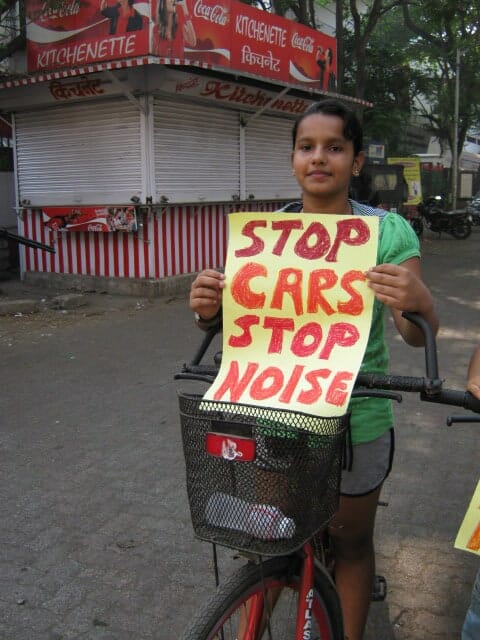
As citizens, we have to do two things simultaneously. One, to speak truth to power and raise our voices where we see things going wrong. This can be done through filing civic complaints, Public Interest Litigations, and petitions. Like the Save Aarey Movement, protest is an essential part of this work.
However, doing too much of this can overstate what is wrong and evoke emotions of anger, helplessness and angst.
So, the second thing to do would be to recognise and amplify hope. We need to share success stories, where the government and administration have delivered (and there are many). We have to point out places where citizens have successfully collaborated with the establishment.
Finding and establishing hope
A part of this approach is also to humanise the administration, and even councillors if one can. It is to assume good intent on the part of at least some people in our government. In my personal experience, I can attest that many good people are trying to serve the samaj through the sarkar route.
Read more: How Mumbai citizens partnered with BMC to make these landmark public spaces
If we dream of creating resilient societies, they have to be filled with hope, energy and care. A middle-class movement can only emerge when its politics naturally resonate with its demographic. Rather than activism that can be overly critical, the idea of engaging constructively is more amenable.
Constructive politics is a non-violent approach to making change happen, the one where the villain is not the politician but the indifferent citizen. And, by trusting our capacities and the intent of those wanting a better city, we can manifest a city we deserve.
Of the 10,000 people working in the social change space in Mumbai, let us aim to organise 3.5% of them. This could mean a potential ripple across the city.
With the BMC elections approaching, it is a great time to release this energy and show up for something we care about. In just a few hours a week, any citizen can connect to their local issues, make their voice heard and do something about what troubles them.
Those wanting to be re-elected will be listening. Let’s invite them to co-create a city of hope. A city of dreams. A city that we are proud of. Our home, Mumbai.