Like everything else, COVID-19 took the sheen off Maximum City during Ganesh Chaturthi as well. Celebrations, laughter and songs would have been in the air, if not for the lockdown.
In Mumbai, usually the festivities go on for 11 days, when roads are blocked by massive pandals, music blares through loud speakers and groups of people dance their way to the beaches to immerse the elephant-headed God.
Well before the festival, the government issued standard operating procedures, aiming to avoid crowds and the spread of the virus.
They restricted the height of large idols that are generally housed in community pandals, and have asked people to use online media to pray to Lord Ganesha.
They have also encouraged people to keep the idol in their homes, and try to have statues of marble or metal that can make do with a ritualistic immersion at home.
While some paid heed to these suggestions, others did not.
Over the last few years, much has been done to improve people’s awareness on pollution caused by the festival.
Mumbai’s beaches were left as dumping yards after the celebrations. Flowers, food items, alcohol bottles and other things were strewn across on the sand. The waves of the sea swept away many of these, causing unnecessary marine pollution. Not to mention the harm caused to the sea when humongous painted idols were dropped in it. Noise pollution caused by loud music added to the mix.
The pandemic has certainly given the sea a break this year. However, in the last few years, there has been a growing awareness about the harmful effects to the environment caused by mass festivals. And people started switching to eco-friendly Ganeshas. This year, with the pandemic, there are likely to be fewer immersions, and hopefully more eco-friendly Ganeshas.
Here’s a selection.
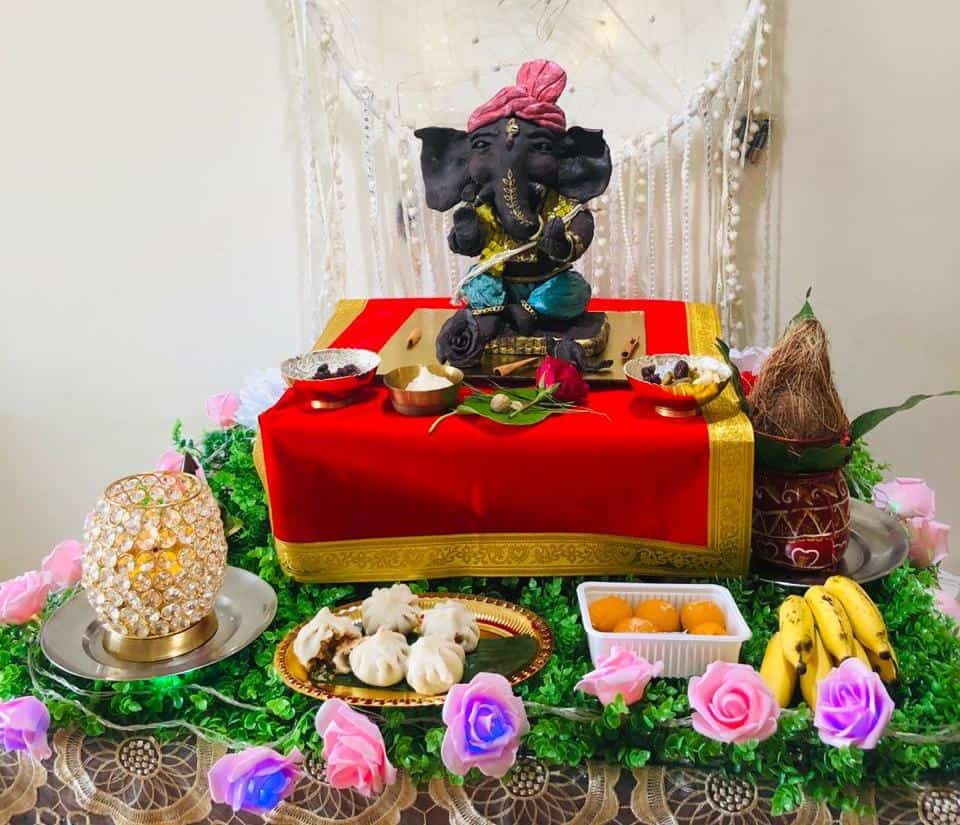
To spread the message of eco-friendliness, Aditi Garg from Mumbai has been making Chocolate Ganeshas for several years. “A Ganesha that will not end up in the sea will help save our environment, especially the marine life and make people think while doing such activities during festivals.” The most delectable thing about her initiative is that the immersion is done in milk at home only and the chocolate milk prasadam is distributed to children and people in underprivileged families through an NGO.
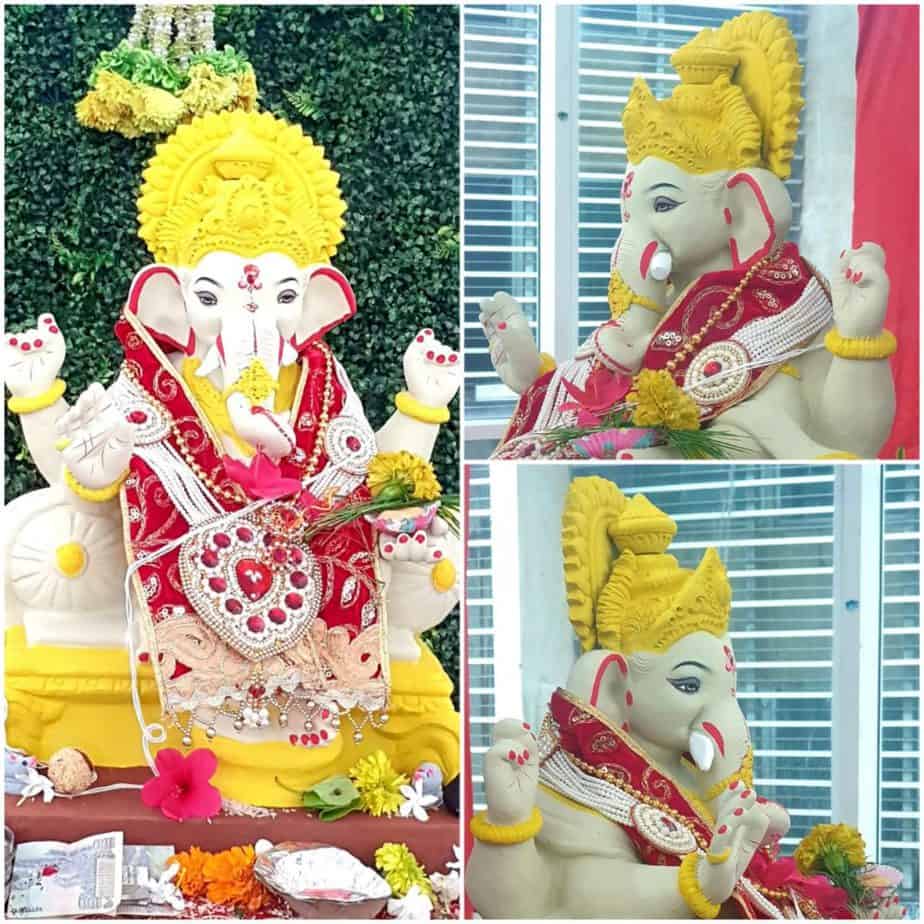
Whispering Palms XXclusive CHS chose a clay Ganesha that has been selectively painted in bits of yellow, red and white natural colours only. “We’re happy to give some business to the ‘eco-conscious’ idol makers.” The idol will be immersed within the premises itself and the water will be used for watering the plants.
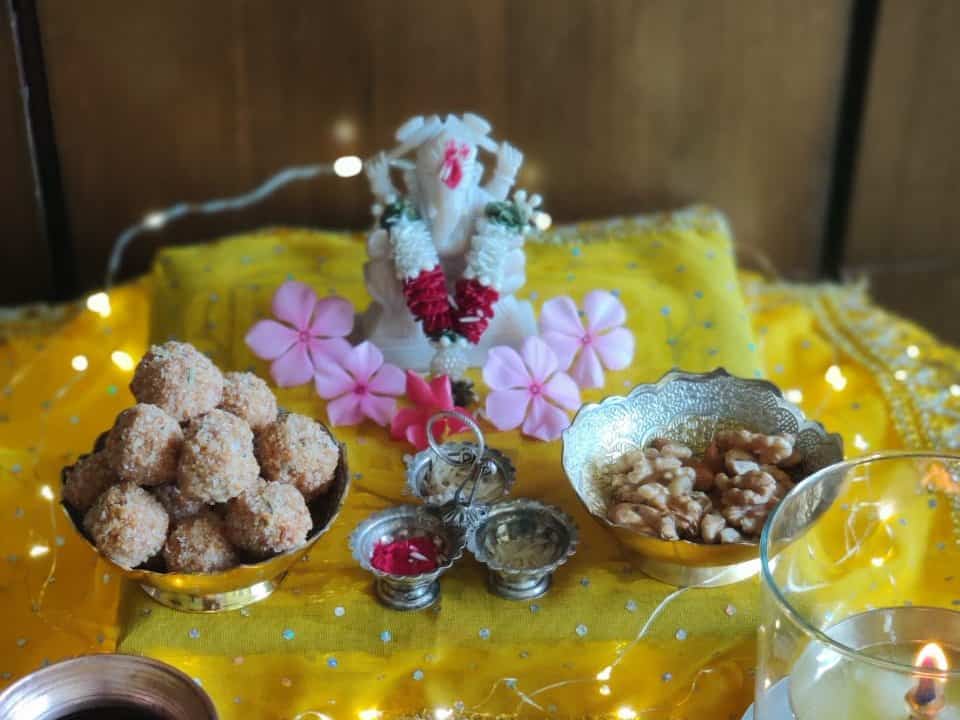
Sadhna’s family has been using a marble idol for some years. “It is better to do this than adding to the pollution that immersion involves. Partially dissolved idols are not a nice sight and also not respectful to God.” They will immerse the idol in water for some time, and then take it out and bathe it.
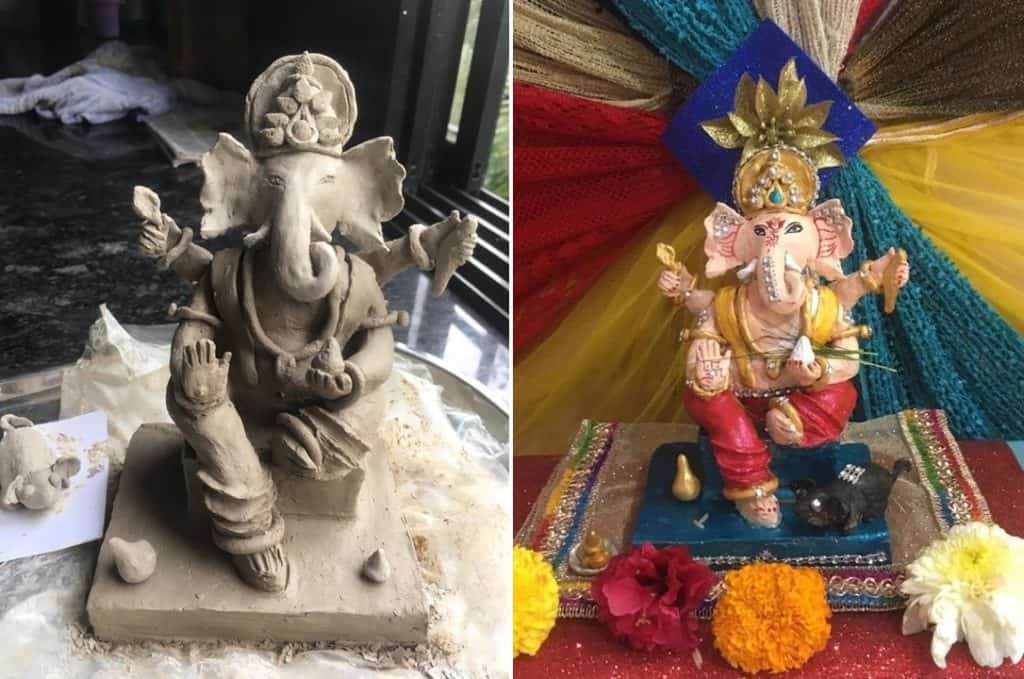
The Ganesha in Aparna’s home has been made by her, using water soluble grey clay “Shadu ki mitti”, and painted with water colours. They will be doing immersion in a tub and use the water for the plants. “My faith shouldn’t be destructive for the environment.”
The following are some of our favourites from other parts of the country.
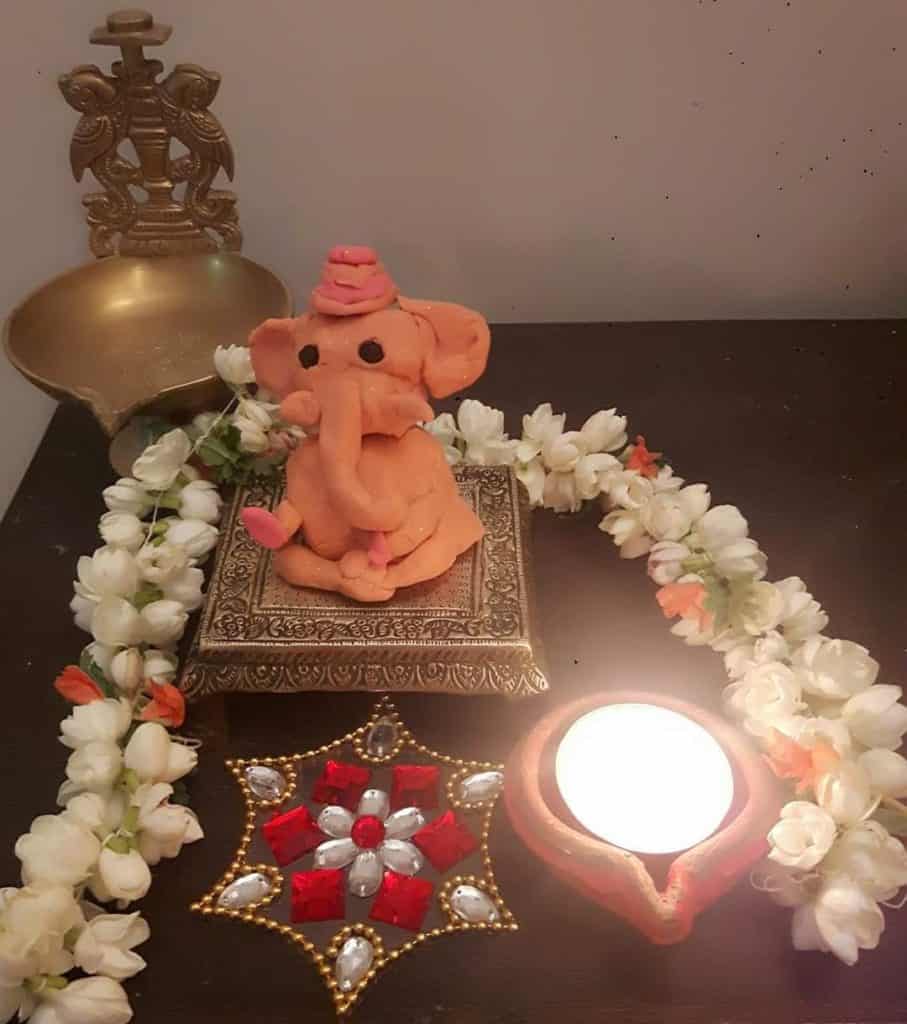
Every year, the girls Punya and Prarthna and their dad Prithvi, have been making Ganesha at home, using different materials. This year they used maida and haldi.
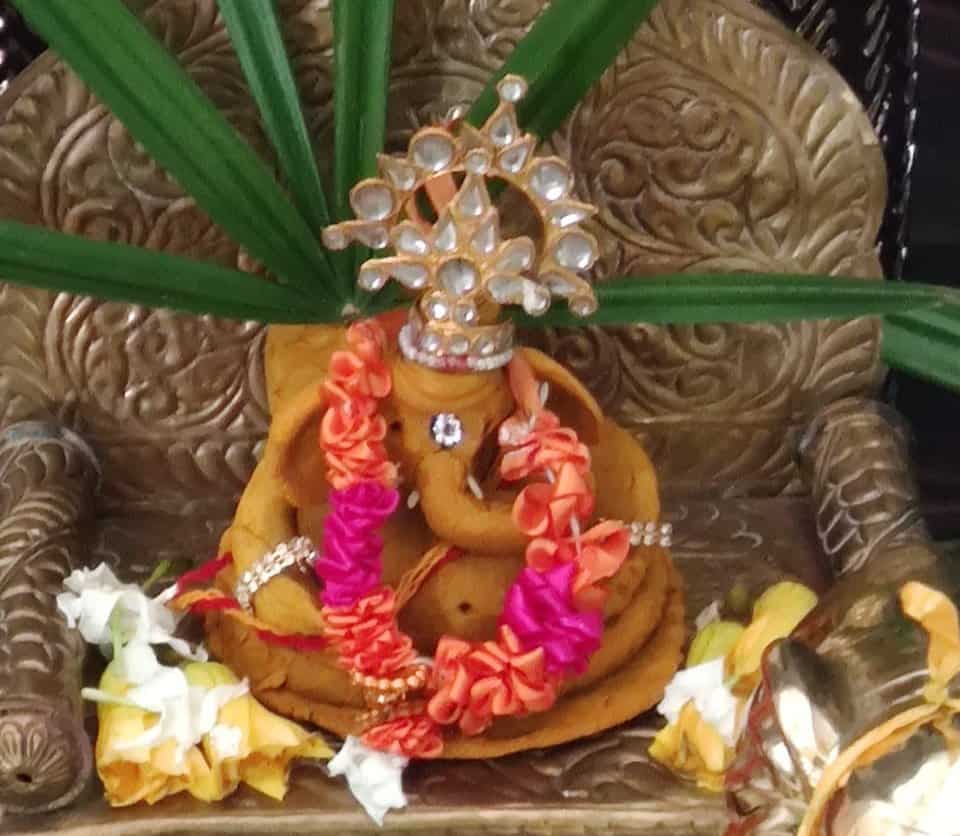
On account of the pandemic, the Grover family decided to make their own Ganesha this year, with wheat flour (atta). “It’s much smaller than what we normally buy, but we’re happy it’s totally natural.”
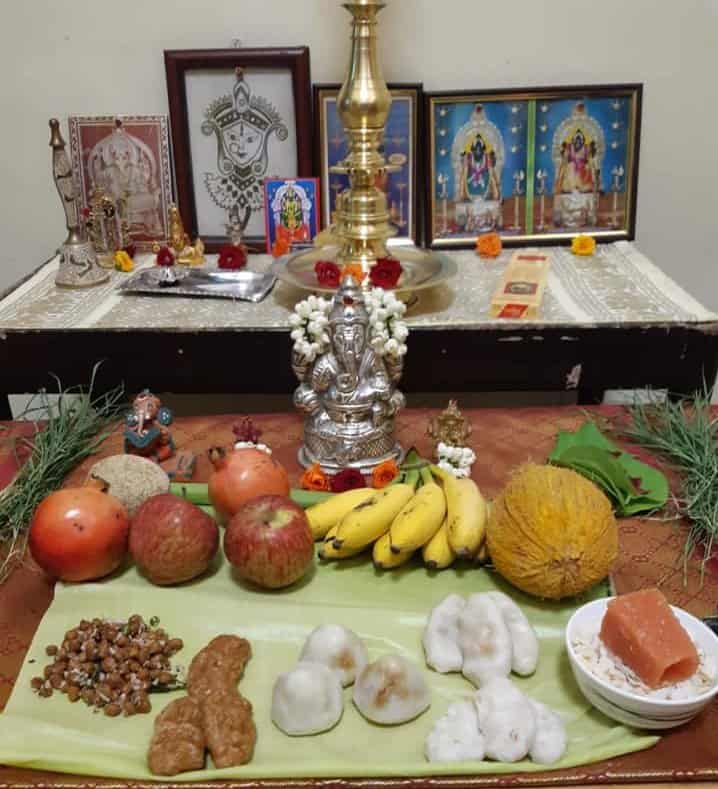
Sujatha’s family has always celebrated the festival, but they’ve never had an idol that needed to be immersed. The metal Ganesha idol is worshipped daily in the puja room, but for the festival, they just make it special with some additional decorations and Ganesha’s favourite food. “Everyone in the family is pious but at the same time, we have never liked our water bodies getting contaminated.”
Related articles
COVID dampens Ganesh Chaturthi cheer; Pune idol makers in deep distress
Tête-à-tête with Mumbai’s own Bappa