Sometimes Harvestmen are not farmers

Did you know that some spiders are also called harvestmen? They're not always scary—you just have to observe them to see their beauty!

Most of us shudder at the sight of spiders, but they are really fascinating creatures. Did you know that most spiders are solitary… and cannibalistic? Many female spiders eat the males after mating!

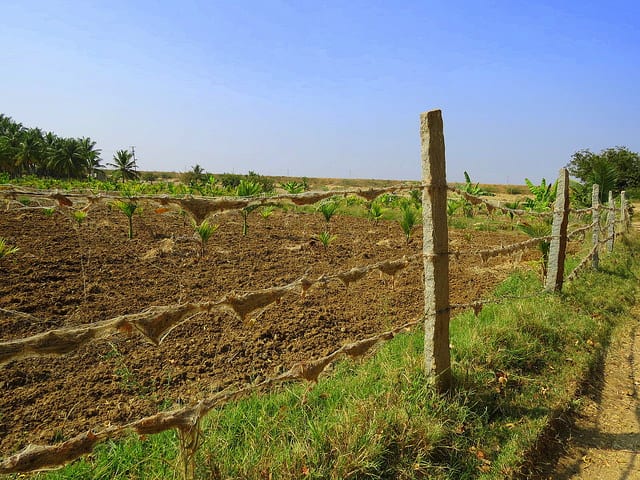
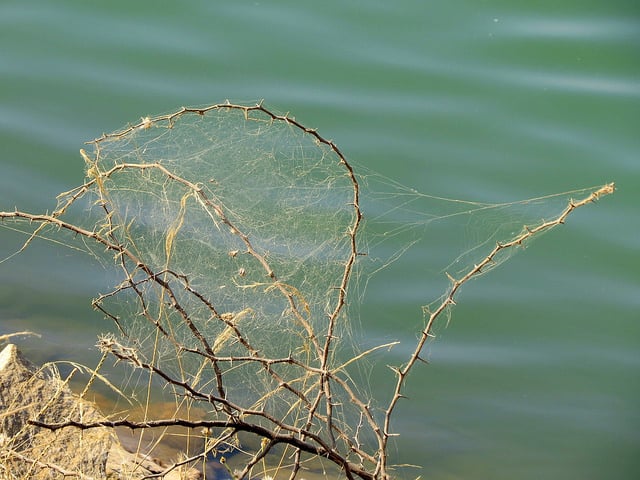
However, there are some spiders that are more sociable. One variety called Social Spiders, spin whole “apartment” complexes, which can cover large areas, like long stretches of this barbed wire fence:
Or over plants, as you can see here:
However, there is another group of spiders which are commonly called Harvestmen or Daddy Long-legs (they have long, thin legs)! Scientifically their name is Opiliones, but they are also referred to as “shepherd spiders” in reference to how their unusually long legs reminded observers of the ways that some European shepherds used stilts to better observe their wandering flocks from a distance.

They suddenly came to my mind when I looked at what I thought was a dark patch of small twigs on the trunk of a tree…
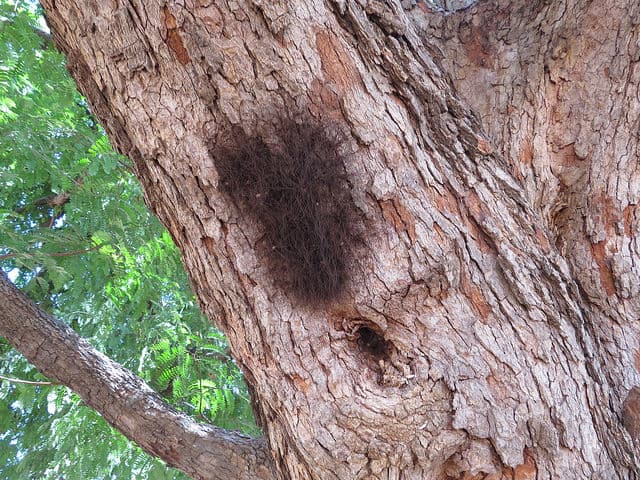
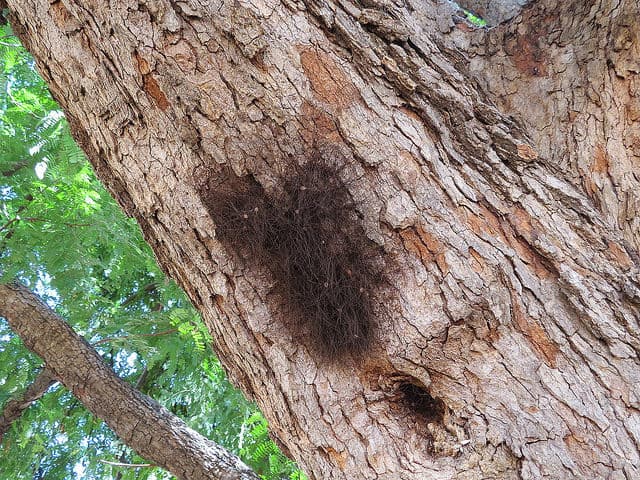
… and found that they were actually a tightly-clustered group of Havestmen:

I also took a short video. You can see them moving on their spindly legs, hardly seeming to touch the bark of the tree!

Here’s my friend documenting the congregation after I showed him the spiders:
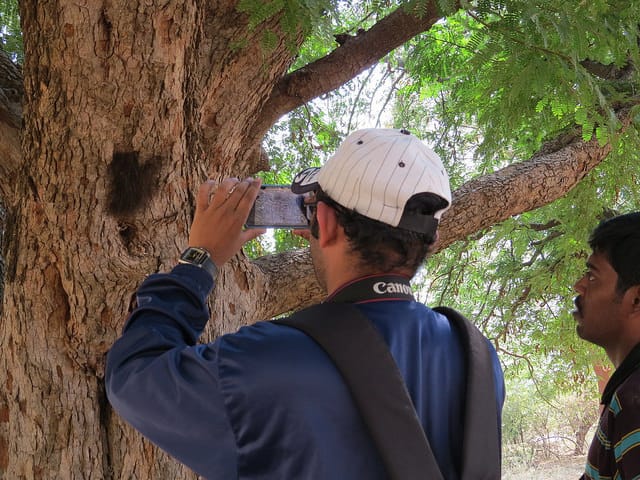
Harvestmen are very old arachnids. There are fossils from 410 million years ago that prove that the group has lived on land since that time. How wonderful to come across these marvellous creatures!

I hope reading this post may help remove some of the fears of arachnids (spiders) that many of us suffer from, and allow us see them for the fascinating creatures that they are.

Related Articles

Umbrella Fishing by Painted Storks!
The rock on which Bengaluru sits
Purple is beautiful…and common!
The bird of State, with blue throat!

Comments:

  1. Ashok Kumar S says:

    Interesting 🙂

Leave a Reply

Your email address will not be published. Required fields are marked *

Similar Story

From Kuruvimedu to Besant Avenue, how Chennai breathes unequally

Ahead of the art exhibition ‘Pugai Padam’, this photo essay captures the contrasting realities of air and the lived experiences of air pollution in Chennai.

The chimneys of the NTECL Vallur Thermal Power Station, billowing smoke, loom over Kuruvimedu in Ponneri, Thiruvallur near Chennai. Wedged between the plant and its sprawling 300-acre ash pond, the hamlet lies under a blanket of kari (coal) and sambal (ash), coating its narrow streets, colourful homes, and trees. Kuruvimedu is hard to find on Google maps, just as its namesake bird. The main road leading to this place is flanked by factories and industrial complexes, its surface riddled with potholes that make every journey dangerous for motorists.  Home to mangroves, networks of canals, and fields, Kuruvimedu once buzzed with…

Similar Story

Pallikaranai’s 1-km buffer zone sparks debate on housing rights, encroachment and ecology

On World Wetland Day, Chennai's Pallikaranai marsh shows how decades of state‑sanctioned encroachment leave residents and ecology at risk.

Across Pallikaranai marshland, migratory birds can be spotted, searching for forage and water. Yet the wetland they depend on has steadily depleted. As Chennai has grown in an amoeba-like manner, ebbing with the promise of ‘development,’ the marsh has borne the brunt. In the 1990s, the marsh covered 2,450 hectares, nearly 70% of its original size. Today, barely 500 hectares remain. In recent years, the marshland has often entered public discourse. In September 2025, Chennai Metropolitan Development Authority (CMDA), acting on an order from the southern bench of the National Green Tribunal, halted planning permission for development within the Pallikaranai…