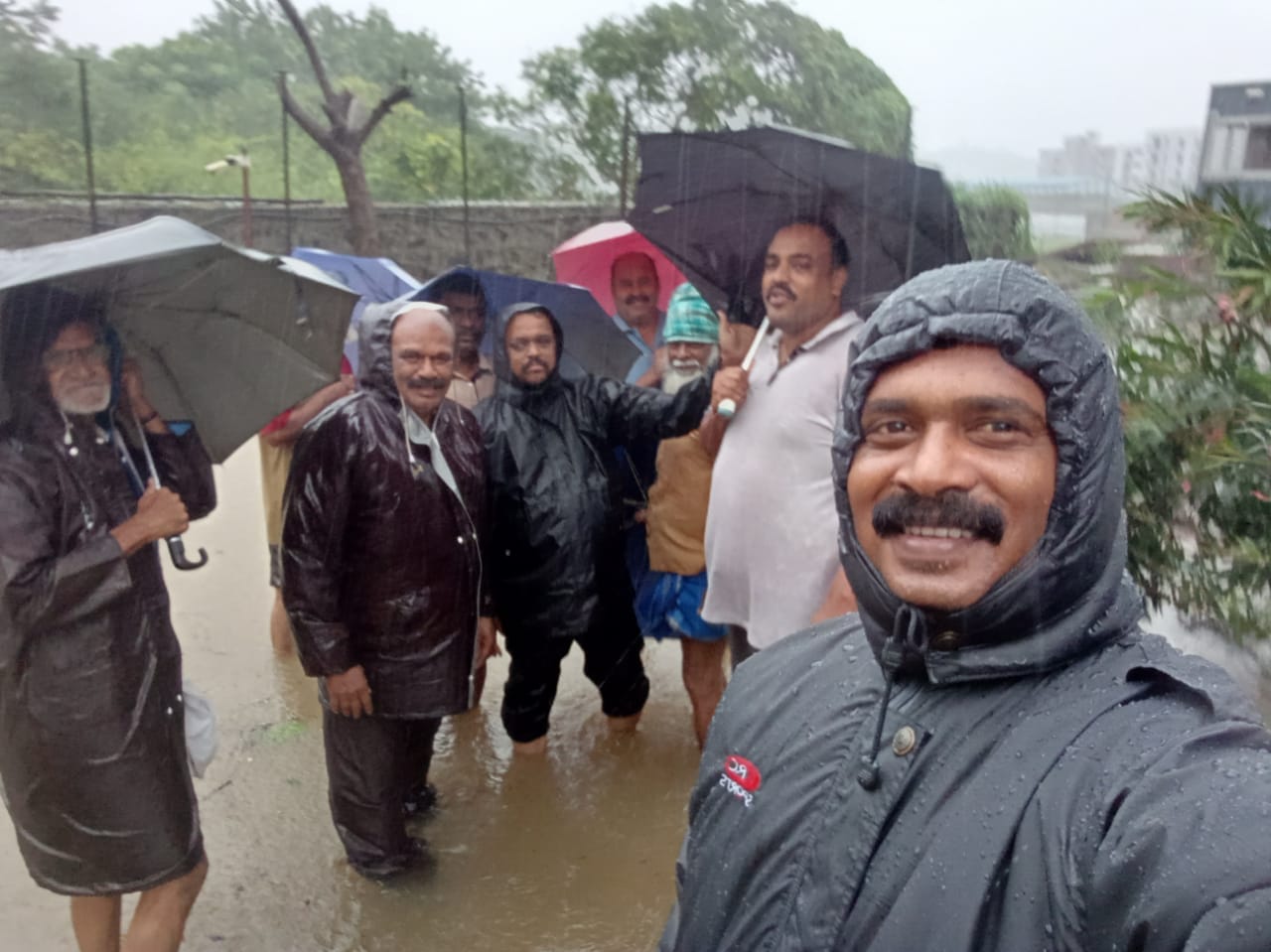
When Cyclone Michaung was wreaking havoc over different parts of Tamil Nadu on December 4th, with the heavy rain and squally winds battering Chennai and its suburbs, a small group of residents in Tambaram swung into action. Among the many stories of distress and wreckage, the efforts of these individuals to prevent floods in low-lying areas and to stop water from entering homes, while ensuring relief supplies to affected communities was heartening.
Dr S M Govindarajan, Founder President of the United Federation of Residents Welfare Associations of Tambaram City Corporation narrates how flood control, rescue-and-relief work were taken up by RWA members from various localities in the area, under his guidance.
Lakes brimming with water
Read more: Four recommended steps for a flood-proof Chennai
“During the heavy rains, the capacity of all the lakes in the area — Perungalathur lake, Thiruneermalai lake, Kilkatalai lake and Sembakkam lake was full and the excess water was entering the low-lying areas. We got panic calls from residents in these localities to help mitigate the impending flood situation. The Tambaram City Corporation never took up any pre-monsoon work; they did not do desilting or cleaning of the storm water drains before the rains because of which the excess rain water was not flowing into the drains properly. Many people tried to get in touch with corporation officials but there was no response. Then they reached out to us for help.”
The affected areas included Perkankaranai (Perungalathur), Pammal, Anakaputhur, Hasthinapuram, Nemilichery, Kilkatalai, Thiruneermalai, Sembakkam and Madambakkam. Members from different resident associations in Tambaram, got together and formed a task force and they immediately got working to see that the damage from the floods was minimal.
“Volunteers from the Pammal area belonging to the Pammal Nalavazhu Sangam, Tax Payers Association and Friends group — Sivasankaran, Navarrasu, Poornima Balu, Sakthidasan, Saravanan, Mariyappan, Thangadurai, Dheena, Asam Bai and Anandhan were part of the rescue operations. The following volunteers from PP Residents Welfare Association Perungalathur were also part of the team that took part in flood mitigation efforts — Mahendra Bhoopati, Balachandar, Mahesh, Velu, Murthy, Satish, Saravanan, Raja, Bhagyaraj (who provided the JCB), Manikandan, Ajit, Poonkavanam and Murali. The main aim was to ensure that the overflow of the water from the lakes towards the storm water drains (SWDs) is normal and not directed towards the residential areas, so as to prevent homes near the lakes from getting flooded or damaged,” adds Govindarajan.
Braving the heavy rain and treacherous flood water, the team of men and women started diverting the water using sandbags, and removing any obstacles and debris. A JCB was brought in to clear the path and make way for the rainwater to flow into the storm water drains (SWDs). Some of the team members cleaned a few blocked SWDs to ensure smooth flow.
Read more: In Chennai’s resettlement colonies, life comes full circle with the floods
Help to the needy
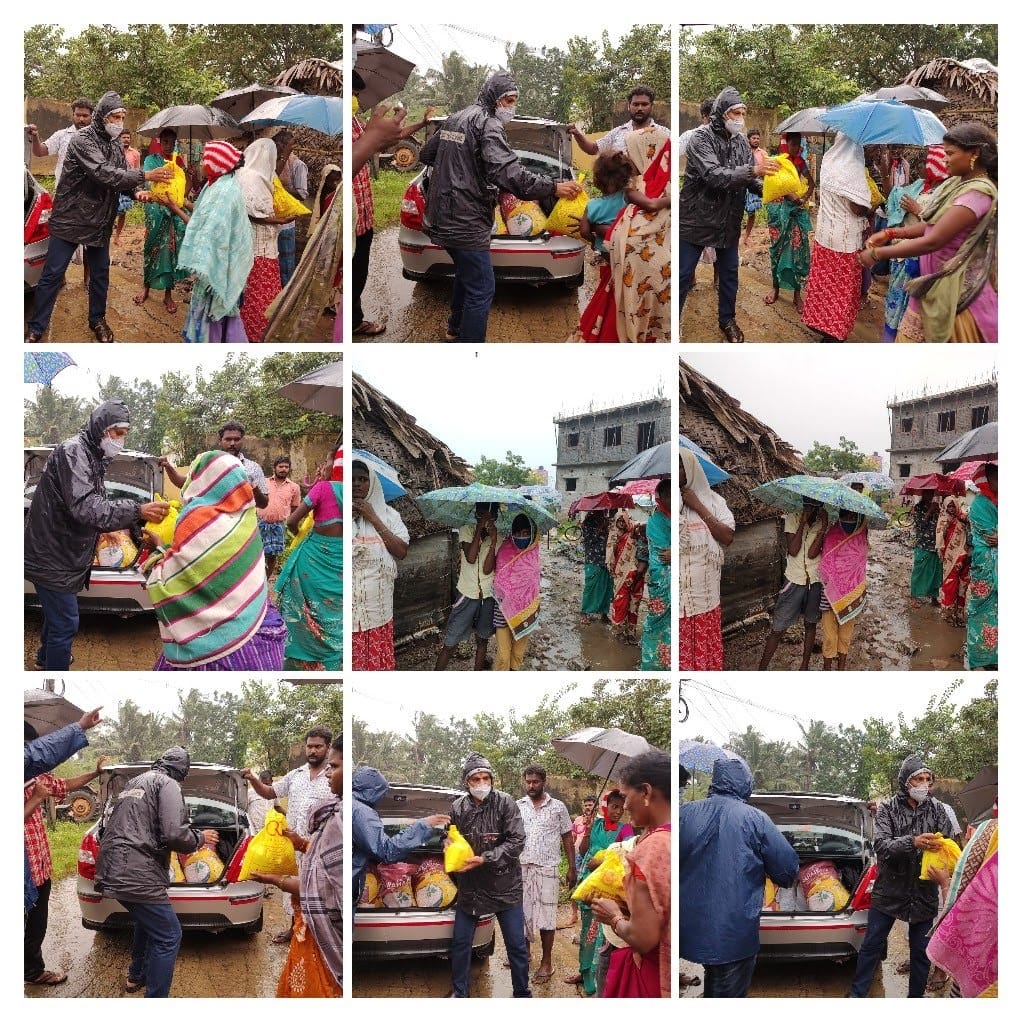
“Also, during such disasters, people rarely spare a thought for marginalised communities. On Monday evening, I and a few other team members distributed essential supplies like rice, sleeping mats, LED lamps, blankets, bedsheets, milk powder and other items to a community of Irular tribals residing in a hamlet in Chengelpet. These were provided through my family trust — Sri Ranga Ramanuja Seva Trust, which has been formed to help people in need. Around 200 beneficiaries were given these items. We have also coordinated with the electricity board officials to remove uprooted trees and ensure that power is restored in these areas as soon as possible.”
The residents’ team from Tambaram were also coordinating rescue work in some of the heavily inundated areas in the city, passing on information about stranded people to the city and district authorities, while also distributing food packets to residents.
“Every time we cannot expect the Government to do everything, as citizens of the country, we have a social responsibility to do our bit and contribute to society, especially during such adverse situations,“ adds Govindarajan.
Also read:
Urban floods: Why some areas in Chennai are worse hit than others
50% stormwater drains lost: Bengaluru’s flooding is no surprise
Excellent coverage of the news . Kudos to the team