“The lockdown around me is making me feel lonely, and I don’t understand how to make myself feel better. I also want to help my parents in some way, but I don’t know how to do so…”
Today, we find ourselves in a world which is more overwhelming, challenging and restricted than before. With the COVID-19 pandemic, physical health is on everyone’s mind, and mental health has become an inevitable casualty.
Children from low-income communities of India are facing adversities that have long-term psychological, emotional and physical effects; situations have worsened causing economic and financial ramifications, leading to issues such as starvation.
Saturday Art Class, is a not-for-profit organization operating in the education sector. We function as a school-based intervention, working towards socially and emotionally empowering children from low-income communities by taking them through a process of creative exploration and expression.
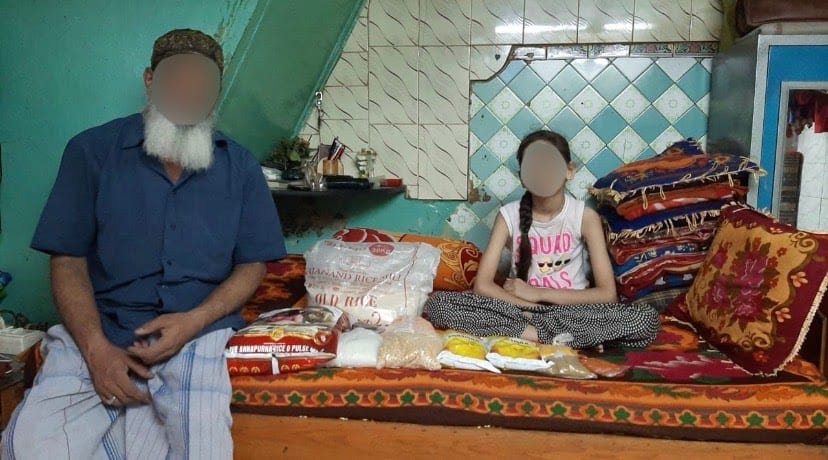
Our response to the COVID-19 pandemic has been two-fold. Starting from April till September 2020, the team focused on providing relief, by ensuring the supply of daily food essentials to families in need. Funds were raised through a volunteer driven fundraising programme, called the Saturday Art Class Champions Project. The idea behind the project was to leverage community participation and teamwork to effectively work towards a solution for a larger problem. It enabled young leaders from diverse backgrounds to support Saturday Art Class’ Relief and Recovery efforts by raising funds through hosting individual crowd-funding platforms. We were able to provide families across Mumbai with a month’s worth of dry food ration, reaching out to 2,500 families and 12,394 individuals.
While we made efforts to keep reaching out to more families, providing them with basic food necessities, children continued to find themselves in a disturbed mental space. They were unaware and uncertain of what was happening around them. They longed to make meaningful conversations and creatively express what they felt in their mind and body. They were in need of safe spaces to help them understand and become aware of the emotions they were experiencing.
COVID-19 made us acknowledge the fact that learning for children would need to include outcomes that can help them become more aware, manage their emotions better, become more resilient and adaptive as well as develop a stronger sense of empathy. Therefore, we introduced virtual classes, focusing on recovery to implement our ‘Social Emotional Learning and Art’ to address these needs.
Through Recovery, Saturday Art Class expanded PAN India, introducing two phases of Virtual Classes spearheaded by a dedicated cohort of 60 facilitators, who hosted weekly sessions with 250 children belonging to 15 partner organizations. (numbers reflect a culmination of both phases).
[Phase 1 of Virtual Classrooms (April- August 2020) – 95 children, 37 Facilitators, 9 partner organizations/schools — Phase 2 of Virtual Classrooms (September – January 2020) – 220 children, 51 Facilitators, 15 partner organizations/ schools]
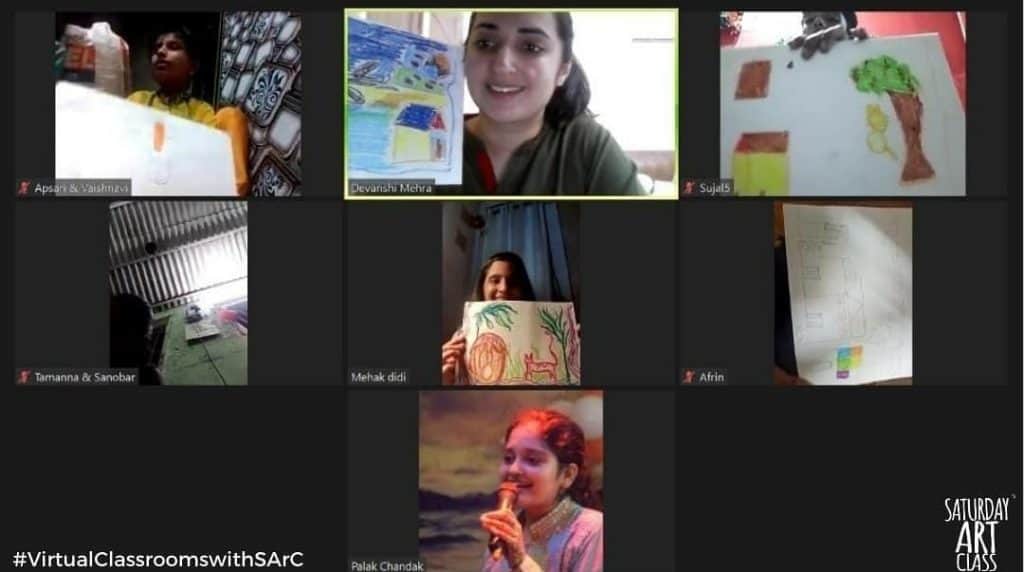
Virtual classes helped us realise that the communities we worked with did not have access to technology compatible with digital learning, nor did they have the resources to invest in a relatively expensive device. This led the organization to come up with solutions and alternatives to provide resources for students, eliminating the need and compulsion for them to attend virtual classes.
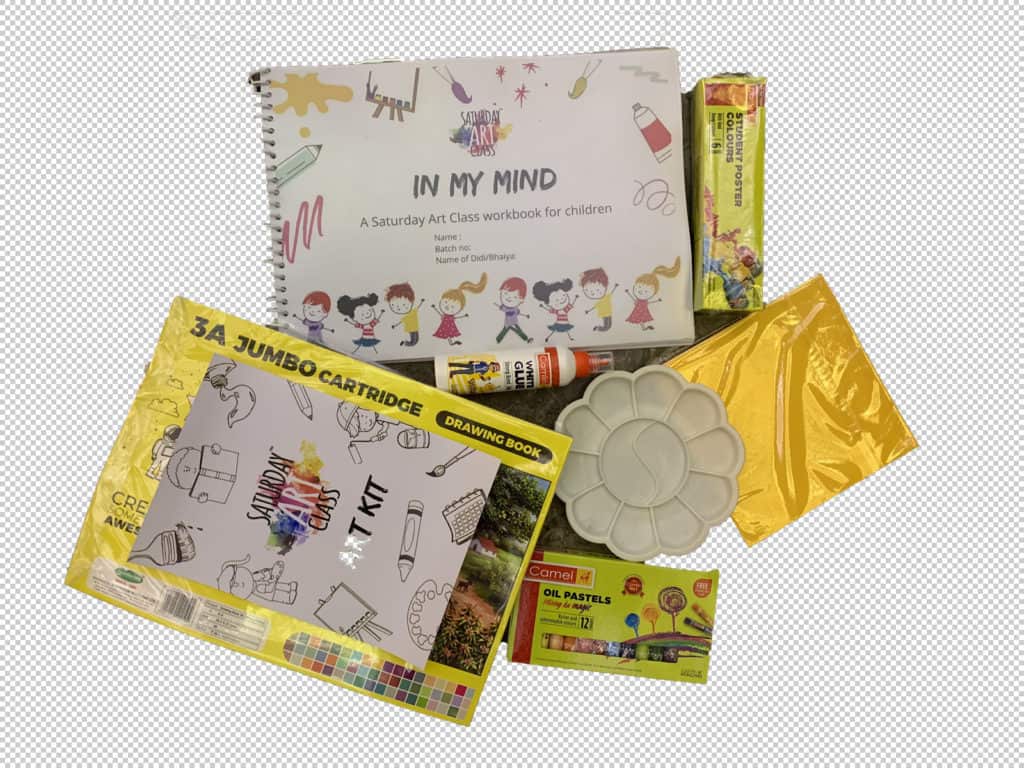
We compiled all our 12 lesson plans into a workbook called In My Mind, that was printed and distributed to our students along with personal Art Kits. The larger idea behind this was to equip a child with simple tools to help him/her at home, with minimal technological intervention.
With the education sector still on a lockdown even in the new year, and the probability of students attending school still still a distant probability, we decided to expand our reach catering to more children across India by introducing our curriculum on an Ed-Tech platform.
Saturday Art Class will be launching their curriculum in a digital format through visually interactive mediums; making it accessible to 50,000 children, along with parents and educators all over the world, in 3 Indian regional languages.
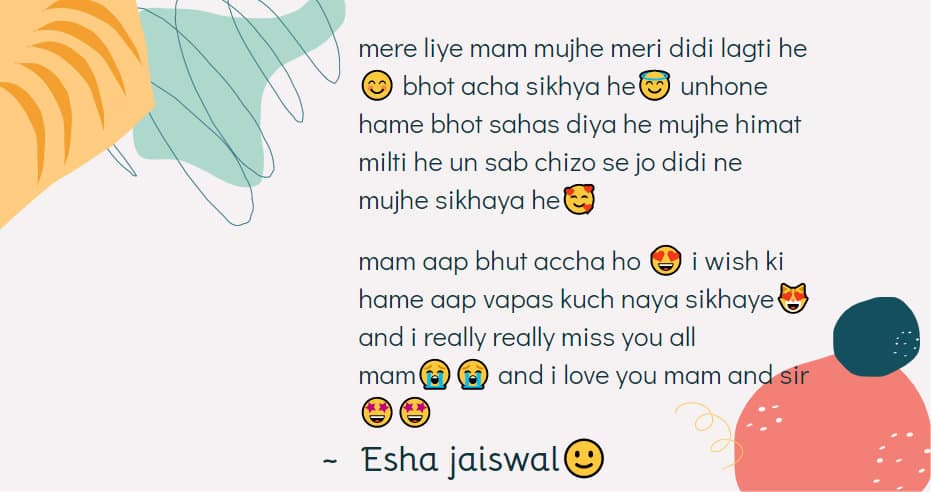
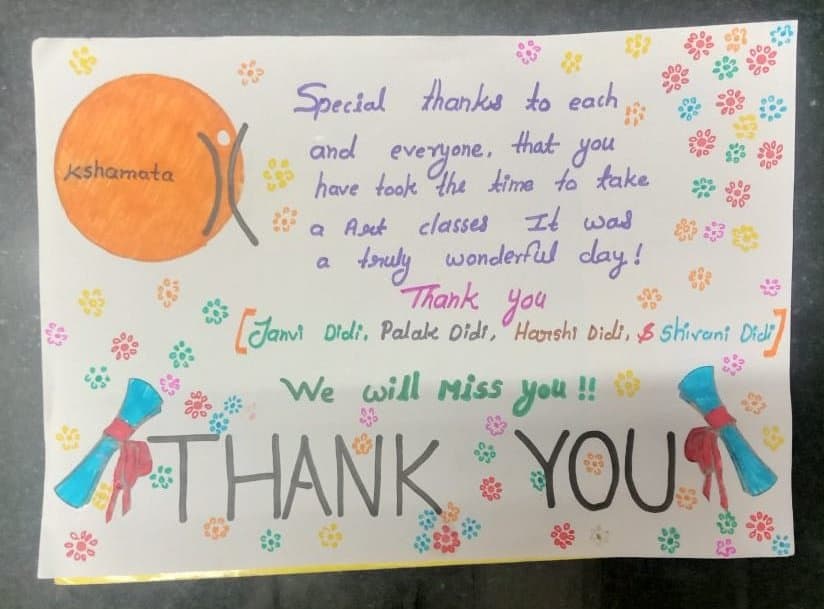
Our students also expressed their gratitude towards their Didi’s and Bhaiyya’s in colorful forms taking with them all that they learnt and experienced with Saturday Art Class. Here is what they had to share:
Saturday Art Class journeyed alongside the pandemic filled with ups and downs, challenges and failures. We hope to keep striving towards creating spaces for children where they do not only survive, but thrive!
Also read: