Namrata (name changed to protect identity) migrated from West Bengal to Bengaluru 15 years ago in search of a better livelihood. She is a domestic worker, and her husband is a waste picker. Though their livelihood has improved, the quality of life is still poor.
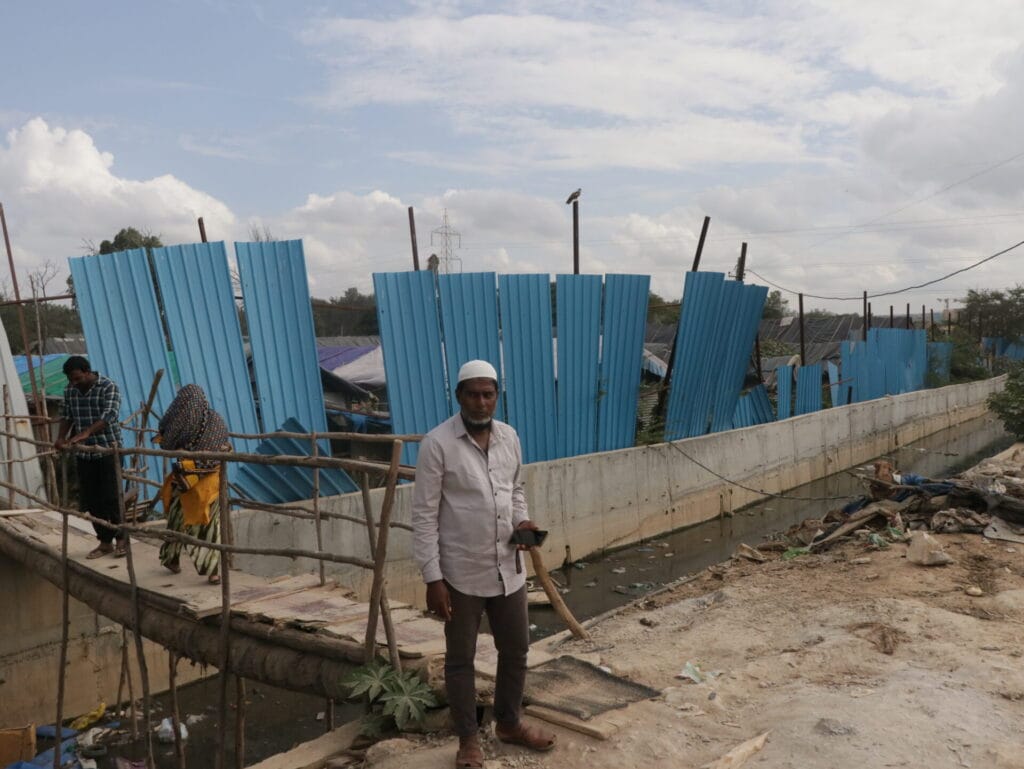
The informal settlement in Belagere, where Namrata has been living for the past nine years, floods after each rainfall. “Water rises to our hip level, and we cannot sleep most nights if it rains,” she said. Also, stormwater drains run on two sides of the settlement. Wastewater from the drains mixes with floodwater, causing children to fall sick.
Recharge wells installed to capture rainwater
Namrata’s living conditions changed recently after Hasiru Dala, a social impact organisation dedicated to supporting waste pickers, intervened. Last December, Hasiru Dala, with the help of native well diggers, installed two recharge wells in the settlement. “This month, though there were severe rains, our place didn’t flood like it used to,” said Khalil, another resident.
Parts of the settlement did flood, but the water drained into the recharge wells quickly, residents said.
“There was no proper water flow network to channel the water into stormwater drains, so we considered the option to direct stormwater into the ground — this led us to the idea of using recharge wells,” said Sowmya Sridhar, Assistant Programme Manager, Hasiru Mane Initiative. Hasiru Mane is the vertical of Hasiru Dala that focuses on housing for waste pickers.
Recharge wells led to abundant water supply too
The recharge wells have not only reduced flooding, but are also making the community water-resilient.
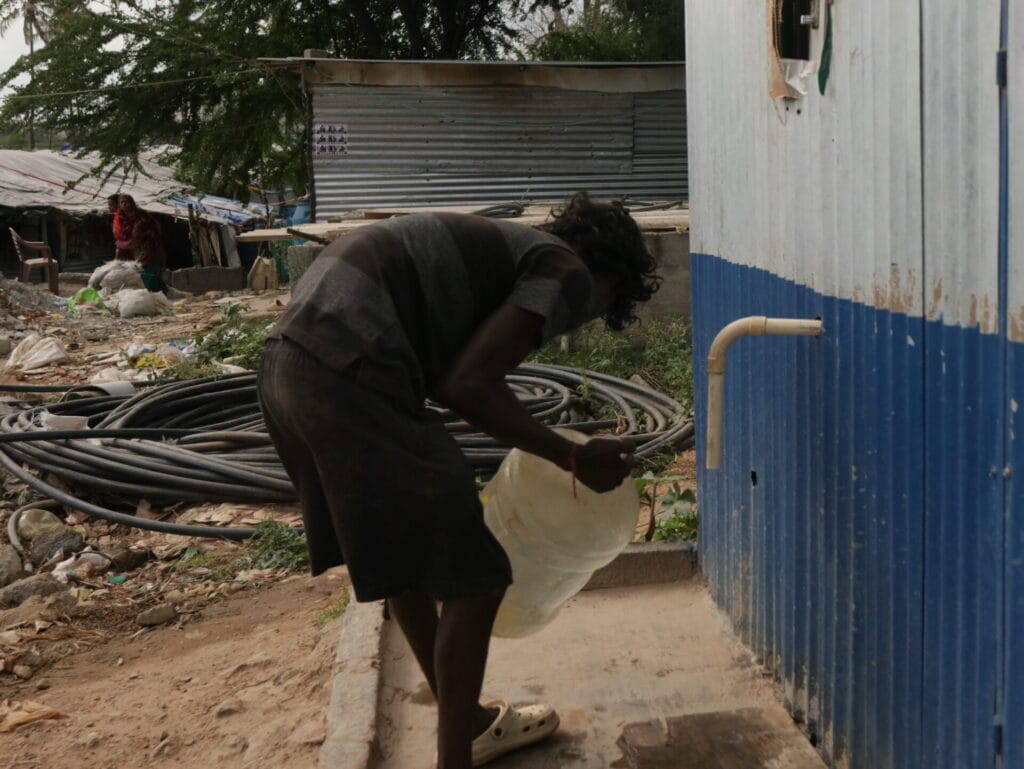
Before the recharge wells were installed, every family here had to spend around ₹400 per month to buy water from tankers. Additionally, they spent ₹100 to fetch potable water from a Reverse Osmosis (RO) plant about a kilometre away. The land, belonging to private owners, has only one water source — a borewell that has nearly dried up. Because of low water levels in the borewell, residents didn’t get enough water from the RO plant installed and operated by the landowner either.
After the recharge wells were installed, the households started getting sufficient water from the borewell. The RO plant on their land started yielding drinking water as well. While it costs the same as the other RO plant — ₹5 per 25 litres — residents don’t have to walk a kilometre to fetch water. Besides, the residents no longer rely on tankers, which means they save ₹400 per month.
Based on the knowledge of local well diggers, the recharge wells were set up just next to the borewell. This way, the groundwater keeps getting replenished. The two recharge wells were dug next to each other so that when one well fills up, excess water flows into the other.
Read more: Do we need a reimagination of Bengaluru’s stormwater drains?
The large tank that stores water pumped from the borewell is always full now. It feeds the RO plant where the water is filtered for potable use.
According to Hasiru Mane, the initiative involved various costs including those for materials, labour and community engagement. Though the community may not incur direct costs in future, they will need to invest time and effort to maintain the structures through regular cleaning and monitoring. Hence, fostering a sense of ownership of the recharge wells within the community was important.
“We are committed to developing maintenance strategies that empower residents to take charge of their environment, reinforcing the idea that sustainable development is a shared responsibility,” Sowmya said.
Challenges in flood mitigation in informal settlements
The community has around 2,000 people and may require more recharge structures in future to meet their water needs during months with less rains.
Read more: An unequal monsoon: The impact of the floods on Whitefield’s poor settlements
“Solutions like this are contextual and depend on the water catchment, runoff, etc.,” said Vishwanath Srikantaiah, water conservation expert. For example, if the area sits on hard rock, recharge wells cannot be dug.
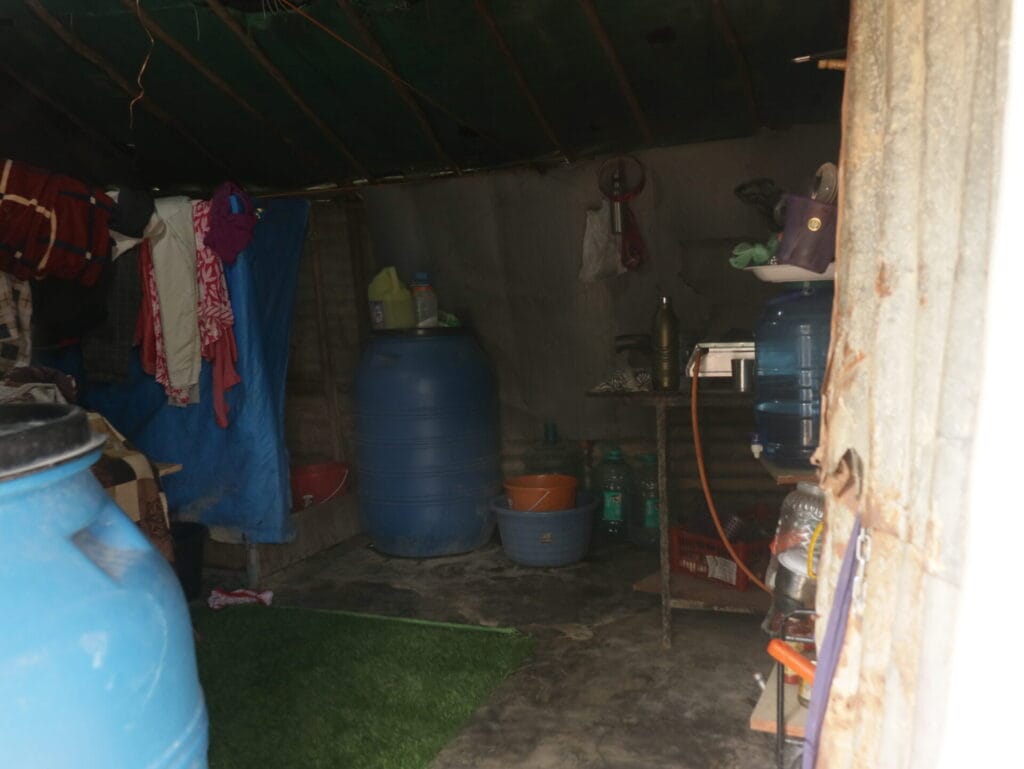
The recharge wells have reduced flooding and water stress, but rains still affect the community. In the absence of proper roads, slushy pathways make transit hard. One part of the settlement lies at a much lower level than the rest. One of the residents was adding layers of concrete to their floors to protect their house from flooding.
Considering the limitations of informal settlements, like low built area, limited space and resources, little can be done to eliminate flooding. “While recharge wells could work in some places, it can’t be the solution everywhere,” Vishwanath said. “The limitations would only allow sub-optimal solutions.”
“As the land belongs to private owners, we could only do limited works for their relief,” Sowmya said. Hasiru Dala is attempting solutions for various issues in informal settlements such as flooding, water scarcity and extreme heat. “While this is a pilot project for us, we are happy that it turned out to be helpful for the community,” said Sowmya.
Low-income settlements are the most affected by climate issues, but solutions are often limited. Clearly, long-term solutions to provide proper housing and ensuring better quality of life are important. However, simple solutions like recharge wells by organisations like Hasiru Dala could provide temporary relief to vulnerable communities.