The Bengaluru Ward Samiti Balaga has extended a public invitation to the second Bengaluru Ward Samiti Balaga Samaavesha to be held on October 16th (Sunday) at Government Arts College, next to Civil Court complex, from 10 am.
The main objective of the Balaga is to strengthen the ward committees of Bengaluru by working together and collaborating with the BBMP and other civic agencies. BBMP elections are still pending (likely to happen before December 31st per Court orders), but we are glad to report more ward committee meetings are happening now than before our May 28th meeting.
However, in many meetings, not many citizens are participating due to a lack of awareness. We are a city of 1.4 crore people and even if a thousand citizens work consistently on ward committees, a lot of positive changes will happen locally. This time, too, we will have an exciting agenda to further improve the quality of ward committees.
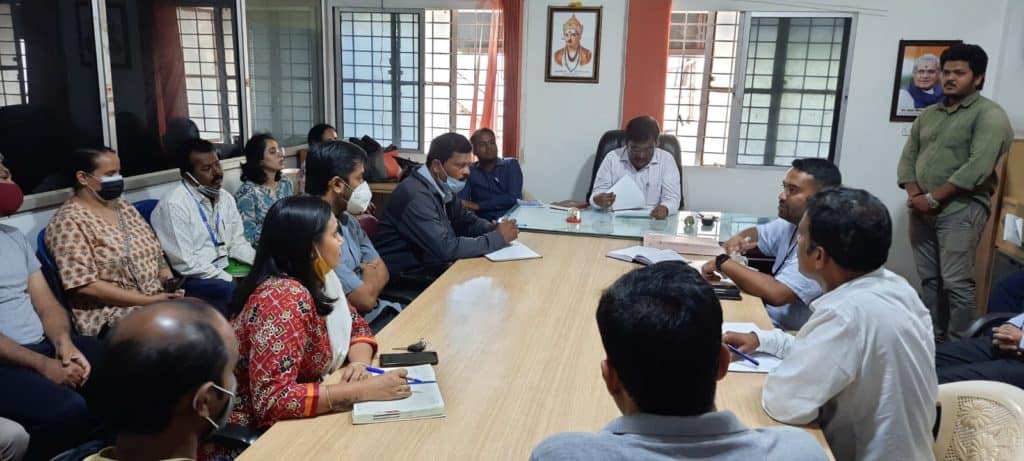
Changes post the May 28th meeting
Here is a summary of changes that took place since the first Bengaluru Ward Samiti Balaga meeting on May 28th at Mount Carmel College:
1. Based on the resolutions passed in the Balaga, a delegation of citizens met the Chief Commissioner along with Special Commissioners.
2. We put forth our requests about appointing nodal officers, conducting regular meetings, having oversight of meetings at the zonal level, calling for nodal officer training, and budget utilisation. This meeting was two hours long, it was productive, and resulted in few changes.
Read more: Why I like Ward Committees so much – and how you can too
3. Wherever there were no nodal officers, they were appointed. At this point, most wards have nodal officers.
4. Divisional officers and Joint Commissioners were asked to attend ward committees within their jurisdiction on a rotation basis. Almost all zones are now holding meetings based on the new 243 wards list.
5. Zonal Commissioners (IAS) have been instructed to conduct ward committees without fail and asked to attend some meetings as well. This has been the biggest positive outcome as Zonal Commissioners are now holding Joint Commissioners and Nodal Officers accountable for ward committee meetings.
Since the last two months, meetings are announced ahead of time with the exact time, venue, and contact number. This never happened before.
We are happy to report that in the month of September, a total of 376 meetings took place. First Saturday (197) and Third Saturday (179).
Read more: Ten steps to make your ward committee meetings effective
6. A checklist has been created to standardise ward committee meeting agenda. This is implemented well in a few wards so far, but more needs to be done. This was one of the key points raised in the May 28th Balaga meeting.
7. Not much progress has been made regarding ₹1crore budget allocations at the ward level as there is a lack of process clarity within BBMP on how it is used and what is remaining.
Janaagraha’s team processed the BBMP 2022-23 budget and released ward-level budget briefs for citizens to better understand allocations.
8. Our concerns are the quality of meetings, lack of training, and the biggest concern is the lack of transparent process for selection of ward committees post BBMP elections. These will be the main topics on the agenda in the upcoming meeting on October 16th.
9. BBMP Chief Commissioner and Zonal Commissioners are supportive of Ward Committees. BMTC is also assigning bus depot managers to different ward committees to seek citizen input.
10. Karnataka Ward Samiti Balaga has been formed and a state-level convention was held last month with enthusiastic participation from Mysuru, Hubballi-Dharwad, Belagavi, Davanagere, Ballari, Kalburagi, and Mangaluru. Ward Committees are in various stages of evolution in all our cities!
We need more citizens to participate to make ward committees stable and results-oriented. Please encourage your neighbours and friends to join us on October 16th.
[This piece has been shared by Srinivas Alavilli on behalf of Bengaluru Ward Samiti Balaga and has been published as a public message with minimal edits]