Central and state government Public Sector Units (PSUs) have encroached upon 656 acres of the Kosasthalai River’s backwaters in Ennore since the disastrous floods of 2015, according to a report by Save Ennore Creek Campaign.
Released on the eve of Home Minister Amit Shah’s visit to Chennai, the report highlighted the fact that central government PSUs, including Kamarajar Port, NTECL Vallur and Bharat Petroleum had converted 417 acres into industrial real estate since 2015. Shah’s program in the city includes the inauguration of a new berth in Kamarajar Port. TIDCO’s poly park – a plastics industrial estate – encroached into the remaining 239 acres of tidal wetlands.
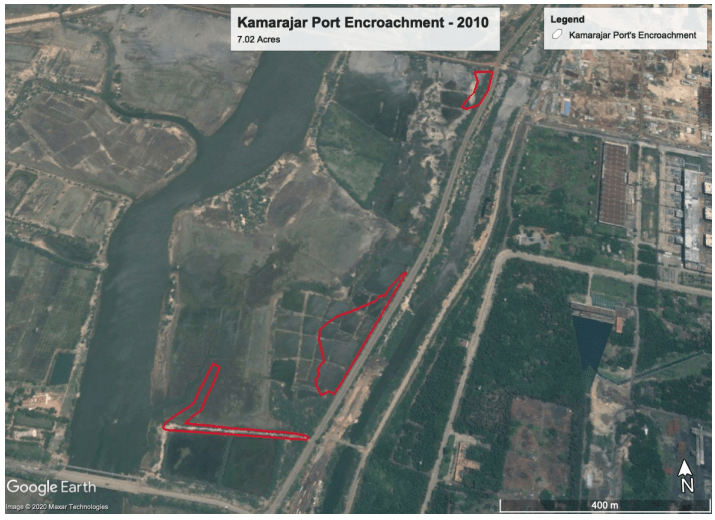
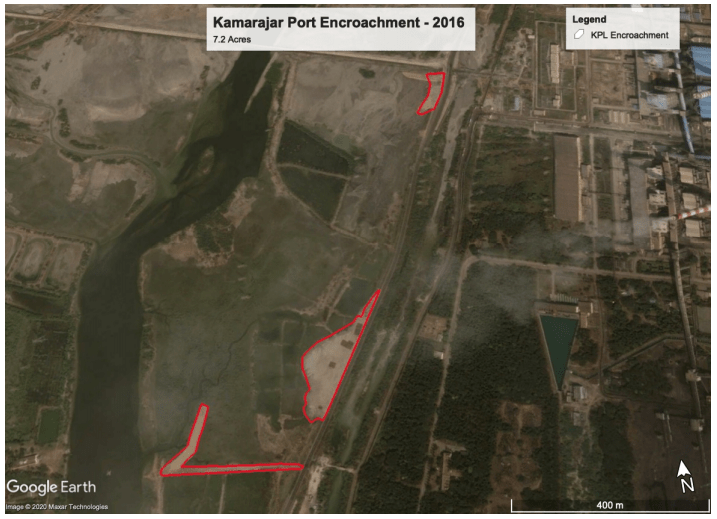
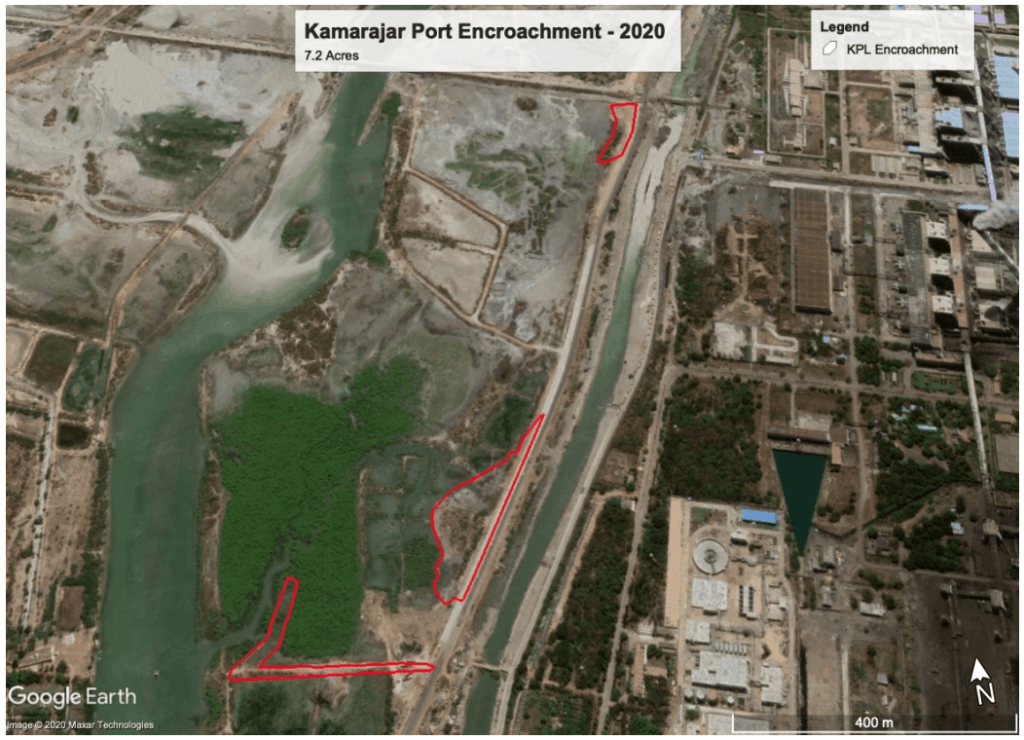
Chennai-based activists have sent a copy of the report along with a letter to Shah drawing his attention to the complicity of central PSUs in encroaching on Kosasthalai’s wetlands and endangering the lives of people in the region. More than 10 lakh people in four assembly constituencies – Ponneri, Madhavaram, RK Nagar and Thiruvottiyur – will face heightened risks of disastrous flooding due to the encroachments.
“Sagarmala, Bharatmala and Make in India projects have destroyed the Ennore-Pulicat wetlands and impoverished fisherfolk. Government of India must adopt a long-term outlook and see the wisdom in maintaining wetlands, especially tidal water bodies that will protect the region from floods, salinity intrusion and sea-level rise,” the letter advised.
Requesting Shah to withdraw his endorsement of Kamarajar Port, which has single-handedly eaten into 114 acres of the Ennore wetlands, the signatories to the letter called on him to advise KPL to stop encroaching on wetlands and ask the Central Government to abandon any schemes in the region involving diversion of the wetlands.
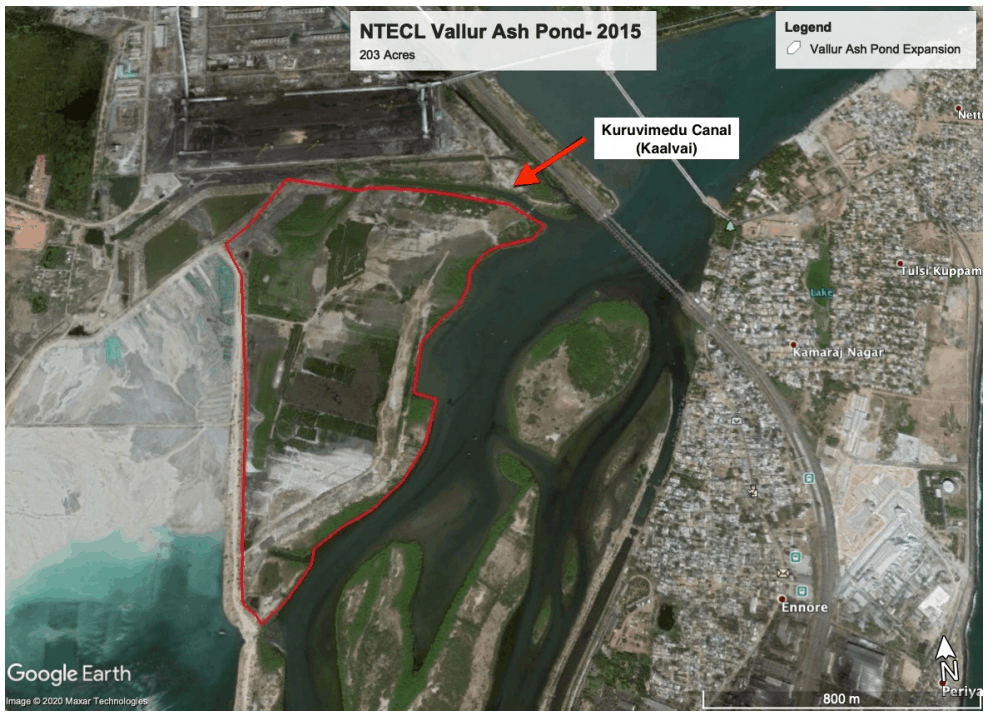
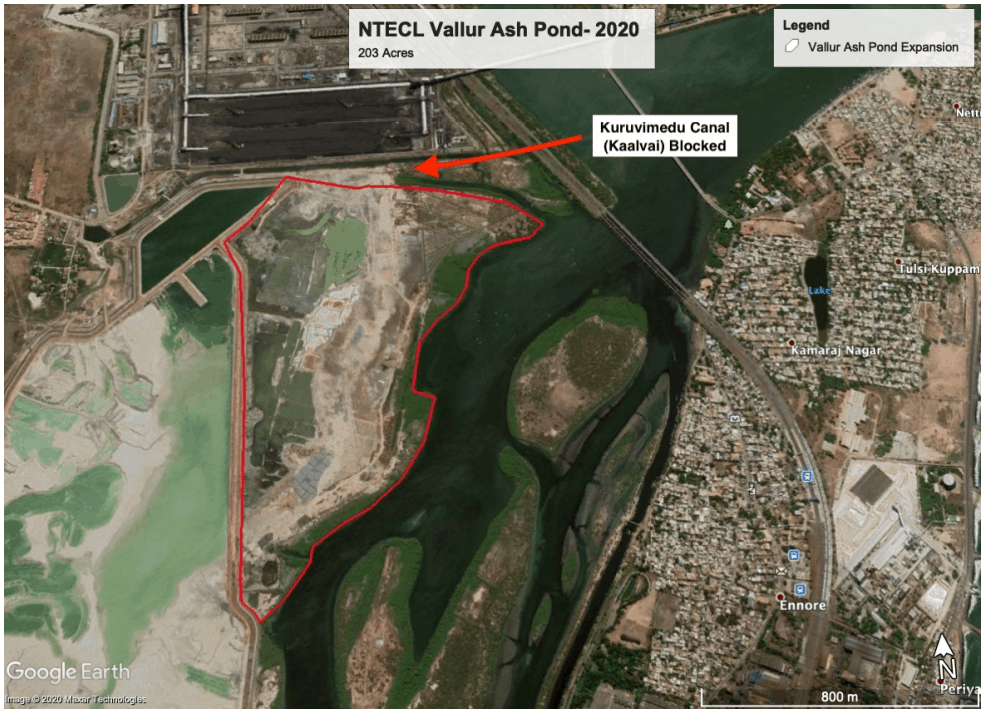
NTECL Vallur encroaches 203 acres
Central PSU NTECL Vallur encroached on 203 acres to construct a new coal ash dump and blocked important canals like the Kuruvimedu Kalvai, while BPCL blocked the Maan Kalvai when it encroached on 100 acres of salt pans within the backwaters to set up its oil storage terminal.
Eating up wetlands
More of the wetlands are likely to be lost unless governments and people wake up to the dangers of such development. Adani Ports has a proposal for an 8-fold expansion of its Kattupalli Port; This involves the creation of 2000 acres of land inside the sea and more than 1000 acres of land by encroaching on the Ennore-Pulicat wetlands.
Interfering with the Kosasthalai River’s wetlands is a dangerous proposition, the report warned. Kosasthalaiyar carries twice as much floodwaters as Adyar and Cooum combined. “If encroachments on Adyar river brought us to our knees in 2015, a Kosasthalaiyar flood will cripple the region,” the report warned.
Speaking at the release event, actress Rohini and G Sundarrajan said it is irresponsible to patronise and celebrate companies like Kamarajar Port whose activities harm livelihoods and endanger communities. If industrialisation is important, it should be carried out on dry land, not on water bodies, they said. They asked state and central governments to abandon plans to industrialise the Kosasthalai river, and instead commit to restoring what remains of the wetlands and declaring it India’s first climate sanctuary.
(This article is based on a Press Release by Save Ennore Creek Campaign team and has been republished here with minimal edits.)