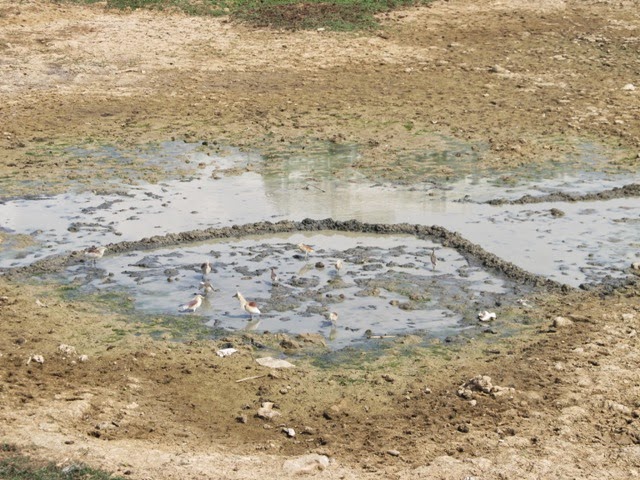
With the sun’s heat accelerating the rate of evaporation, the water level has fallen sharply in our Puttenahalli Lake and there are no more than four or five pools of water left. We have been consoling ourselves with the thought that this is still far, far better than this time last year when we had literally a few buckets of water in the entire lake. Fish had died in scores then and the lake bed was hard and with cracks and crevices. Encouraged by the monsoon filling the lake somewhat, in September we’d released 3000 fingerlings and the birds returned once again.
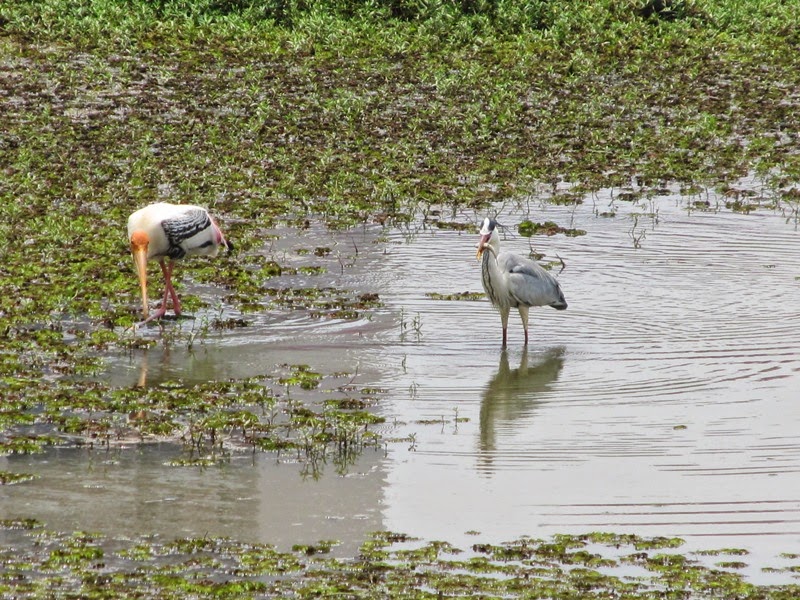
The fish has grown in these six months attracting new species of birds such as the Great Egret, Asian Openbill Stork, Painted Stork, Darter, Garganey Ducks among many others.
Garganeys, Dec 2013
Painted Stork and Grey Heron, April 2014
Deepa Mohan’s Youtube videoon the Asian Openbill Stork
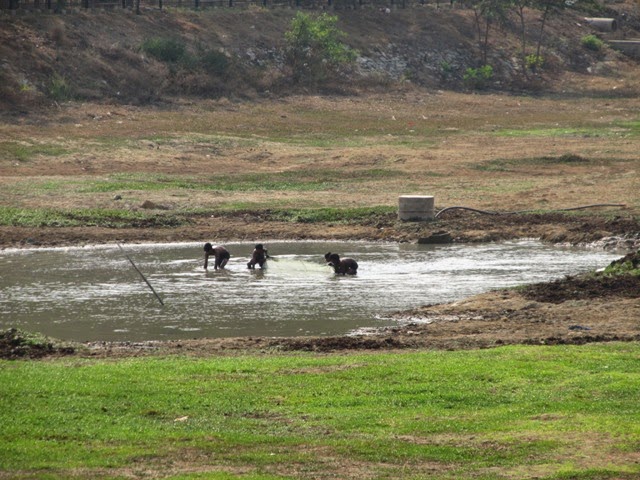
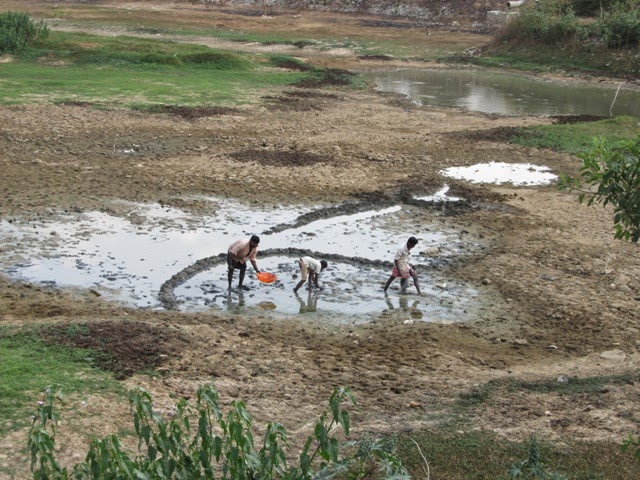
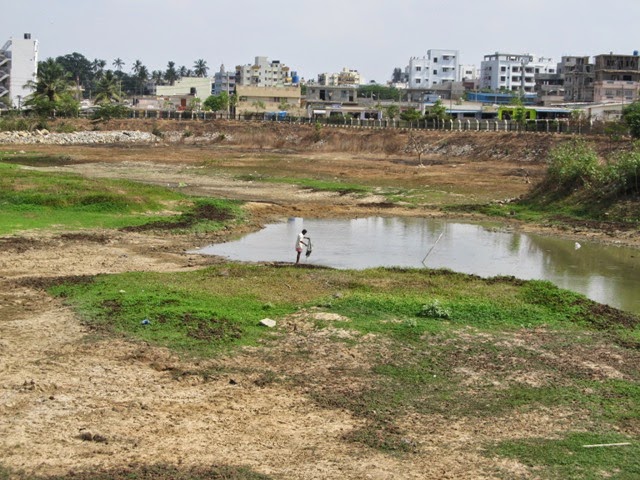
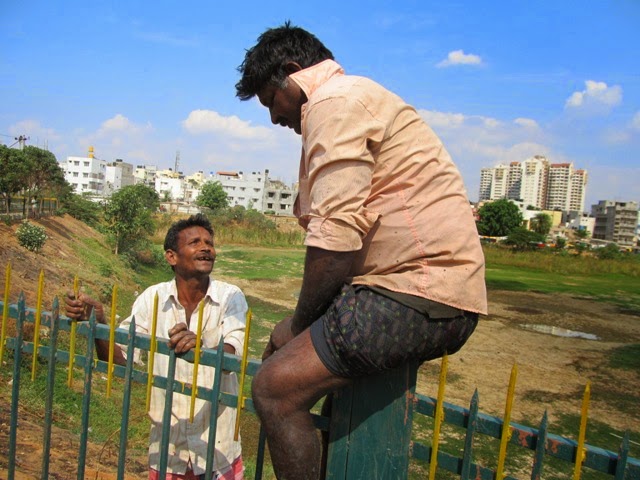
Unfortunately though, the fish also attracts poachers to the lake. Every time the trespassers come close, the birds fly away.
Poachers, 3-May-2014
Fishing, 4-May-2014
With a sack of fish, 4-May-2014
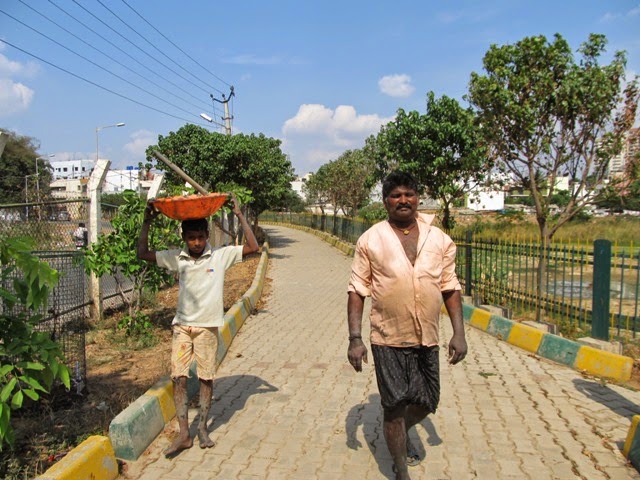
The sheer brutality of these men and boys is appalling to say the least. Armed with sticks, they beat the fish in the shallow water. In the deeper water others use fishing nets or even cloth to catch the fish. When ticked off by our gardeners, they threaten to break the arms and legs of our men. We trustees have taken to chasing the men away and collecting the sticks and nets they leave behind in the hope that they may not return. We are wrong and they do return to fish, day and night. Only a few birds are now left at the lake.
Trespassers, poachers
Teaching the young to flout the law
The birds return when the men leave
We are guarding the lake and the fish as best as we can while we wait for the monsoon to begin, fill the lake and bring the birds back. We fervently hope the rain will also keep the poachers away.
Despite the volumes of citizen-generated data on the city's biodiversity, pollinators who sustain the urban ecosystem do not seem to be getting their due attention.
Urban biodiversity is often discussed in terms of tree cover, lakes, or flagship species, but far less attention is paid to pollinators—the insects and birds that quietly sustain urban ecosystems. In Bengaluru, a rapidly urbanising city with a strong culture of citizen science, large volumes of biodiversity data are now being generated by the public. But what does this data tell us about pollinators in the city? This article draws from a data jam hosted by OpenCity in Bengaluru that explored pollinator observations using publicly available, citizen-generated datasets. By analysing long-term observation records and spatial data on land use and…
Open Natural Ecosystems in Bengaluru harbour rich biodiversity. Take a look at what they hold and what we risk losing to unchecked development.
When we discuss urban nature, we often forget about real natural habitats. In Bengaluru, widely called the Garden City, most talks about urban nature focus on landscaped parks, roadside trees, and manicured gardens; in other words, artificial ecosystems designed for looks and human comfort. As lay citizens, we usually notice only such nature as we see around our homes, workplaces or other areas we generally pass by. While these places do have some ecological value, they mostly support a few highly adaptable species. This has strong negative implications for native flora and fauna that depend on open scrublands, grasslands, rocky…