PNLIT loses an invaluable patron

It was with very deep sorrow that we heard the news of the demise of eminent bird watcher, long time Secretary of the Bombay Natural History Society, Padmashri Zafar Futehally last Sunday, 11th Aug., at Kihim, Maharashtra. 

 
He had supported PNLIT at every step and we turned to him constantly for advice which he gave so readily. He had visited the lake in early 2012 with his wife Mrs. Laeeq, ardent nature lover and writer. When he heard about the presence of the migratory Garganey Ducks at our lake, he came to see them, binoculars slung from his neck. He later brought his granddaughter to show her around the lake.
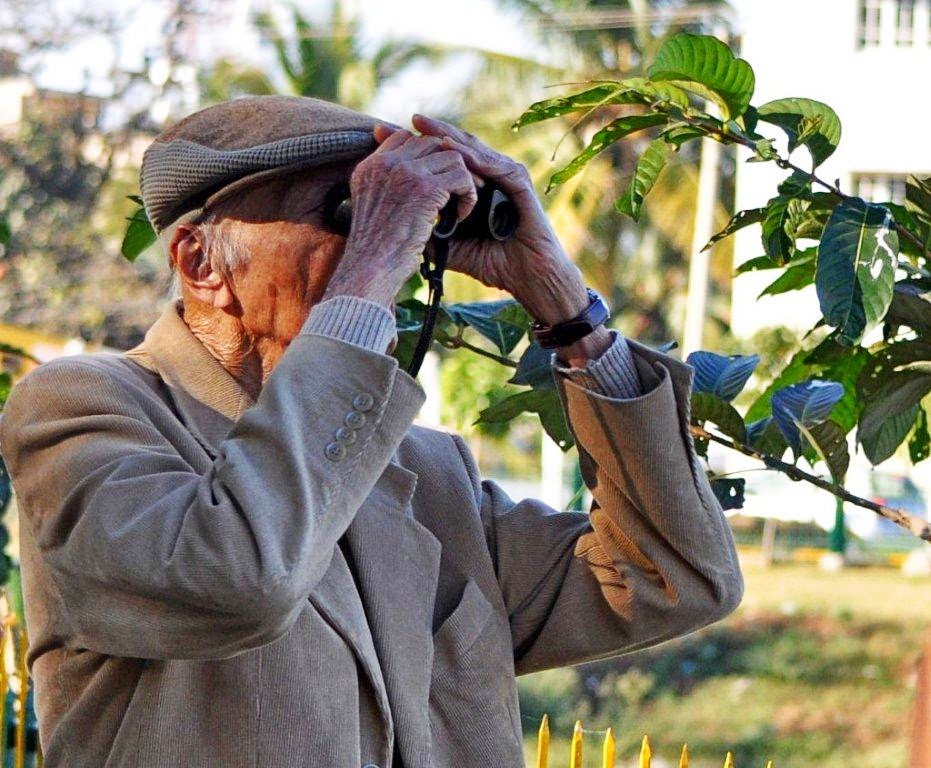


Zafar Futehally at Puttenahalli Lake, Jan 2012 (Pics: Sujesh S.)
 
 
Mr. and Mrs. Futehally shifted residence to Kihim in Maharashtra on March 31 but continued to take keen interest in our work at Puttenahalli Lake as evident in one of his last messages to me sent on June 23. 
 
—-
From: Zafar Futehally 
Date: 23 June 2013 22:02
Subject: Puttenhalli
To: usha rajagopalan 

At your convenience tell me about the progress of the lake. The rains must have made you happy. I hope the flock of Garganeys will show up in September.
 
We have a small lilly pond in our garden and a little Kingfisher sits watching the situation from a nearby guava tree, and at the right time swoops down over the pond and returns happily with a fish in its beak.
 
Hope to hear from you.  Zafar and Laeeq

—–

We will miss you, Zafar Sa’ab. R.I.P. 

Comments:

  1. Deepa Mohan says:

    It’s not just one lake in Bangalore, but many lakes…and so many initiatives of conservation…have lost their champion. I join you in your salute, Usha.

Leave a Reply

Your email address will not be published. Required fields are marked *

Similar Story

Reviving the Cooum: Need for innovation, enforcement and shared responsibility

An analysis reveals how this Chennai river is affected by sewage dumping, encroachment of buffer zones and unchecked urban growth.

The Cooum River, once a sacred river that shaped the history of Madras, has now become a sad sign of urban degradation. For the millions of residents in Chennai, it has transformed into a malodorous, polluted, and stagnant channel, burdened with solid waste accumulation and extensive encroachments along its banks. During a recent datajam organised by Oorvani Foundation and OpenCity, we used Geographical Information System (GIS) datasets and population analytics to investigate the underlying causes contributing to this crisis. The results show that rapid urbanisation, inadequate provision of essential civic infrastructure, and the absence of coherent policy frameworks, along with…

Similar Story

Pallikaranai at a crossroads: Expert warns of irreversible damage to Chennai’s last great marshland

In an interview, naturalist Deepak V says the government must publish ecological maps marking wetlands and waterbodies to boost public awareness.

The Pallikaranai Marshland, one of Chennai’s last remaining natural wetlands, has long been a site of ecological tension. Its designation as a Ramsar site brought national and international recognition, along with renewed expectations for strong conservation measures. Yet the marshland continues to face intense pressure from urban development, infrastructure projects and real estate expansion.  Recently, Arappor Iyakkam, an anti-corruption organisation, alleged that state agencies illegally cleared environmental and construction approvals for a large high-value housing project within the Ramsar boundary. As the matter unfolds, it reveals how regulatory gaps and political inaction make the marsh vulnerable. Meanwhile, residents of Tansi…