It is our social responsibility to build a community in which every individual plays an independent role in society. To achieve this, the focus should be on transformative and innovative solutions for inclusive development. Inclusivity is a major concern for Persons with Disabilities (PWDs) all over the world, as well as in India. According to recent data, nearly 2.21% of the Indian population has some form of disability. However, there is a general lack of awareness about disability.
The lack of accessibility infrastructure results in most PWDs in India struggling to live an independent life, unable to do things as significant as finding employment or as basic as using a public toilet. This prevents most PWDs, especially those from low-income groups, from having a fair opportunity to study or work due to this lack of awareness and infrastructure.
Not all disabilities can be cured, but they can be managed with the right solutions, allowing PWDs a sense of agency so that they can lead dignified lives. Listed below are five transformative innovations that are setting a path towards building inclusivity and accessibility for PWDs.
Read more: How accessible is Bengaluru for a person with disability?
The universal design for learning
Ed-tech is seeing new initiatives to promote inclusive education. The Universal Design for Learning (UDL) framework involves methods of teaching and learning that work to accommodate the needs and abilities of all learners, eliminating unnecessary hurdles in the process. The concept of UDL provides flexibility to a diverse mix of learners in a classroom. For instance, if a student has a hearing impairment, the instructor can choose only those video clips that include closed captioning. More importantly, UDL is not only designed for providing accessibility to PWDs but also to help all students benefit from an accessible approach to learning.
Assistive vehicles
The concept of ‘accessible’ cars, adapted to accommodate the special needs of PWDs, is relatively new in the Indian market, but there are already private transport companies offering this service. In 2017, Uber India launched two vehicle options in Bengaluru: UberASSIST and UberACCESS. These wheelchair-accessible vehicles are retrofitted with features like a raised roof and a hydraulic wheelchair lift, providing a practical option for PWDs or senior citizens with daily transportation needs.
In addition, the drivers are skilled with training from the Diversity & Equal Opportunity Centre (DEOC) to ensure passengers enjoy a safe, convenient experience. Another example of these assistive vehicles is retrofitted motorbikes, granting a certain level of independence to PWDs or senior citizens with enough mobility to use them.
Mobility devices
Mobility or assistive devices help PWDs to move around, socialise, and do daily activities conveniently, thus making them self-dependent. It is also imperative that the devices be both affordable and customised to the individual’s specific needs to ensure maximum independence for a PWD.
The Association of People with Disability (APD), a Bengaluru-based NGO, offers customised 3D-printed postural support to PWDs. It manufactures assistive devices such as orthoses, callipers, crutches, and prostheses, catering to the specific needs of the person. These mobility devices not only promote accessibility but also positively impact the self-confidence and well-being of the person. They also have relooked at how existing mobility aids can be improved, resulting in innovations such as the standing wheelchair and the all-terrain wheelchair. These devices provide PWDs with a way to navigate otherwise inaccessible activities for traditional wheelchair users.
Mobile applications
In a world of constant technological development, it is no wonder that smartphone applications are helping PWDs enjoy improved access to public spaces and infrastructure. Under the Accessible India Campaign, the Government of India launched the ‘Sugamya Bharat’ app to enhance accessibility for PWDs in areas of transportation, public services and more. Through this app, PWDs can flag accessibility-related issues in public spaces that require more inclusive infrastructure.
Sameer Garg, a spinal cord injury victim, launched another app called BillionAbles, which is dedicated to providing PWDs with information on places, products, and services with ramps, braille messaging, and wheelchairs for accessibility. The app has over 150 verified listings in cities, including Bengaluru, allowing PWDs to easily find accessible places.
Read more: How to create a Bengaluru that ensures accessibility for everyone
Last mile delivery
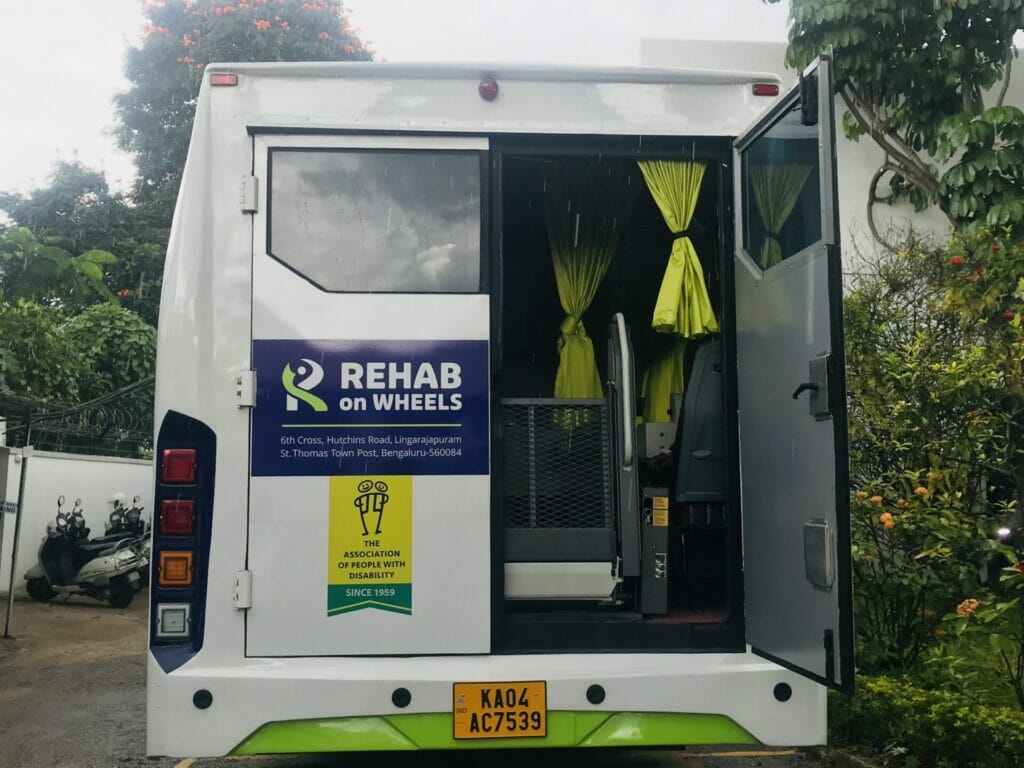
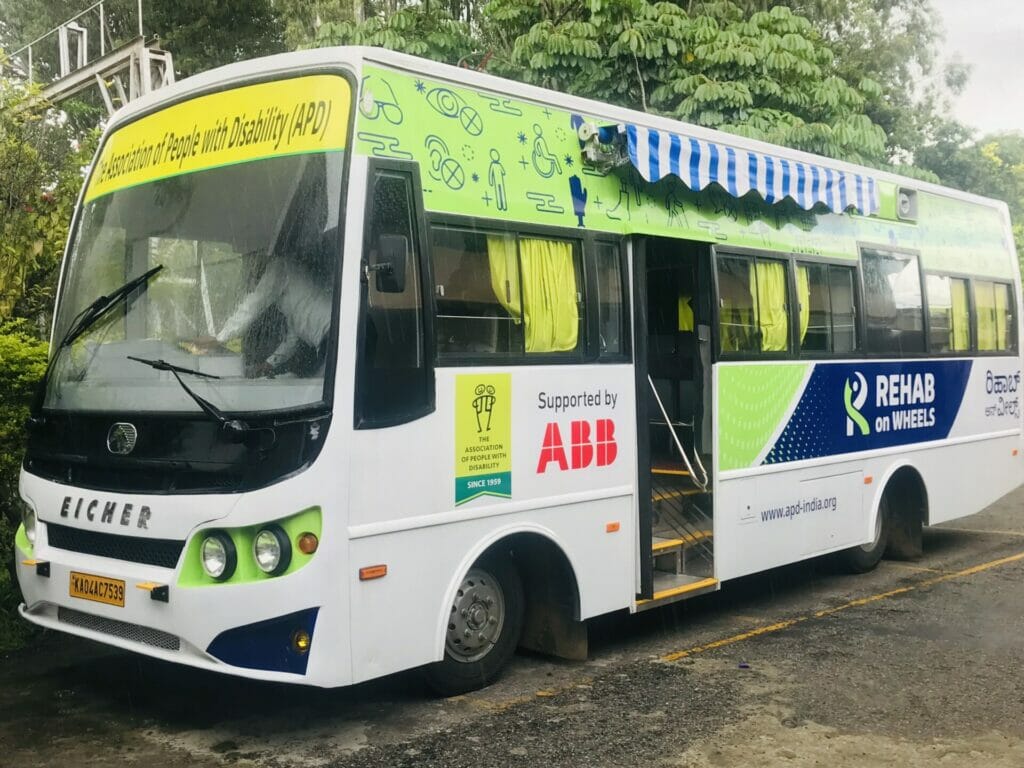
In India, around 69% of PWDs live in rural areas with low access to medical facilities. There is a need for hospitals on wheels that can reach the severely disabled and elderly, who may not otherwise be able to visit medical facilities by themselves. In Bengaluru, India’s first fully-equipped mobility van called ‘Rehab on Wheels’ was launched in October 2022, with an aim to create accessible, affordable, and quality rehabilitation services for those with limited locomotor abilities, including the elderly and disabled. The mobility van moves around various locations, providing rehabilitation services in various geographical locations across Karnataka.
These are some of the innovative solutions that effectively bridge the gap in inclusivity and accessibility for PWDs, empowering them and making them feel included. The onus is on society to develop more such solutions so that we can create a more accessible India, where every individual is equipped to lead a life of dignity and independence.