An early adoption of universal adult franchise and a parliamentary system that has stood the test of time have ensured that every eligible Indian voter has a stake in national policies through their elected representatives.
During the recently concluded G20 summit, India positioned herself as the ‘mother of democracy’ – patting herself on the back as a model of pluralism and participation.
This claim however calls for some critical self-examination.
Parliament functions not only as a space for deliberating and dissecting provisions of imminent laws. It is also the main institution seeking accountability for government actions and inactions. To this end, its functions merit continuous public scrutiny and discussion.
Functioning of parliament
Typically, three parliamentary sessions are held each year – Monsoon, Winter and Budget sessions. The 2023 Monsoon session of parliament concluded on August 11th and the winter session will start in mid-December.
A special session of parliament is one in which MPs gather to either conduct matters requiring urgent deliberation or to commemorate a nationally important event. In the past, special sessions have been held in 1947, 1962, 1972, 1992, 1997 and 2017.
In a decision that aroused much consternation, the union government on August 31st announced a special session of parliament from September 18th to September 22nd. But no agenda was mentioned then.
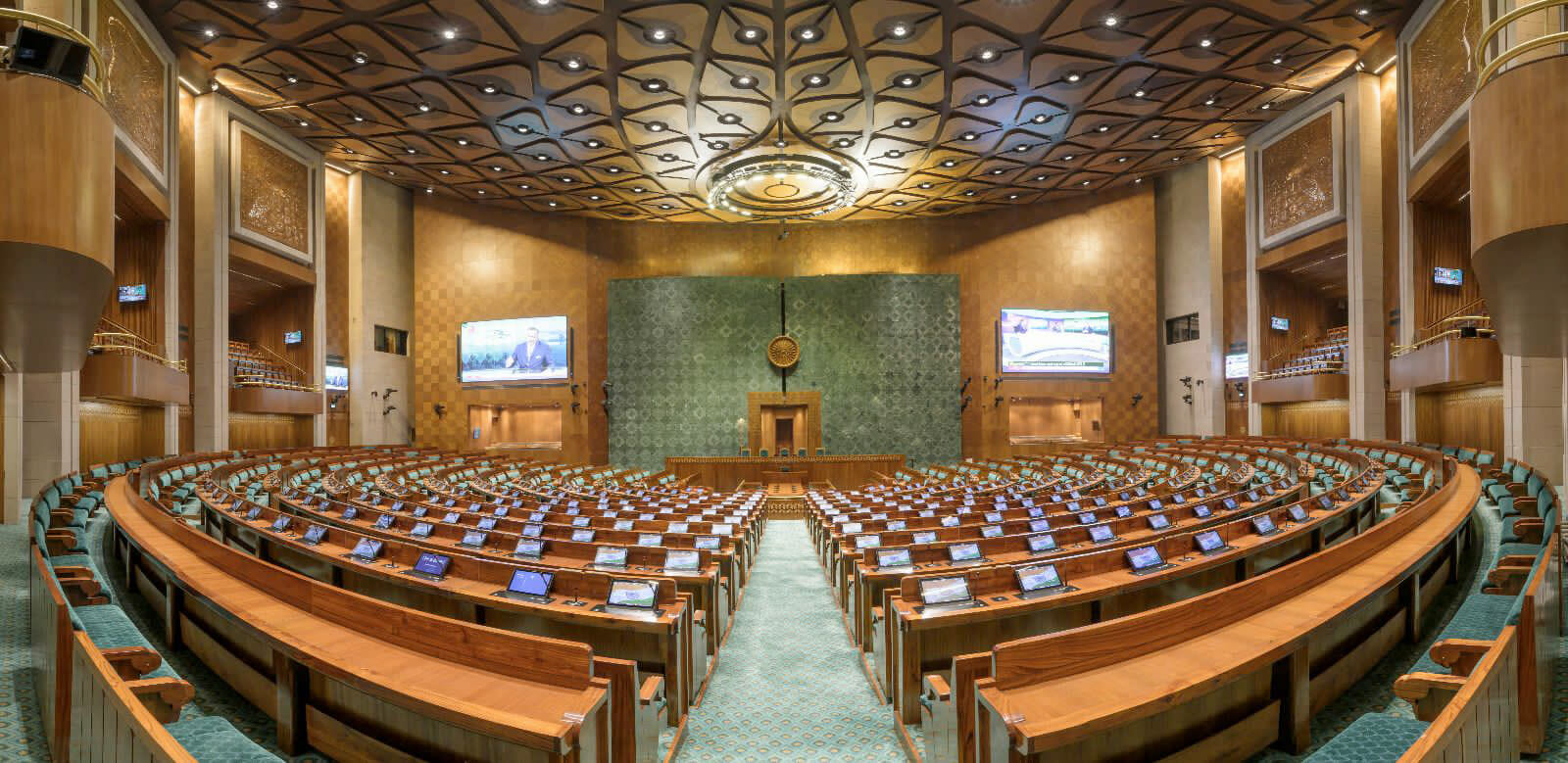
On September 13th, under much public pressure, the government announced a tentative and non-exclusive agenda which included a discussion on Parliament’s journey of 75 years and the move to the new parliament building built by the present government. The old one, where the session began, was named Samvidhan Sabha.
The following was the legislation agenda:
1. Chief Election Commissioner and other Election Commissioners (Appointment, Conditions of Service and Term of Office) Bill that seeks to replace the Chief Justice of India with a cabinet minister in the panel for selection of the chief election commissioner and election commissioners
2. The Repealing and Amending Bill, 2023.
3. The Advocates (Amendment) Bill, 2023.
4. The Press and Registration of Periodicals Bill, 2023.
In recent years, many key laws and policies were decided with hardly any consultative processes and democratic deliberation. From demonetisation to the recently enacted Digital Personal Data Protection Act, 2023, one observes a near absence of discussion and parliamentary debate.
In the 15th Lok Sabha (2009-14), 71% of the bills were referred to parliamentary committees. This decreased to 25% in the 16th Lok Sabha (2014-19) and to less than 10% in the current Lok Sabha. In the 2023 Monsoon session, Parliament passed 20 bills with less than an hour of discussion. Suspension of Question Hour and Zero Hour in the special session thus heightened people’s concerns.
Bahutva Karnataka people’s poll
Pursuant to the announcement of the special session, Bahutva Karnataka, a Karnataka based collective engaged in fostering constitutional values, decided to do a rapid online poll to get a pulse on the kind of issues citizens felt should be included in the Special Session.
The idea was to engage citizens in the democratic process. The poll was conducted from September 12th to 15th and asked citizens to imagine a ‘Parliament Session as if citizens mattered’.
The poll got 232 responses from 19 states with 60% of the respondents from Karnataka and Maharashtra. Though not statistically representative, the results provide a window into what citizens think should be high priority to their government. Each respondent could choose three issues that they thought were the most pressing.
- Around 75% of respondents picked ‘Continued Violence in Manipur’ as the matter requiring the most urgent discussion in the special session.
- Around 38% of the respondents said that ‘Rising vigilante attacks and bulldozing of homes in violation of law’ needed discussion
- Nearly one-third of the respondents said that ‘Inflation and rising costs of essential commodities’ needed to be discussed in the special session.
Predictably, none of the issues selected by citizens in the Bahutva Karnataka were taken up. Also, the five bills originally listed for consideration were not taken up. Instead, only one Bill, the Constitution (One Hundred and Twenty-Eighth Amendment) Bill, 2023, popularly known as the Women’s Reservation Bill which was not part of the originally listed agenda, was introduced and passed on September 21st.
Read more: Women’s Reservation Bill: A long, bumpy road ahead to implementation
The need to be consulted and heard
This manner in which the recent Special Session was planned and conducted lends itself to much speculation on the real reason behind calling the session.
It is a matter of concern that parliamentary proceedings are focussed less on high priority issues faced by the nation and concerning the people and more on electoral politics and political agendas. This divergence between parliament and people’s perceptions of issues of priority is undermining people’s confidence in the government.
Note: The authors would like to acknowledge that the work on the survey and analysis was initiated and led by Bahutva Karnataka. They thank Shaheen Shasa for anchoring the entire effort, and Sakina Dhorajiwala and Naveen Gajjalagiri for their timely help with some data work.