The colourful jewels from nature that adorn our city

It's true that our cities are choking with dust, soot and pollution. Yet, there is also a lot of precious beauty, if only one cares to look a little deeper. Some photos from treasure-hunting in Bengaluru.

I don’t find it necessary to go to jewellery shops, as Nature provides me plenty of jewels! All the photographs below are from local gardens in Bangalore.

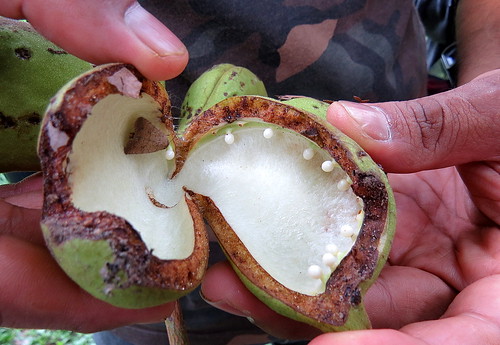
Do I want pearls for a necklace? Here are the pearls of the Sterculia foetida, locally called the Jungli Badam.
IMG_6957

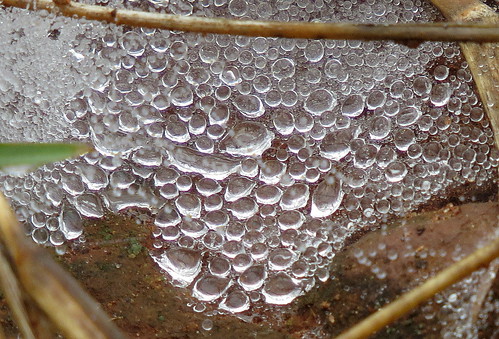
The monsoon season, or even a dewy morning, provides so many diamonds. Here are hundreds,sprinkled over a spider web:
IMG_6714

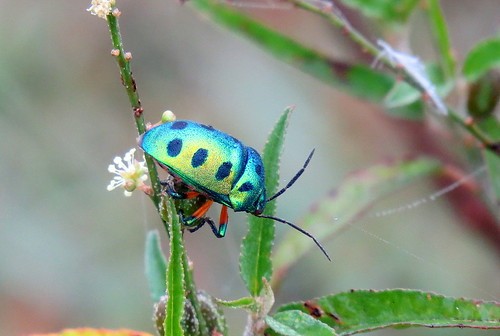
One of the bugs we see often is, indeed, called the Jewel Bug. It appears in rainbow glory, with a metallic sheen, on top of our most common plants and weeds:
IMG_1748

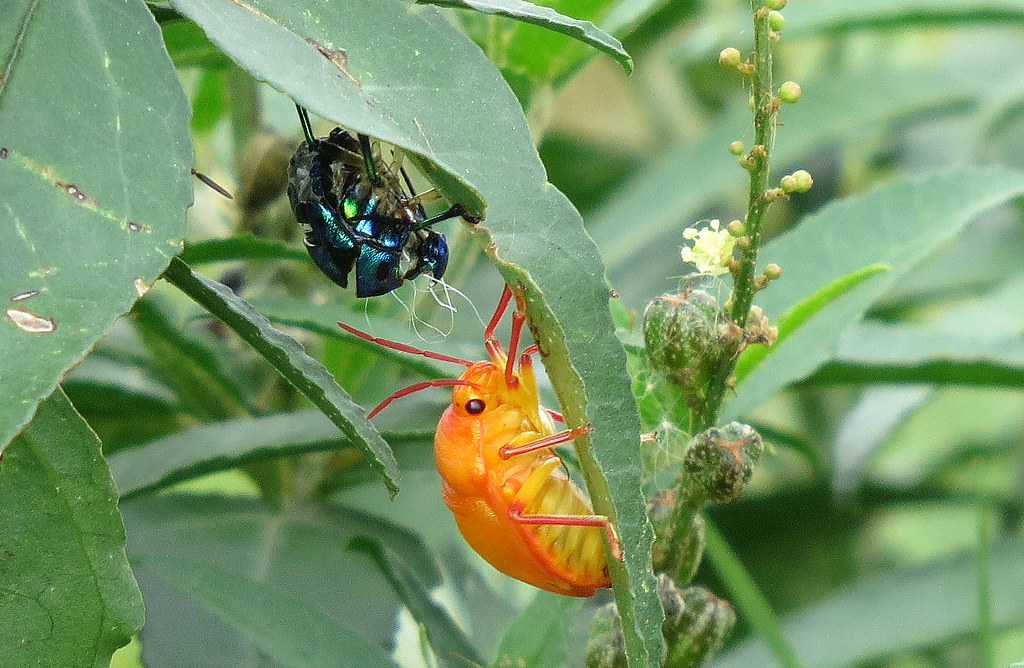
And when the bug decides to moult, it sheds that beautiful outer shell, and emerges, looking bright orange like a coral:
IMG_4734

Then there is the gold of the Copper Pod tree, scattered over the footpaths and roads of our city:
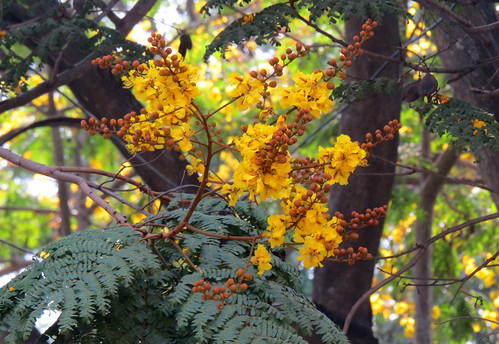
IMG_3523

Did you say rubies? Of course, of course! These are provided by the Bastard Sandal, a plant that gets its name from the fact that its wood is often used instead of real sandalwood, but it has excellent medicinal properties too:
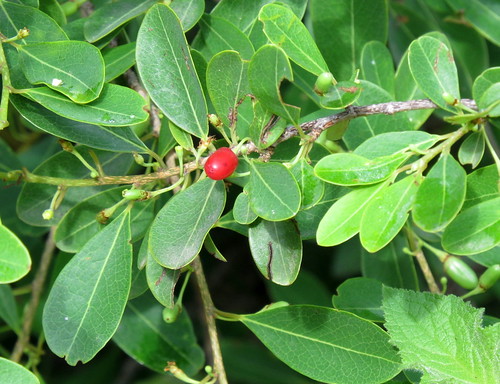
IMG_0488

If I want my rubies with a touch of black, I get the seeds of the Crab’s Eye creeper, locally called Gulaganji:
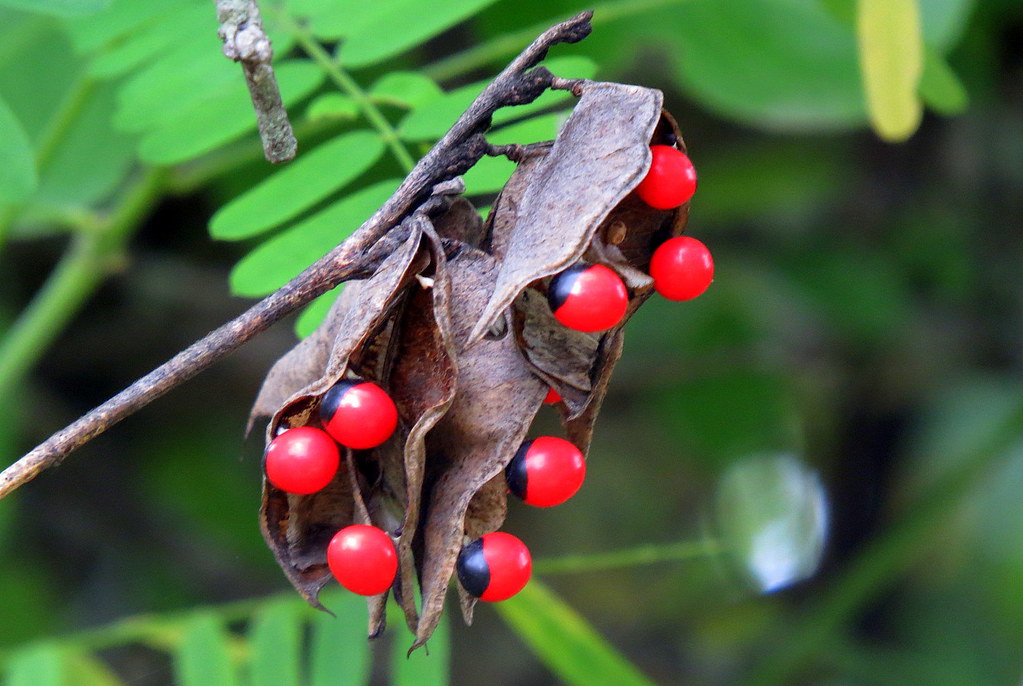
IMG_7163

The Grass Jewel is a butterfly that is well named. It is the smallest butterfly in India, and it’s as exciting to see one as it is to find a jewel!

IMG_7661

All of these jewels come to us with the energy produced by that great jewel of fire in the sky….
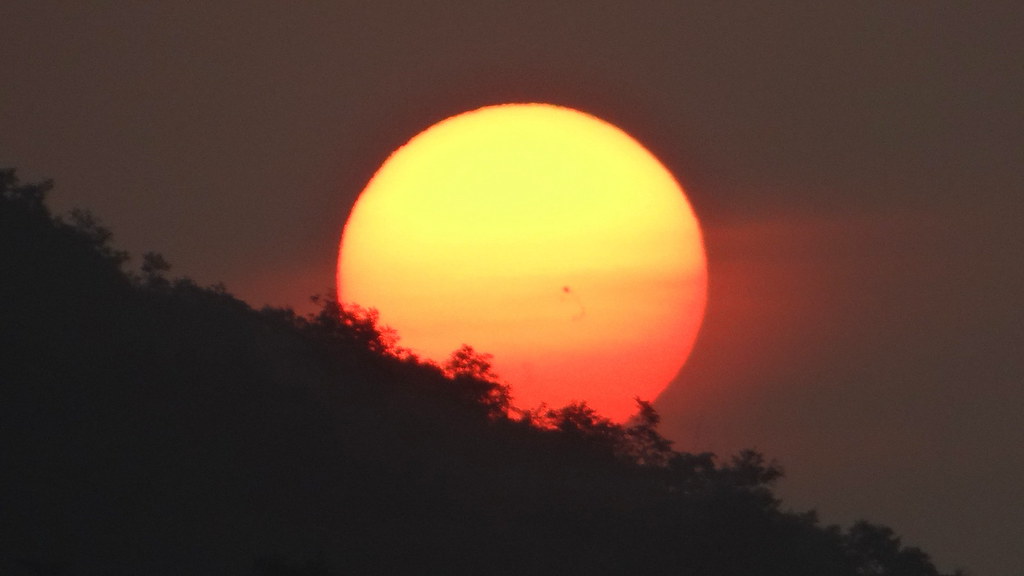
DSC01804

So, keep an eye out for the many treasures, gems and jewels that we can observe in the natural world, as we walk along!

Leave a Reply

Your email address will not be published. Required fields are marked *

Similar Story

Bengaluru’s flowering Tabebuia Rosea trees: Think green, not just pink

Cities must not confuse beauty with ecology; Bengaluru’s pink weeks are lovely, but unchecked ornamental planting could make the city prettier but less alive.

Late each winter, Bengaluru briefly transforms into an Indian Kyoto, as roads blush pink, office parks turn photogenic, and social media buzzes with claims of a local “cherry blossom” season. But the star of this spectacle is not cherry at all. It is Tabebuia rosea, the pink trumpet tree, a neotropical ornamental whose native range runs from Mexico to Ecuador. What seems like a harmless aesthetic win is, ecologically, far more complex. The history Bengaluru’s pink canopy is not new. Much of it can be traced back to the 1980s under forester S G Neginhal, who drove a major greening…

Similar Story

Inside Chennai’s AQI: Why hyperlocal monitoring of air quality is crucial

Official data masks Chennai's toxic air. Citizen Matters travelled with the IITM team to map variations in air quality. Watch the video to know more.

Across cities, official Air Quality Index (AQI) readings often overlook local hotspots. Chennai has eight Continuous Ambient Air Quality Monitoring Stations (CAAQMS) that function 24/7 throughout the year. But this isn’t enough to map particulate matter. Air changes every few metres, as researchers from the Indian Institute of Technology-Madras tell us. Seasonal variation, construction, vehicular movement, and proximity to industries also change the air we breathe, In 2022, over 17 lakh people died in India due to air pollution (PM 2.5), according to a Lancet study. With better hyper-local air data and public awareness, citizens and policymakers can target pollution…