The Western Express Highway in Kandivali East, North Mumbai is expectedly, one of the busiest arterial roads of the city, but those living on the side of it often spend an hour from the highway to reach their homes, about a kilometre away.
Residents of Hanuman Nagar, Lokhandwala Township, Damu Nagar and Kranti Nagar are the worst affected.
At the place where the highway crosses Akurli Road (the road that begins at the Kandivali East station and extends right upto the hills), we have a flyover, a traffic-cum-pedestrian subway and service roads crisscrossing, with vehicles moving in different directions. There is also a large mall. Sports Authority of India campus and the Samta Nagar Police Station are located close to this junction. All this results in daily traffic jams.
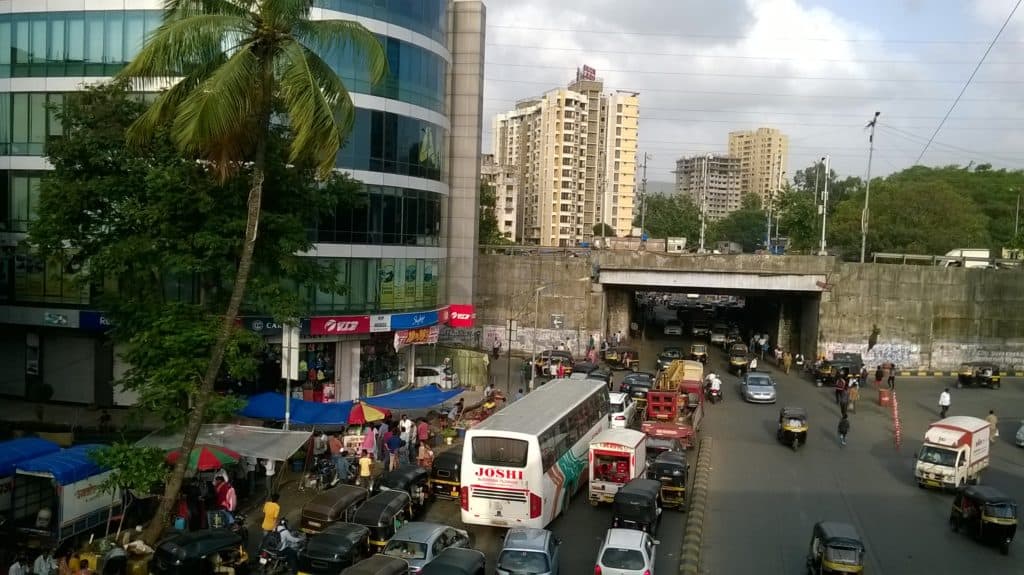
The extreme traffic conditions on Akurli Road have been shared with the police and local administration at different points in time, over the last 4-5 years.
Past efforts and the solutions
In October-November 2016, Lokhandwala Residents Association had organised a successful 21-day campaign where more than 3,000 residents of Lokhandwala Township toiled day and night on Akurli Road, along with the Traffic Police, to pilot test some of the proposed traffic movement regulations.
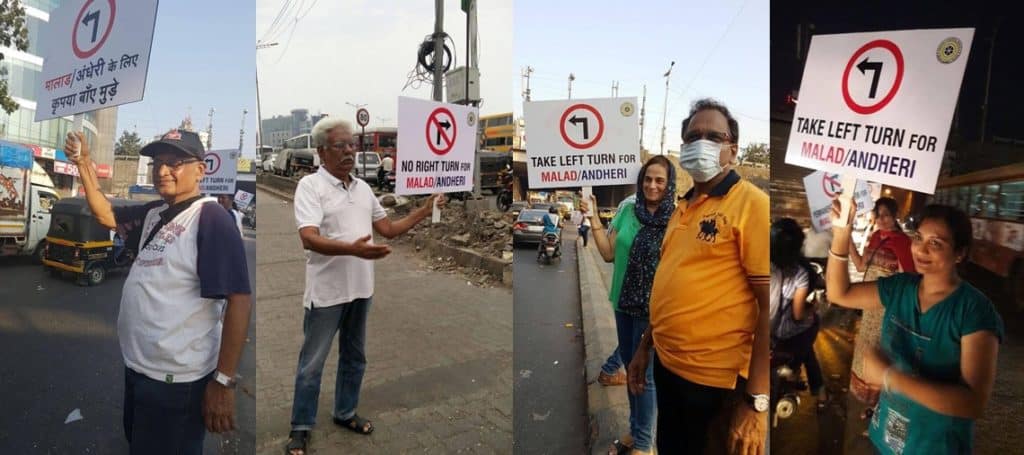
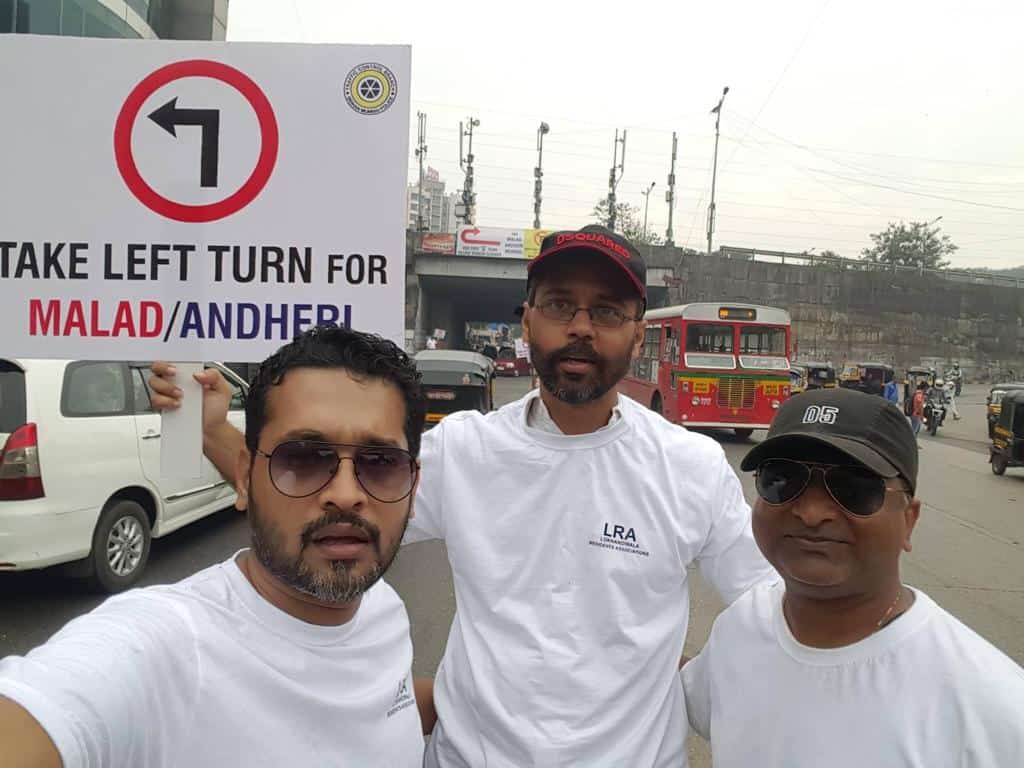
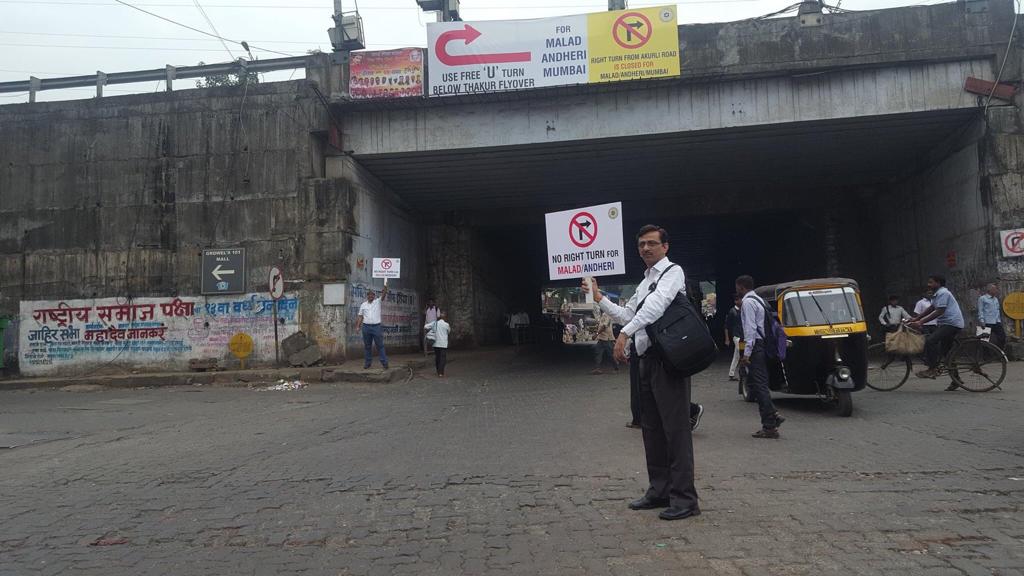
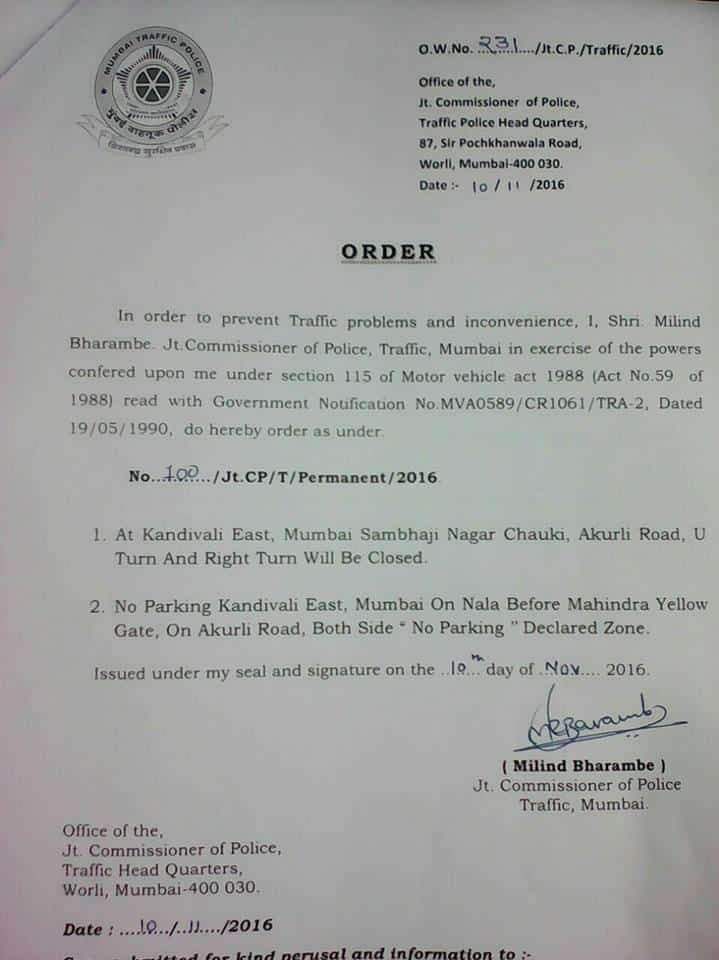
A couple of U/right turns were prohibited and with this, immediate relief in the traffic situation was felt. This resulted in an order being issued by the Joint Commissioner of Police, Traffic, Milind Bharambe, enforcing the regulations.
Subsequently, further improvement was seen after piloting another regulation that involved barricading a service road to prevent the right turn under the flyover. The idea was to put a permanent road divider, but it was decided to used plastic/metal barricades instead, to ensure that the road could be easily accessed in case of any emergency.
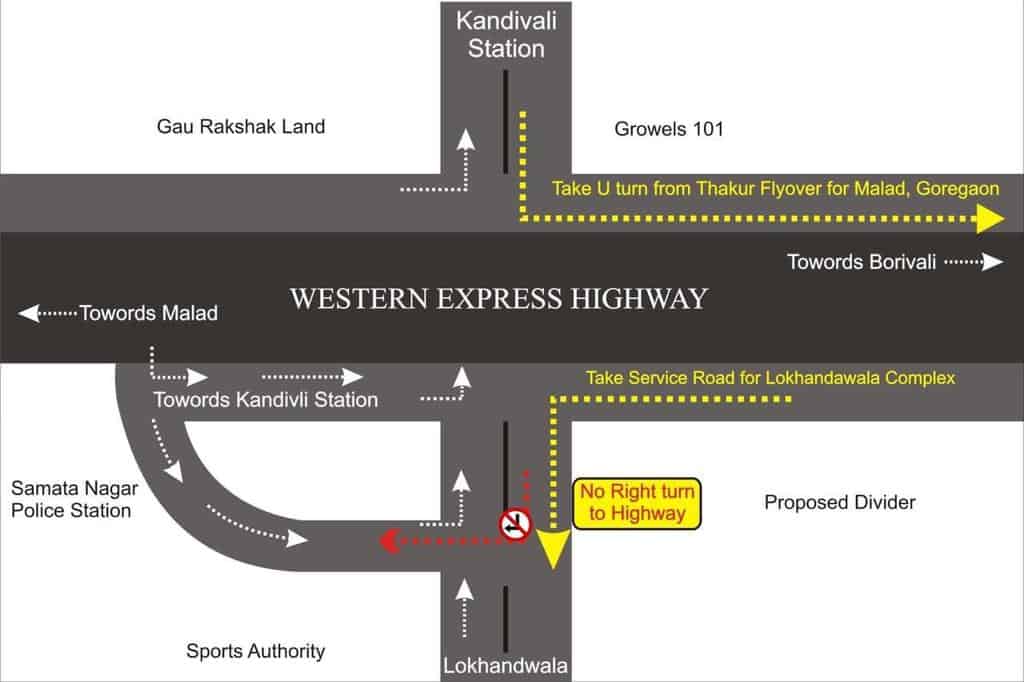
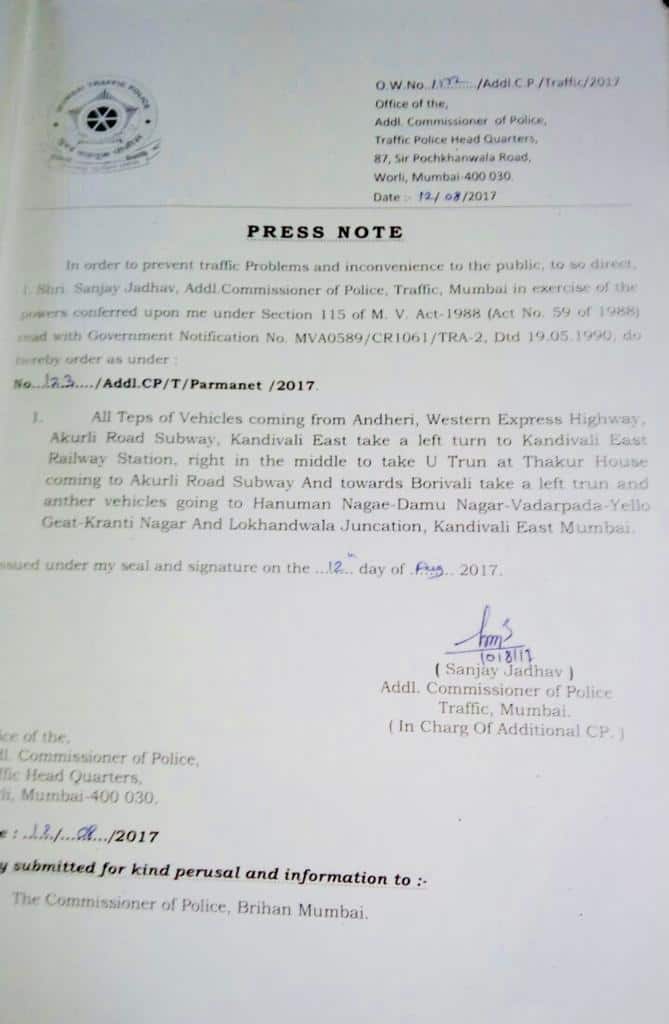
After repeated visits by the police, and after being fully convinced that the traffic plan would work, the order, enforcing the no right / under the flyover (where the barricade was put), was passed by the then DCP Traffic Sanjay Jadhav. This, along with the enabling of an under-flyover U-turn, gave positive results, streamlining the traffic flow and removing the snarls. The trip to the highway from the Lokhandwala Township area took about 10 minutes which was never possible earlier.
The current situation
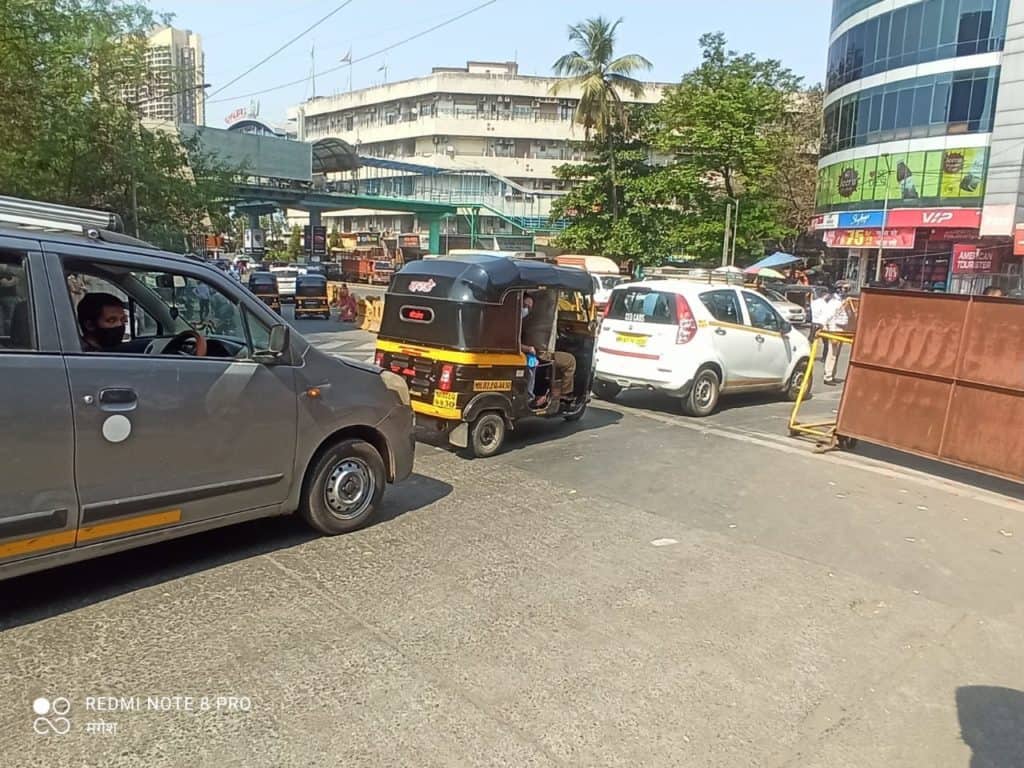
Despite the success of the solutions that were put in place, the last couple of years has seen them being disregarded. The barricaded junction caters to 90% of the East-West traffic that goes between the railway station and the residential areas. The barricades deployed are opened on and off by those who are supposed to be managing the traffic. This is causing major traffic jams on both sides of Akurli Road.
Read more: Mumbai will focus more on transportation in 2021. It should
The members of the Lokhandwala Residents Association in Kandivali East met with the new Traffic DCP Somnath Gharge (organised by our MLA Atul Bhatkhalkar) under the Akurli subway to discuss the issues faced and offer solutions.
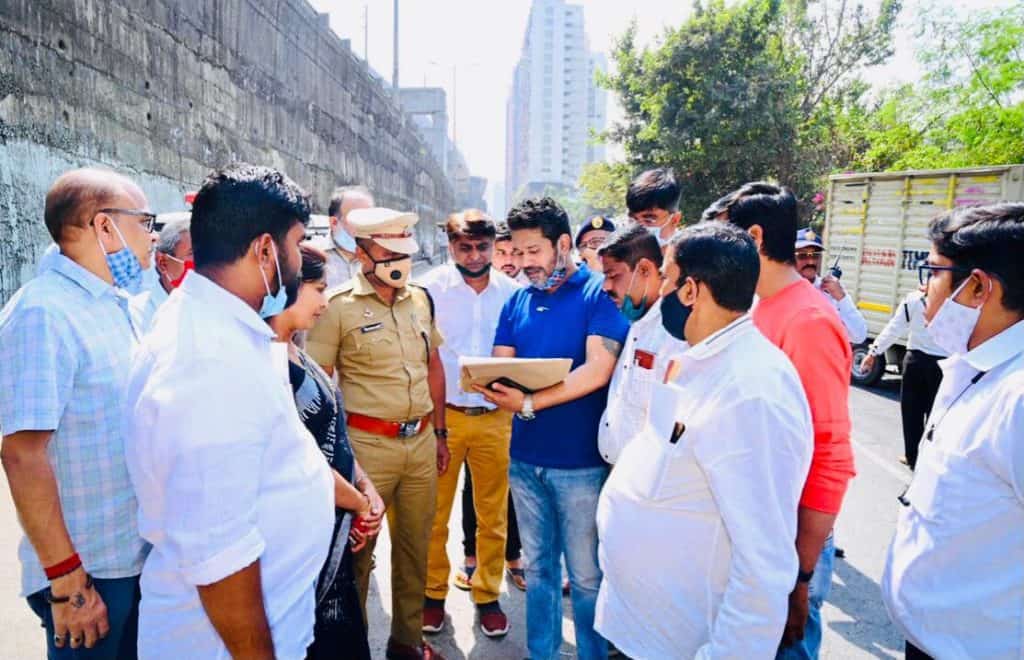
Apart from the traffic jams, the other issues discussed included illegal parking of heavy vehicles and auto rickshaw plying (overcharging, overloading, not following traffic rules) and parking – that are dangerous and result in undesired activities such as night drinking and loitering. The police take action when we complain but the relief is temporary and in no time, things go back to how they were.
The DCP has assured a further meeting with the Addl CP & we’re eagerly awaiting his visit to Akurli Road. We are committed to working with the police to provide permanent solutions to the daily problems we are facing.
Also read:
अँधेरा घना है,पर दिया जलाना कहाँ मना है!!
These tried and tested solutions should be immediately implemented by the authorities to ease out the traffic situation. We people deserve what is rightful ours. Otherwise what’s the point of paying so much if taxes.
This is such a shame that we the lokhandwala residents are suffering since many years and are deprived of our legitimate right to have a stress free commute.
In the event of emergency situations, there is no respite to us. Even ambulances gets stuck in the same traffic jam.
Let us hope that with this fresh move, things get better. Otherwise we should come on street for our rights as done in the past.
With due respect to LRAs efforts… Till today problem remain same & becoming worse day by day… I strongly belive that widening of under-pass bridge at Western express Highway & Mahaindra DP road thakur village are the better & permanent solution to reduce the traffic burden at akurli road. Regards…
Till today the status of DP road is not clear. The builders have impressive projects and they are aggressively selling the properties worth 1.5 Cr plus, yet how to reach the invested properties is a big question mark. It’s deadline is missed by many months, the road is not to be constructed on a river or Himalayan range yet there is immense delay. What a shame that the projects here take endless time to complete.