Was Mumbai’s power outage a cyberattack?
A New York Times article last week cited a cybersecurity report to claim that Mumbai’s major power blackout last October may have been a cyberattack from China. But the Central and State governments are now in disagreement about what happened, Boom reported. Maharashtra’s Energy Minister confirmed the Chinese cyberattack, while Central government chalked it up to a human error and not an attack.
Source: Boom
After BMC Chief, Aaditya Thackeray talks about the need for a single authority in Mumbai

Maharashtra minister and Shiv Sena leader Aaditya Thackeray said that a single authority for the financial capital is the top priority for the state government which will help “settle better accountability, Mint reported. Sixteen agencies, including the city civic body, agencies under the state government like MMRDA and Mhada for housing, and also some under the Central government like Airports Authority of India and Ports, run the financial capital at present, he told Mint. Last February, Brihamumbai Municipal Corporation had first made the suggestion of appointing itself as a single authority for the city.
Source: Mint
Mumbai’s pollution due to road dust
Preliminary findings from National Environmental Engineering Research Institute (NEERI)’s study, shared by the Maharashtra Pollution Control Board (MPCB) indicate that road dust makes up 71% of all particulate matter pollution in Mumbai.
Of this, 45% comes from unpaved roads (which are more prone to erosion by wind) followed by paved surfaces, which contribute to 26% of the city’s dust load. Another 8% comes from particulate matter emissions traced to construction activities, and 3% to vehicles. The rest comes from industries, the domestic sector, aircraft, marine vessels, open eateries, bakeries, and crematoria, the Hindustan Times reported.
Source: Hindustan Times
Read more: Smoggy, but unfazed: Mumbai needs to take air pollution more seriously than it does
Greater Mumbai and Navi Mumbai among top 10 in Ease of Living Index
Navi Mumbai ranks sixth and Greater Mumbai ranks 10th in the centre’s Ease of Living (EOL) Index 2020 released by Union Housing and Urban Affairs Minister Hardeep Singh Puri. The EoL Index and the accompanying Municipal Performance Index (MPI) examine the quality of citizens’ lives in 111 cities across four main pillars: economic ability, sustainability, citizens’ perceptions and quality of life. Expanded, these pillars cover 14 different categories such as housing, economic opportunities, green spaces, and even city resilience, the Hindustan Times reported. “Greater Mumbai scores little above 60 — the national average is 79 out 100 — in the category of housing and shelter.”
Source: Hindustan Times
Vaccine centres struggle to manage crowds in Mumbai
While the CoWIN software functioned better, centres continued to struggle as a large number of senior citizens and people with co-morbidities turned up for vaccination, Indian Express reported. BMC plans to scale up to 40 vaccination centres from Wednesday to cope with the overwhelming turnout of those wanting to get immunised. On Monday, there were eight centres, which was increased to 22 on Tuesday for senior citizens and people with comorbidities, according to the Indian Express. “In the coming days, BMC plans to vaccinate 40,000 people a day.” The Union Health Ministry has allowed Maharashtra to open 29 private hospitals as vaccination centres in Mumbai.
Mumbai sees a huge growth in property sales
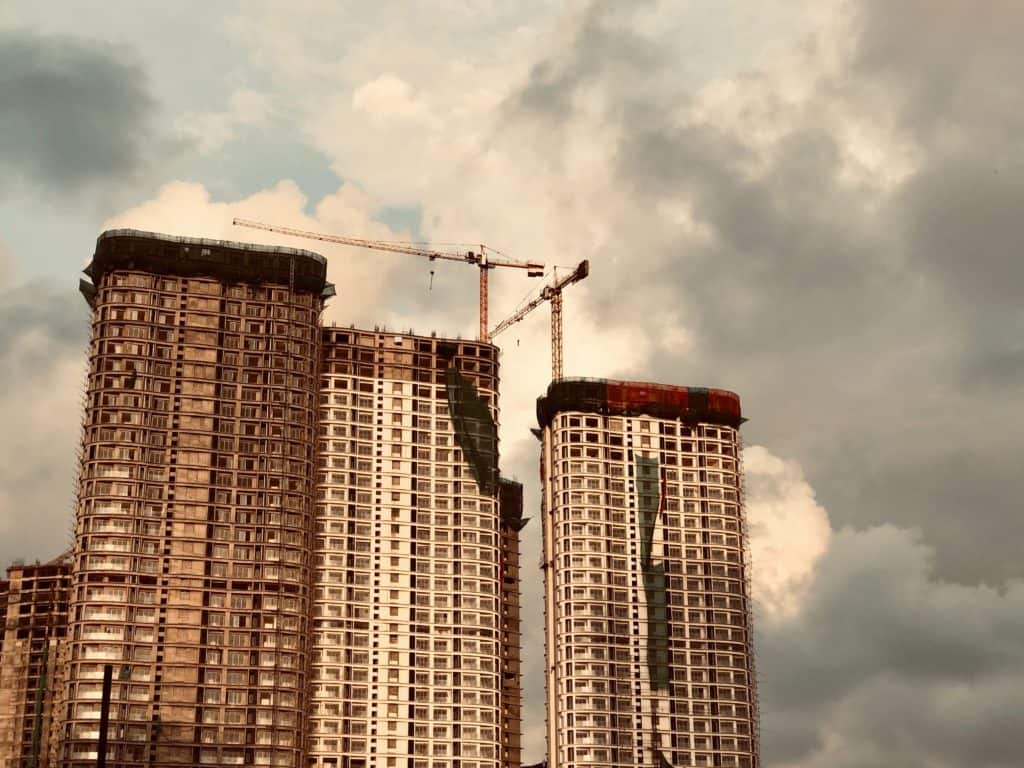
Mumbai saw a huge surge in property registration numbers in February, thanks to stamp duty cut by the Maharashtra government, Mint reported. Over 10,000 housing units were registered in Mumbai in February, data shared by NAREDCO revealed. To boost the ailing real estate industry amid coronavirus pandemic, the Maharashtra government in August announced to cut stamp duty on housing units from 5% to 2% until 31 December, 2020. From January 1 to 31 March, 2021, the stamp duty charges were reduced to 3%, according to Mint.
Source: Mint
Read more: Mumbai has no space to house its police
Mumbai schools ask government to bail them out
As non-payment of fees continues in large numbers, the Maharashtra English School Teachers Association wants the government to pay teachers the minimum wage, release the pending Right to Education act reimbursement, and provide electricity bill and tax waiver to schools, the Times of India reported. The group submitted its list of demands to education minister, Varsha Gaikwad, on Thursday.
Source: Times of India
Also read:
[Complied by Apekshita Varshney]