Mumbai’s summer heat: Traffic officials aged 55 and above asked to stay indoors in afternoon
Mumbai is currently facing higher temperatures than previous summers, and as a precautionary measure, traffic police officers who are 55 years old and above have been advised to avoid being outside between 12 pm and 5 pm to prevent heatstroke.
A circular was issued on April 26th to all 50 traffic chowkis in the city to convey the same. Senior officers are responsible for ensuring that on duty traffic police officials have access to clean drinking water and wear caps during the afternoon hours. On April 20th, Mumbai experienced its third-highest day temperature of the decade, reaching 38.8 degrees Celsius.
Source: Hindustan Times
Read more: Mumbai weather report: How hot will it be in April?
Crackdown on unauthorised schools in Mumbai
Mumbai’s deputy director of school education (DDSE) issued an order directing officials to shut down unauthorised schools by April 30 and submit a report. The move is part of Maharashtra government’s crackdown on such schools.
All illegal educational institutions, including non-state board schools with affiliation certificates, will be subject to action. City’s DDSE Sandeep Sangave stated that there are a total of 674 illegal schools, including 239 in Mumbai. Furthermore, Sangave noted that there are 218 private unaided schools in the city that have not renewed their recognition certificate, which is valid for three years for Class I to Class VIII under the Right to Education (RTE) Act of 2009.
Source: The Times of India
Bandra (E) skywalk needs to be reconstructed within 15 months: HC orders BMC
The Bombay high court on April 24th directed the Brihanmumbai Municipal Corporation (BMC) to complete reconstruction of Bandra (E) skywalk within the next 15 months. The court also asked the civic body to ensure that all such skywalks in the city are made ideal for their best possible utilisation.
The order was passed in a public interest litigation (PIL) filed by advocate who had complained of facing problems while commuting during peak hours. He had claimed that the absence of sufficient pavements and a narrow access road to the station from the Western Express Highway (WEH) resulted in accidents.
Furthermore, the court also asked the BMC to consider using mechanised walkways and escalators for making the skywalk accessible to senior citizens and differently-abled persons.
Source: Hindustan Times
Read more: After 15 years of existence, skywalks may get escalators. But will they get more users?
Using your phone without earphones in BEST bus can now attract fine
BEST has barred commuters from speaking loudly on mobile phones and has made it mandatory to carry earphones if they plan to watch video or listen to songs. The undertaking issued a circular regarding the same to keep the decibel levels in check.
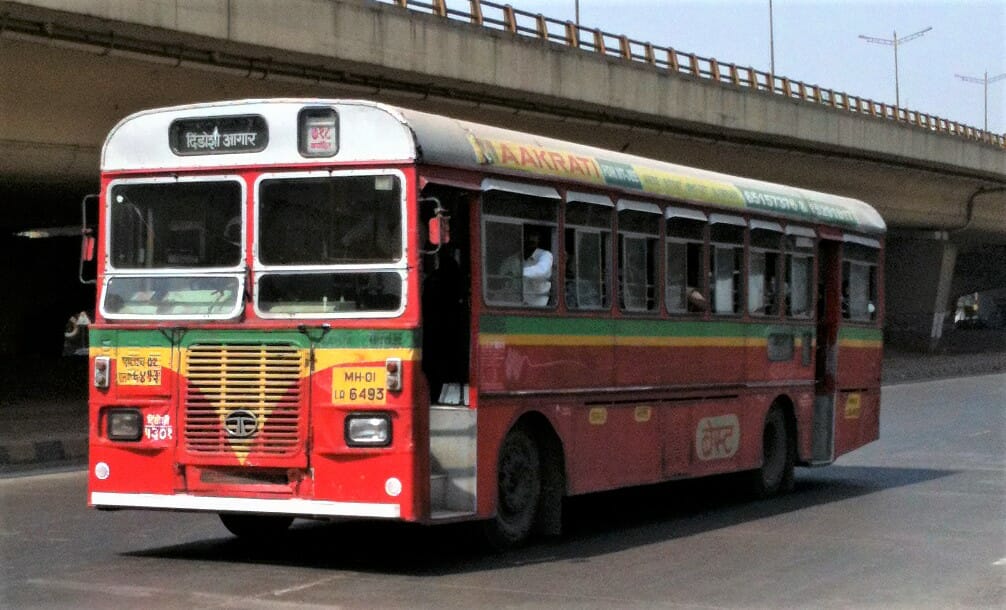
The move comes after BEST received several complaints from commuters about fellow passengers who play loud music on their phones or speak at a high pitch while on their phone inside the bus. The bus conductors can take cognisance of complaints and hand the offenders to the police for further action.
If found guilty, commuters can be prosecuted under section 38 of the Bombay Police Act, 1951. The Act deals with offences related to annoyance, disturbance or discomfort in public due to music, sound or noise, and has a hefty fine up to Rs 5,000 or three months imprisonment.
Source: The Times of India
Water shortage at Mumbai University’s hostel, students protest
Students residing in Mumbai University’s Maharshi Dhondo Keshav Karve Girls’ Hostel in Kalina campus held a sit-in protest on April 26th night against water scarcity in the hostel. The hostel residents sat on the street near the staff quarters as they waited for the warden. However, according to the protestors, no authority met them during their demonstration to address their grievances.
The University administration has now taken a note of it and have told the press that a long-term solution is being deliberated upon. In the meantime, the authorities have made alternative arrangements for water tankers.
Source: The Indian Express
Compiled by Eshan Kalyanikar