Walking into the Madras Literary Society (MLS) is like stepping into another era. The towering, multi-storey bookshelves hold more than 80,000 volumes, some of which are rare and priceless. Among the library’s many treasures is the 296-year-old edition of Isaac Newton’s Naturalis Principia Mathematica.
The architecture of the building, with its double-layered windows, high ceilings with exposed rafters, and lime-plastered walls, offers more than mere aesthetic appeal. These features ensure natural ventilation, retain acoustics unique to the space, and keep the library cool even in Chennai’s scorching summers. Antique furniture adds an extra flourish to the space.
The library thrives thanks to the warm presence of librarians Uma Maheswari and Vinayagam. Uma has been with MLS since the early 1990s and has become a part of its living history. Tirupara Sundari Sevvel, Secretary of MLS, is another key figure whose passion for the library’s heritage and future ensures every visitor leaves with a deeper appreciation of the place.
Legacy of MLS
As we celebrate 386 years of Madras (now Chennai) this August, it is a fitting time to delve into the Madras Literary Society’s rich legacy. Much like Madras itself, whose origins can be traced back to the historic precincts of Fort St. George, MLS also had its beginnings within the Fort in 1812. It was established to educate employees of the East India Company in art, history, theology, languages, and local customs.
Later, the library moved into its current home, a striking red-bricked structure built in the Indo-Saracenic style. Justice E Padmanabhan’s report on heritage buildings in Chennai has listed close to 500 such structures, and MLS is one of them. Currently, the Public Works Department (PWD) is initiating renovation works to preserve this landmark.
Building communities, one story at a time
Much of MLS’s charm lies in its organic and deep-rooted community engagement. First-time visitor and media studies student Satvika Tupil shares, “The hard work and dedication put into preserving the books and the history of the library fascinated me. I also had a chance to write a postcard to my best friend in Bengaluru using historically relevant seals like Rippon Building and Higginbotham’s Library. Visiting MLS is like time-travelling to a lovely past I wasn’t a part of.”
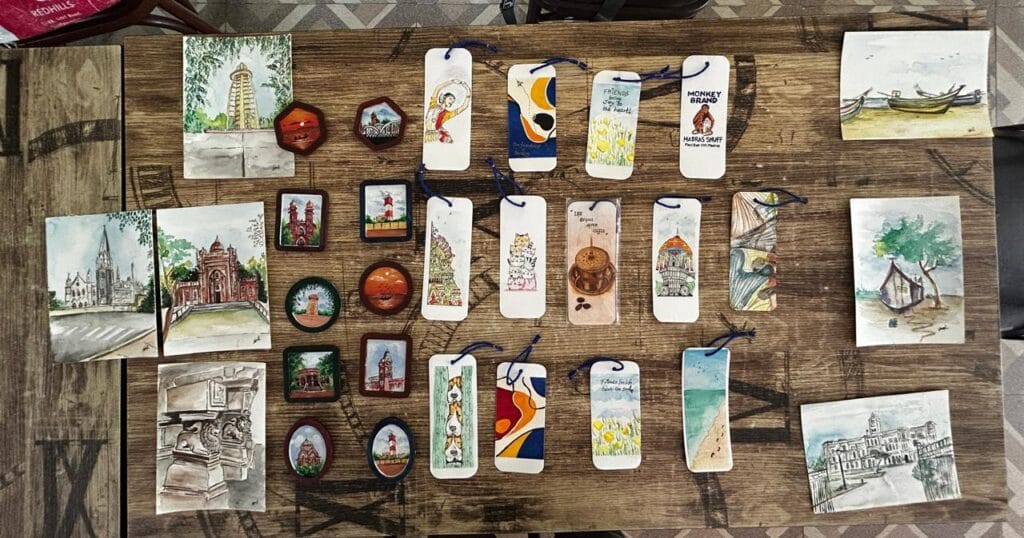
This immersive experience is closely tied to the efforts of Nam Veedu, Nam Ooru, Nam Kadhai, a thriving community initiative founded by Sundari Sevvel. Dedicated to building a compassionate and inclusive Chennai, the community works in collaboration with MLS to organise events, host storytelling sessions, and celebrate art and literature, including playing a pivotal role during Madras Week celebrations. It has initiated mobile libraries and book donation camps, with many books donated to Puzhal Prison, government schools, and the Hobart School Library.
Sundari explains, “Much like Nam Veedu, Nam Ooru, Nam Kadhai, sensitivity, a strong sense of community and equity form the underbelly of MLS. It’s what keeps the staff and members so closely aligned.” With over 500 members, MLS has seen a 60% rise in memberships over the past decade.
Read more: 50000 books, rare memorabilia and just three employees: Why Madras Literary Society needs Chennai
Stories of impact: Artists, authors and historians
MLS has also become a second home for artists, authors, historians, and volunteers. Tamil filmmaker Mani Ratnam showcases many heritage structures in the city through his films. MLS was featured in his 1986 classic Mouna Ragam, where a part of the movie was shot in the library. Fast forward to 2025, when some critical shots of his recent film Thug Life were filmed there.
Author and MLS member, T.S. Padmapriya, launched her book, The Gods of the Holy Koovam, at MLS and donated the proceeds to create a much-needed Tamil section in the library. This directory of heritage sites along the Cooum River was not just an academic contribution but also a personal offering to the city’s heritage.
Historian Meenakshi Devarajan, another long-time collaborator, partnered with MLS to initiate the #JusticeForAllFlowers campaign. Highlighting Chennai’s endangered native flora, she organised educational events on plants like punnai, thazham poo, and adumbu that are often overlooked.
Inclusivity is at the core of MLS. Author Sundari Siva Subbu, who has cerebral palsy, launched her book Bumblebees in My Balcony at the library and filmed an episode for Madras Day there.
Photo-blogger Srivatsan Sankaran, a long-standing member, has been instrumental in promoting inclusive platforms for the hearing-impaired community, showcasing Indian Sign Language as a form of art and expression. Events under this initiative by MLS and along with the Deaf Artists NFT Collective, have drawn large audiences, making MLS truly inclusive.
Srivatsan notes, “MLS fosters an inclusive environment where individuals from all backgrounds can access resources and participate in meaningful discussions.” His collaboration with MLS extends to book lending programmes, social media engagement, and photo exhibitions aimed at promoting heritage and storytelling among individuals with hearing and speech impairment.
The power of volunteers: Preserving knowledge
At the heart of MLS lies its ever-growing volunteer base. Individuals from all walks of life contribute to the preservation of books and the maintenance of the library. Chitra V, a core committee member of both Nizhal (an environmental organisation) and MLS, began as a volunteer in 2004. Today, she leads a team that meets regularly—armed with brushes, gloves, and masks—to clean, restore, and catalogue the priceless book collection.
Chitra has also spearheaded nature walks within the DPI complex, where MLS is located, and played a key role in digitising the library’s records. Fellow core committee member Radhika Narasimhan has helped to grow the Tamil section from just 500 books in 2017 to a thoroughly catalogued 3,000 today. Radhika recalls how difficult it was initially to find volunteers for Tamil cataloguing, but persistence has borne fruit.
The ‘Adopt a Book’ restoration programme invites individuals and institutions to sponsor the restoration of ageing books. “Around 40 titles have already been adopted; some even through creative efforts like a student-led lemonade stand fundraiser,” informs Sundari.
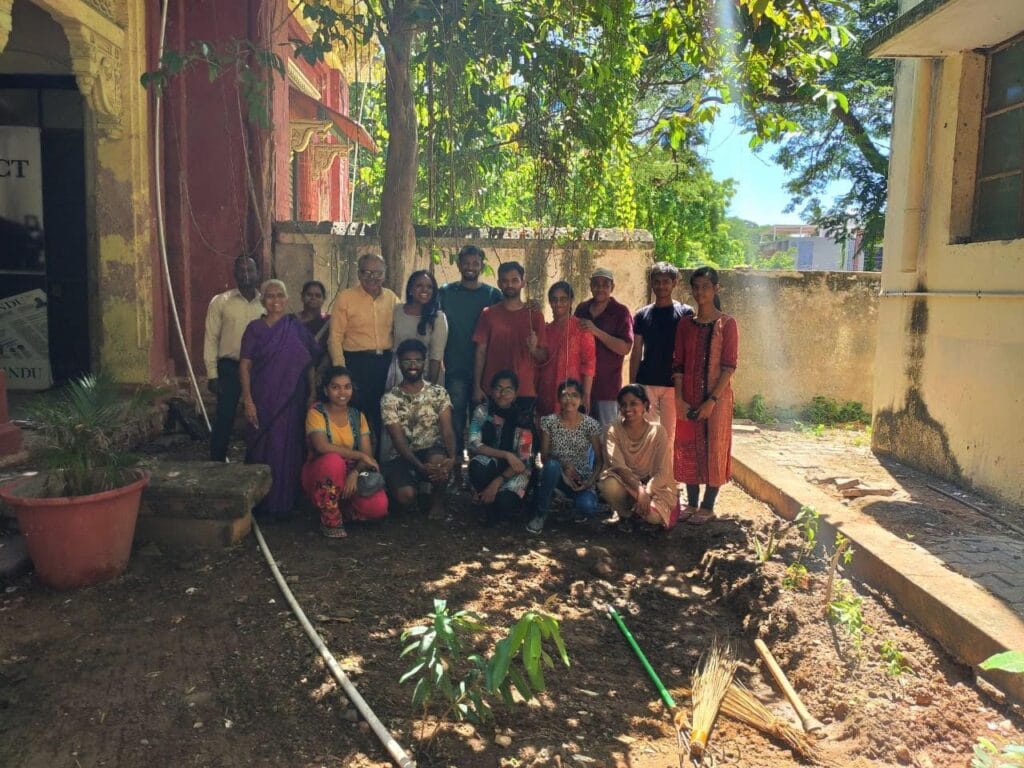
While structural maintenance is overseen by the PWD, the garden at MLS is lovingly cared for by volunteers. The initiative, “My Garden, My Taazhvaram”, led by member Muhilan M., has transformed the grounds into a lush, fragrant oasis. From orange jasmine to wild lime and Ceylon ironwood, the flora mirrors the diversity of those who care for it. The recently retired Martha Ma, once the oldest employee of MLS with a 40-year tenure, also played a vital role in maintaining the garden and antique furniture.
A youthful revival
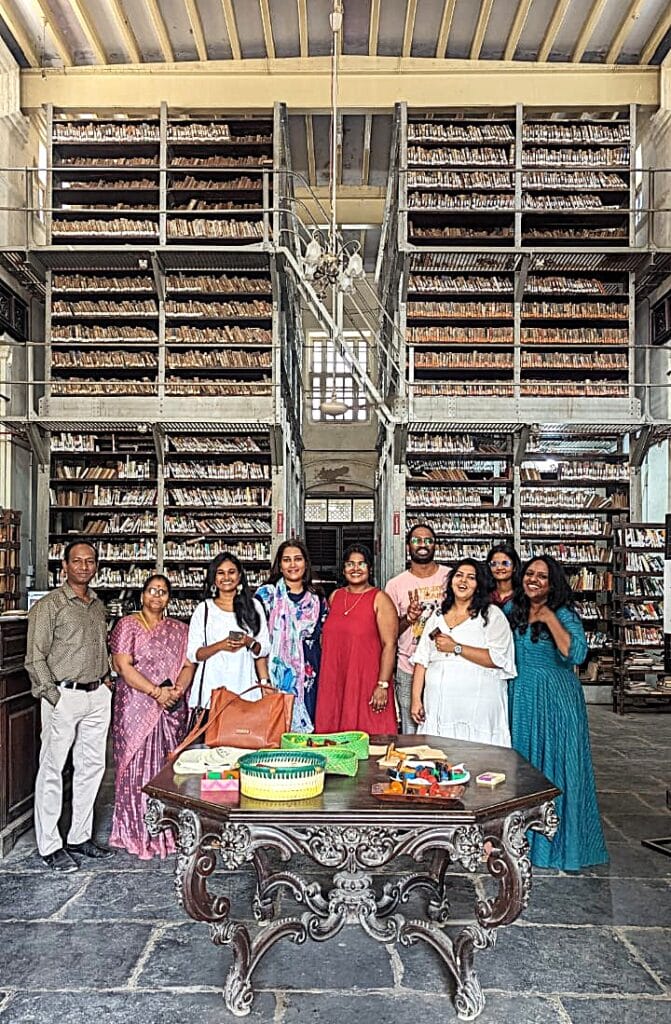
Meanwhile, MLS is also seeing a surge in youth participation, with young volunteers now making up 10% of the total membership. Schools and universities regularly partner with MLS for workshops, history projects, and library days.
Young architecture students, in particular, have taken a keen interest in MLS’s Indo-Saracenic design. Through sketching, documentation, and study of its functional and aesthetic elements, they contribute to its conservation and spread awareness through their academic and social networks.
MLS is more than just a library. It is a living, breathing institution, held together by the passion and commitment of its community. If you, too, are interested in being part of this community, email the library at madrasliterarysociety@gmail.com.
The name “Madras literary Society” itself makes you
feel very nostalgic. Also, the name stands as Madras and not Chennai, further more brings memories. Beautiful article written by the author Harini Raghavan.Many of us who have lived there, 50 years ago are still not aware of such a library run by great people and volunteers. The author through her beautiful writing has brought to light the existence of such institutions with a collection of humongous and rare books that have stood the test of time,Weather and lack of funds. The author also talks about the landscape and the names of the flowers.(to me, it belongs to the Sanga kal) that have been planted and displayed. It has given me an opportunity to visit this place when I visit Chennai.
Best wishes to the author Harini Raghavan.