Exclusive interview: ‘Our focus is on regulating traffic,’ says Bengaluru traffic commissioner

M. A. Saleem, Special Commissioner of Police, Traffic, explains how ITMS and synchronised traffic signals work, and about IPC section 283.

Bengaluru’s infamous traffic jams have been the subject of much discussion for over a decade. With the roads burdened with vehicles beyond its capacity, traffic congestion has increased as the city itself has expanded. Last year, Chief Minister Basavaraj Bommai said his government’s priority is to ease traffic.

To ensure better traffic management, M A Saleem, IPS, was brought back to head the Bengaluru Traffic Police as Special Commissioner of Police, Traffic, in November 2022. He is a 1993-batch IPS officer who has a PhD in traffic management.

In his previous stints with the Bengaluru Traffic Department, M A Saleem introduced several initiatives such as Safe Routes to School and adopting technology under BTRAC (Bengaluru Traffic Improvement Project). In his previous role, he introduced around 128 one way roads in the city, which earned him the name ‘One-Way Saleem’.


Read more: How to make Bengaluru traffic jams go away


The Bangalore Traffic Police is devising ways to manage the city’s mammoth traffic, from working in co-ordination with other civic bodies, such as the BBMP and BDA, to exploring technology-related systems, such as ITMS (Intelligent Traffic Management System), synchronised signals, and installation of Artificial Intelligence at signals.
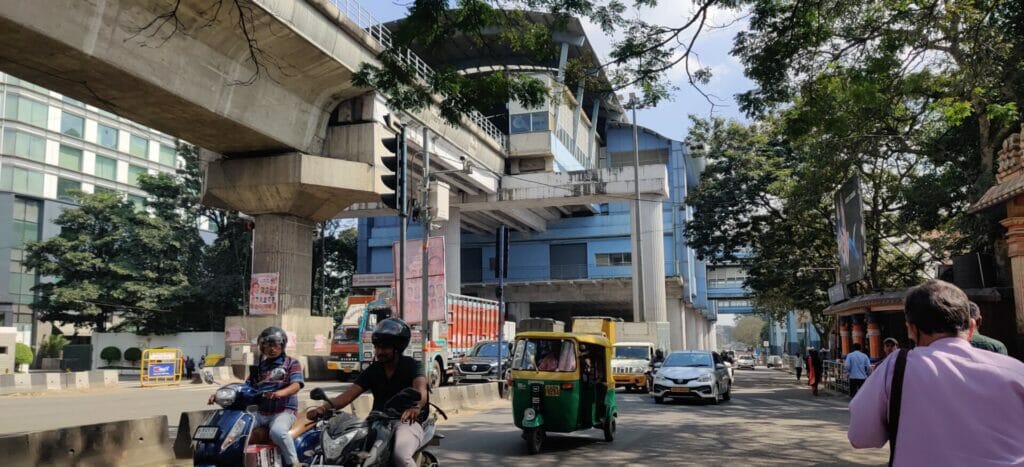
Vehicles plying on a road
Representative image. CM Basavaraj Bommai said his government’s priority is to improve traffic. Pic: Sherin Sunny

In conversation with Citizen Matters

In an exclusive interview with Citizen Matters, M A Saleem spoke about the use of technology in controlling traffic. He explained how ITMS is used for transparent booking of violations and how synchronised traffic signals work. He also spoke about the need for the enforcement of IPC section 283 to avoid footpath parking and ensure pedestrian safety.

Watch the full interview and know more on how Bengaluru Traffic is being regulated.

Also read:

Leave a Reply

Your email address will not be published. Required fields are marked *

Similar Story

Freebies or freedom? What bus subsidies do for Indian women

Free bus travel for women in Indian cities cuts transport costs by 50 per cent and boosts jobs. Watch this interview to know more.

Across Indian cities, women depend heavily on buses to get to work, school, healthcare, and to manage everyday caregiving. In recent years, several states have introduced women-specific bus fare subsidy schemes. Delhi, Karnataka and Tamil Nadu offer completely free rides for women in state-run buses, while Maharashtra offers 50% subsidy. Read more: Who benefits from the free bus for women scheme? These schemes have been both vilified as 'freebies' or touted as transformative solutions for women’s mobility. But do these schemes actually work? In 2025, the Sustainable Mobility Network commissioned a study to answer this very question. Beyond Free Rides…

Similar Story

Cycle city no more? Audit reveals only 11% of Pune’s roads pass the test

Pune is set to host the 2026 Grand Tour, but a Parisar audit reveals unsafe, narrow, and encroached cycle tracks across the city.

Children and adults pedalling to school, work and play — this was a common sight on Pune's streets not so long ago. Once known for its vibrant cycling culture, the city still has many groups and communities that promote non-motorised transport. However, with the rise of motorised vehicles, cycling has not only taken a back seat, but has also become unsafe and inconvenient due to poor infrastructure. This is despite Pune having dedicated cycle tracks and lanes. The decline in cycling infrastructure is reiterated by a recent audit, which found that only 11% of cycle tracks in Pune fell in…